







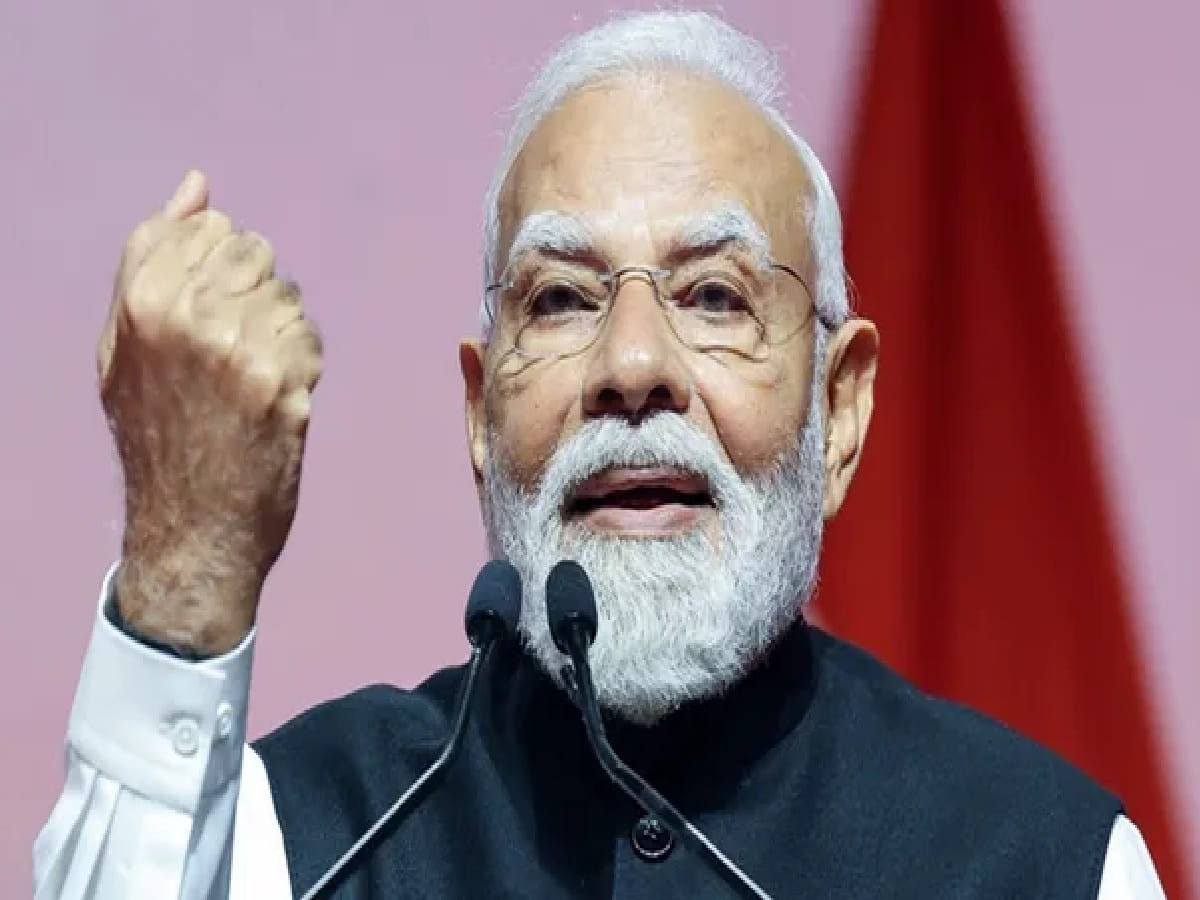
PM Modi Takes 'Constitution in Pocket' Dig at Rahul Gandhi
Addressing farmers, agricultural scientists, policymakers, and industry leaders in New Delhi on Thursday, November 12, 2026, Prime Minister Narendra Modi blended sharp political commentary with a comprehensive roadmap for transforming Indian agriculture into a modern engine of economic growth. Speaking at the Kisan Tak Bharat Agriculture Conference 2026, organized by the India Today Group at Bharat Mandapam under the theme Smart Kisan, Viksit Bharat, the Prime Minister took a pointed, veiled swipe at Congress leader and Leader of the Opposition in the Lok Sabha Rahul Gandhi, who frequently carries a pocket-sized copy of the Indian Constitution at public rallies and political events. Without naming Gandhi directly, Prime Minister Modi remarked that certain political figures nowadays pull the Constitution out of their pockets and behave as though both the Constitution of India and the nation’s democracy reside inside their pockets. For readers and farming communities across New Delhi, Lucknow, Uttar Pradesh, Punjab, Haryana, Gujarat, and Maharashtra, the Prime Minister’s plenary address linked democratic accountability with tangible rural welfare—spotlighting a historic four percent agricultural growth rate, massive fuel and fertilizer subsidies that shielded cultivators from West Asian conflict shocks, and clean-energy innovations turning food providers into agri-entrepreneurs.
'Constitution in Pocket' Remark and the Gujarat Economic Ranking Episode
Elaborating on his critique of the opposition’s political conduct, Prime Minister Modi observed that even while sitting out of power, some leaders continue to display an "intoxication of authority". He urged citizens and political observers to look beyond contemporary slogans and examine how those very individuals governed when they held power in New Delhi. To illustrate what he described as double standards on institutional freedom and democratic norms, the Prime Minister recounted a specific episode from his tenure as Chief Minister of Gujarat.
According to PM Modi, an independent economic research institution—whose name, he noted with a pointed hint, was associated with a former Prime Minister of India—had ranked Gujarat first in a national economic performance assessment. However, those holding power in New Delhi at the time were unable to accept Gujarat receiving top honors. The Prime Minister stated that central authorities subsequently issued formal instructions directing the researchers at that institution to seek prior permission from the government before publishing any future reports. Contrasting that episode with today’s political discourse, Modi remarked that the same people who suppressed unfavorable economic findings while in office now deliver lectures on tolerance, constitutional values, and democracy.
Record 4% Agricultural Growth and 50 Crore Lifted Out of Poverty
Turning to the performance of India’s farm economy over the past decade, Prime Minister Modi highlighted structural milestones that he said rarely receive adequate attention in conventional media narratives. He noted that India’s average annual agricultural growth rate has exceeded 4 percent over the last ten years—making it the first decade since Independence in which the country has sustained agricultural expansion above that threshold.
Connecting farm productivity directly to grassroots poverty alleviation, the Prime Minister cited findings from a World Bank study indicating that approximately 50 crore (500 million) Indians have risen out of poverty over the past 12 to 13 years. Crucially, the study documented a steep decline in rural poverty, demonstrating that millions of marginal farmers, tenant cultivators, and agricultural laborers across India’s heartland have achieved meaningful economic upward mobility through sustained rural investment, direct benefit transfers, and improved market access.
Shielding Farmers From Global Oil and Fertilizer Shocks: ₹43 Diesel Relief
A central theme of the Prime Minister’s speech was how the Central Government insulated Indian farmers from severe international commodity and energy shocks caused by geopolitical conflicts in West Asia and the Gulf region. Recalling the sharp volatility in global energy markets, PM Modi explained that when war clouds gathered over West Asia, international crude oil prices surged from $70 per barrel to $122 per barrel within just a few weeks, creating an acute inflationary challenge for import-dependent economies.
Under prevailing market parity, domestic diesel prices would have required an immediate increase of ₹50 per liter. Instead of passing that crushing burden onto tractor-owning farmers and freight transporters, the Indian government raised diesel prices by only ₹7 per liter and absorbed the remaining ₹43 per liter cost itself. While diesel prices in neighboring countries climbed by 40 to 50 percent during the same period, India shouldered a monthly fiscal burden of roughly ₹14,000 crore so that Indian cultivators would not feel the economic heat. The government applied the same protective shield to crop nutrients: despite international supply disruptions driving the global price of a 50-kilogram bag of DAP fertilizer to nearly ₹5,000, Indian farmers continued receiving it at a subsidized price of ₹1,300 per bag, alongside urea worth ₹3,000 made available for under ₹300—supported by ₹16 lakh crore in fertilizer subsidies over the past twelve years.
From 'Annadatas' to 'Agri-Entrepreneurs': Exports, PM-KUSUM, and Drone Didis
Framing agriculture as the bedrock of India’s civilization, social fabric, and cultural rhythm—and linking farming traditions to harvest festivals nationwide as well as the ongoing Chhath Mahaparva—Prime Minister Modi reiterated that building a Viksit Bharat (Developed India) is impossible without modernizing farming practices and empowering farmers. Recalling his Independence Day address from the Red Fort, he emphasized that agriculture stands among the seven core power sources driving India’s development journey. Today, India’s annual agricultural exports have crossed ₹4 lakh crore, channeling global market earnings directly back into rural households. On the global production leaderboard, India ranks first in milk, pulses, jute, rice, and coarse grains (millets), and second in wheat, cotton, fruits, vegetables, and fish production, complemented by rapid ten-year expansion across dairy, poultry, fisheries, beekeeping, and horticulture.
Looking toward the future of smart farming, the Prime Minister spotlighted how clean energy and rural technology are reshaping village economies. Under the PM-KUSUM scheme, roughly 12 lakh solar power pumps have already been provided to farmers, slashing irrigation electricity bills and enabling Annadatas (food providers) to become Urjadatas (energy producers) by generating solar power on their fields. Sharing a forward-looking vision, PM Modi stated that just as the global automobile sector is transitioning toward electric vehicles, he is actively working with scientists and farmers toward powering all agricultural tools and farm machinery with solar energy. Coupled with grassroots technology adoption led by Namo Drone Didis—rural women trained to operate agricultural drones for precision spraying—the government’s overarching mission is to transform India’s food providers into prosperous, self-reliant agri-entrepreneurs.




