







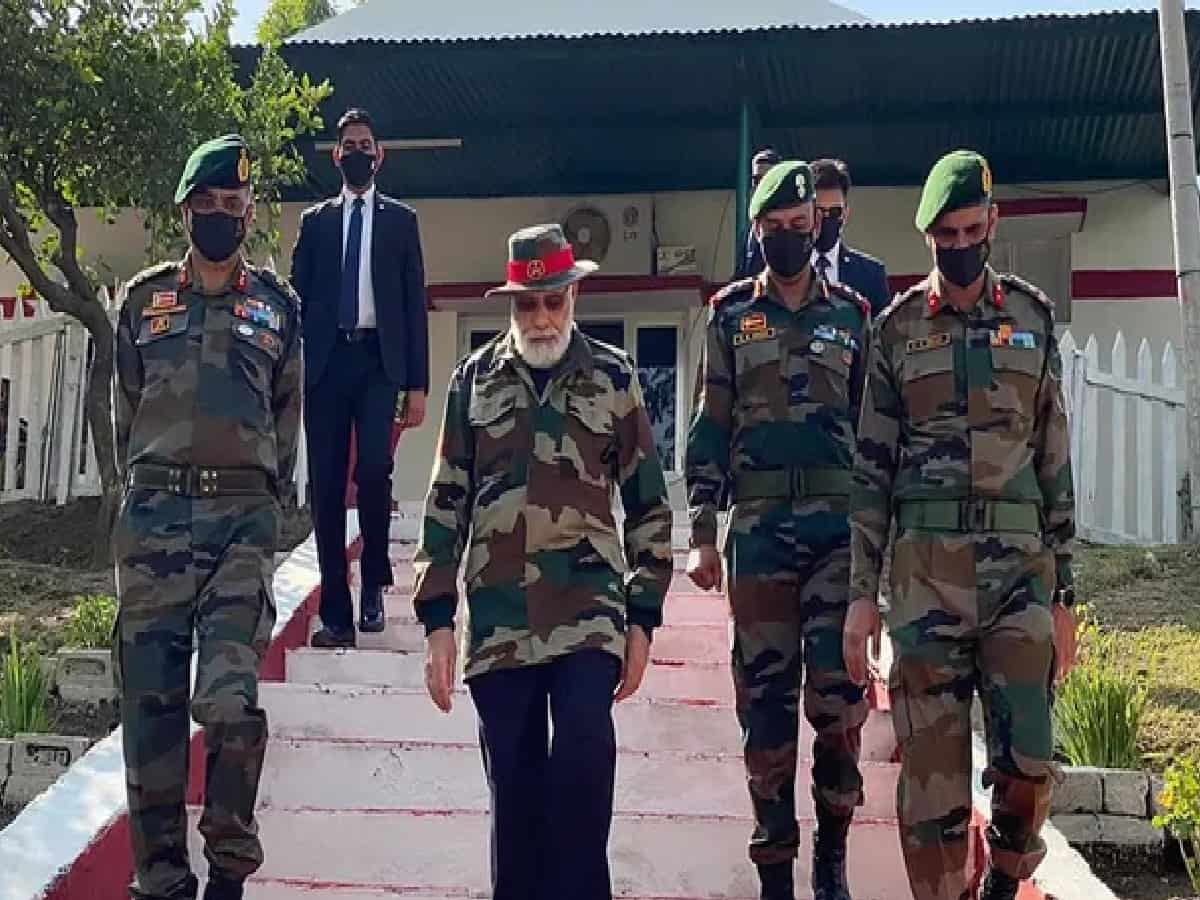
PM Modi May Celebrate Diwali with Soldiers at Poonch LoC
With the festival of lights approaching, anticipation is building across the forward outposts and border hamlets of the Pir Panjal ranges as Prime Minister Narendra Modi is expected to celebrate Diwali with armed forces personnel stationed along the Line of Control (LoC) in the frontier district of Poonch, Jammu and Kashmir. Although formal itineraries are typically safeguarded until the eleventh hour due to stringent operational security protocols, high-level administrative and security preparations across the Jammu division suggest that the Prime Minister may once again bring the nation’s festive greetings directly to the trenches and bunkers of the forward-most defense lines. For more than a decade, the Prime Minister has avoided ceremonial festivities in the national capital, choosing instead to share sweets, meals, and heartfelt conversations with jawans stationed in freezing heights, dense border jungles, and isolated desert outposts. A potential visit to Poonch would further cement this enduring tradition, turning a spotlight of national solidarity onto one of the country's most tactically sensitive and historically resilient border bastions.
A Decade-Long Tradition of Celebrating with the Armed Forces
The custom of the Prime Minister spending Diwali with frontline troops is not merely an occasional photo opportunity; it has evolved into a defining hallmark of Narendra Modi’s tenure since he first assumed national office in 2014. In October of that year, just months into his first term as Prime Minister, he made an unannounced journey to the icy heights of the Siachen Glacier—the world’s highest and coldest battlefield—to celebrate his inaugural Diwali as the country’s leader. Standing amid the freezing winds and stark white ridgelines at base camp, he conveyed a simple, enduring message to the troops: that as the nation celebrates in the warmth of their homes, the entire country stands in unreserved debt to the soldiers who guard the frontiers in sub-zero isolation.
In the years that followed, this symbolic gesture expanded across India’s varied military geography. In 2015, the Prime Minister marked the festival by visiting the border posts and war memorials of the 1965 India-Pakistan war in Punjab, paying tribute at Dograi, Barki, and Asal Uttar. In 2016, following the Indian Army’s surgical strikes across the Line of Control, he spent the day with Indo-Tibetan Border Police (ITBP) and Dogra Scouts at Sumdo in Himachal Pradesh, near the Sino-Indian border. In 2018, he reached the remote cantonment of Harsil in Uttarakhand, while in 2020 he traveled to the desert sands of Longewala in Rajasthan, reminding adversaries that Indian vigilance never wavers. At each stop, from the rugged heights of Kargil in 2022 to the high-altitude frontier of Lepcha in 2023, the underlying premise has remained consistent: treating the armed forces not merely as a state institution, but as the Prime Minister’s immediate family.
The Strategic Pulse of Poonch and the Pir Panjal Frontier
Choosing Poonch as the potential destination for Diwali carries immense tactical and geopolitical weight. Situated in the rugged south-western flank of the Pir Panjal mountain range, the district shares an expansive and geographically challenging Line of Control with Pakistan-occupied territories. Defined by steep forested slopes, narrow valleys, natural ravines, and unpredictable weather, the Poonch-Rajouri sector has long been an operational focal point for counter-infiltration and counter-insurgency operations. Indian Army units deployed along forward defensive lines here endure rugged living conditions, constantly maintaining 24-hour surveillance to neutralize infiltration bids and safeguard civilian populations settled just hundreds of yards behind the fence.
The district is also rich in military lore and communal harmony. From the historic battle of Poonch during the 1947–48 operations to the defensive campaigns of 1965 and 1971, local residents—including Gujjar, Bakerwal, and Pahari communities—have stood shoulder-to-shoulder with the Indian Armed Forces, actively assisting in defense and intelligence efforts. An in-person visit by the Prime Minister to this region sends an unequivocal signal of deterrence across the border while providing immediate recognition to the combined sacrifices of both the deployed military formations and the border-dwelling populace who endure cross-border shelling and security challenges.
Echoes Along the LoC: From Gurez and Rajouri to Nowshera
The Line of Control in Jammu and Kashmir holds a recurring place in the Prime Minister's festive itinerary. On October 19, 2017, he traveled to the remote Gurez Valley in North Kashmir’s Bandipora district, an area that remains buried under several feet of snow for half the year, to celebrate Diwali with soldiers of the 15 Corps. Two years later, on October 27, 2019—shortly after the constitutional reorganization of Jammu and Kashmir—the Prime Minister arrived at the headquarters of the Ace of Spades Division in Rajouri, as well as forward locations in the Bhimber Gali (BG) sector connecting Rajouri and Poonch.
The tradition returned to the Jammu frontier on November 4, 2021, when he spent Diwali morning with troops stationed in the Nowshera sector of Rajouri district. During that visit, he famously described the brigade and troops stationed in Nowshera as the "living shield of the nation," lauding their courage during historical counter-terror operations and cross-border responses. In each of these interactions, the visual language is unmistakable: the Prime Minister eschews formal podiums, sits side-by-side with young soldiers in camouflage jackets, feeds them laddoos by hand, and listens directly to their field experiences. Should Poonch be the selected venue, it will complete a profound circuit of border outreach across the Jammu division’s most sensitive frontier posts.
Beyond Symbolism: Modernizing Border Defense and Troop Welfare
While the festive visits carry deep personal and cultural resonance, they also serve as an administrative benchmark for evaluating troop welfare and defense preparedness. In his interactions with troops during previous celebrations, the Prime Minister has linked national security with indigenous self-reliance (Aatmanirbhar Bharat), highlighting the induction of modern surveillance drones, advanced communication suites, sniper rifles, bulletproof armor, and thermal night-vision gear. He has consistently underscored that a strong, self-reliant defense posture is the prerequisite for peace and sustained economic growth.
Furthermore, these border visits emphasize the central government's focus on accelerating border infrastructure development. Under the stewardship of the Border Roads Organisation (BRO), all-weather road corridors, high-altitude bridges, and strategic tunnels across the Pir Panjal and Jammu-Kashmir frontiers have significantly reduced logistical turnaround times for forward garrisons. Parallel to physical logistics, long-standing welfare issues—including the comprehensive implementation of the One Rank One Pension (OROP) scheme, expanded healthcare facilities under the Ex-Servicemen Contributory Health Scheme (ECHS), and the induction of women officers into permanent combat and command positions—are routinely highlighted during the Prime Minister's visits to reinforce the country’s institutional commitment to its defense personnel.
Border Residents and Jawans Await the Festival of Lights
Across the military camps and forward pickets overlooking the LoC in Poonch, the possibility of welcoming the Prime Minister has generated an atmosphere of quiet enthusiasm. Units deployed at forward operating bases typically mark Diwali by lighting earthen diyas atop sandbagged bunkers and organizing communal feasts (barakhana) far away from their families and hometowns. The physical presence of the head of government in their midst transforms an otherwise lonely vigil into an event celebrated with national pride.
For local border residents living in surrounding villages such as Mendhar, Mandi, and Haveli, the prospective visit reaffirms that the frontier districts remain at the forefront of national policy. As earthen lamps begin to flicker along the winding mountain ridgelines of the Pir Panjal, the potential celebration in Poonch stands as a moving testament to an unbroken decade of gratitude—a gesture that bridges the geographical distance between the bustling cities of mainland India and the resolute soldiers holding the line in the cold Himalayan winds.




