







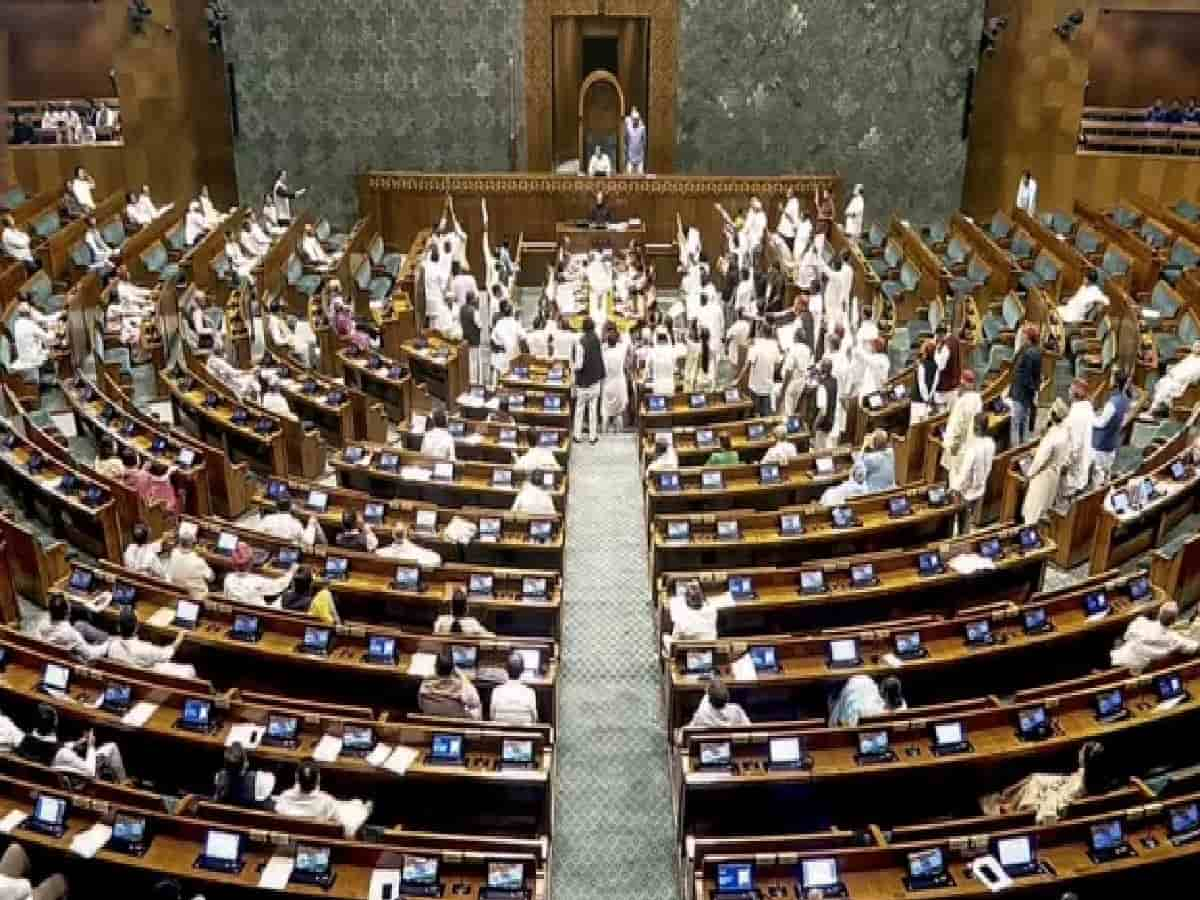
Parliament Standoff: Delimitation Bill Hits 4 Congress Demands
Parliamentary corridors in New Delhi are abuzz with high-stakes arithmetic and constitutional debate as the recess of Parliament's Monsoon Session stretches past 100 days on Monday, November 23, 2026—setting a new benchmark in Indian parliamentary history ahead of the session's next phase expected in the second week of December. According to political reports circulating across New Delhi on Monday morning, the prolonged adjournment—which goes well beyond the 87-day gap recorded in 2008—carries a clear procedural advantage alongside sharp political calculations: keeping the existing session unprorogued allows reconvening on less than a week's notice, whereas calling a fresh session after prorogation requires two weeks' notice. Behind closed doors, the Bharatiya Janata Party (BJP)-led National Democratic Alliance (NDA) has been weighing how to clear constitutional-amendment hurdles around delimitation and the 33% women's reservation framework linked to it, while the Congress, along with parties such as the DMK and Aam Aadmi Party (AAP), has pressed four core demands to decouple women's quotas from constituency redrawing. Speculation in Delhi over the past few weeks had pointed toward a possible three-day window around November 25–27, though government sources have indicated that the next stretch of the Monsoon Session is lined up for December with roughly a dozen sittings—with strategists planning early legislative moves before political attention intensifies around upcoming 2027 Assembly elections in Uttar Pradesh, Punjab, and other states. For citizens and voters across Unnao, Lucknow, Chennai, Mumbai, and Chandigarh, the standoff touches directly on future parliamentary representation and women's political participation.
Parliament Standoff Over Delimitation & Women's Reservation (Nov 2026): Demands, Draft & Numbers
To bring together the procedural rules behind the 100-day Monsoon Session recess, the four opposition conditions tied to the Nari Shakti Vandan Adhiniyam (2023), and the legislative math in the Lok Sabha, the tables below summarize the key elements shaping the debate:
Four Opposition Conditions vs. The Proposed Delimitation Draft
| Issue / Parameter | Opposition's Four Demands (Congress, DMK & AAP Alignment) | Proposed Government / Draft Approach Under Discussion |
| Total Lok Sabha Seats | Keep total Lok Sabha seats fixed at 543 with no expansion or reduction. | Draft framework envisions expanding Lok Sabha strength from 543 to 850 seats. |
| State-Wise Seat Share | Ensure each state retains its existing number of seats without losses to southern or slower-growing states. | Seat reallocation tied to census figures (such as the 2011 Census or a designated census benchmark). |
| 33% Women's Reservation | Immediately implement 33% women's reservation (182 seats out of 543) under the 2023 Act without waiting for delimitation. | Links one-third reservation (roughly 283 seats in an 850-seat House on rotation) to the delimitation cycle. |
| Freeze & Timeline | Freeze the arrangement for 25 years via constitutional amendment; convene an all-party meeting. | Aims to advance legislation promptly so boundary work does not collide with the 2029 general election calendar. |
Lok Sabha Arithmetic & Key Political Equations
| Bloc / Party | Reported Strength / Political Position | Impact on Constitutional Majority (~360 Votes) |
| BJP & Core NDA Allies | NDA baseline around 319 MPs (including 241 BJP MPs, alongside TDP 16, Shiv Sena 13, JD(U) 12, LJP-RV 5, and smaller allies). | Needs roughly 40+ additional votes in the Lok Sabha for a two-thirds constitutional majority. |
| Regional & Non-Aligned MPs | Includes 20 MPs aligned with the breakaway/NCPI group, 22 DMK MPs, 8 NCP (Sharadchandra Pawar) MPs (with Supriya Sule seeking a uniform 50% state increase without regional bias), and ~3 dozen unaligned MPs. | Shifting stances among regional parties and unaligned lawmakers remain decisive. |
| Congress & Allies | Insist on constitutional safeguards, immediate women's reservation on 543 seats, and an all-party consultation. | Accuse the government of gerrymandering; government accuses opposition of delaying women's quotas. |
Why Procedural Rules and the 100-Day Break Matter in New Delhi
In Indian parliamentary practice, adjournment sine die leaves a session alive until the President formally prorogues it, giving the executive flexibility to recall lawmakers on shorter notice than a freshly summoned session. As the Monsoon Session break crosses 100 days on November 23, 2026, both sides are sharpening their narratives—balancing constitutional arguments over federal seat shares and women's representation against looming 2027 Assembly elections in states including Uttar Pradesh and Punjab.
What to Watch Ahead of the December Sitting and 2027 State Polls
Whether the government moves immediately in the first three days of the December sitting, agrees to an all-party meeting, or seeks middle ground on women's reservation and delimitation timelines will determine how quickly the logjam breaks. For observers in Unnao, Lucknow, and across India, the coming weeks will reveal whether consensus emerges or partisan gridlock deepens on the road to 2027 and 2029.




