







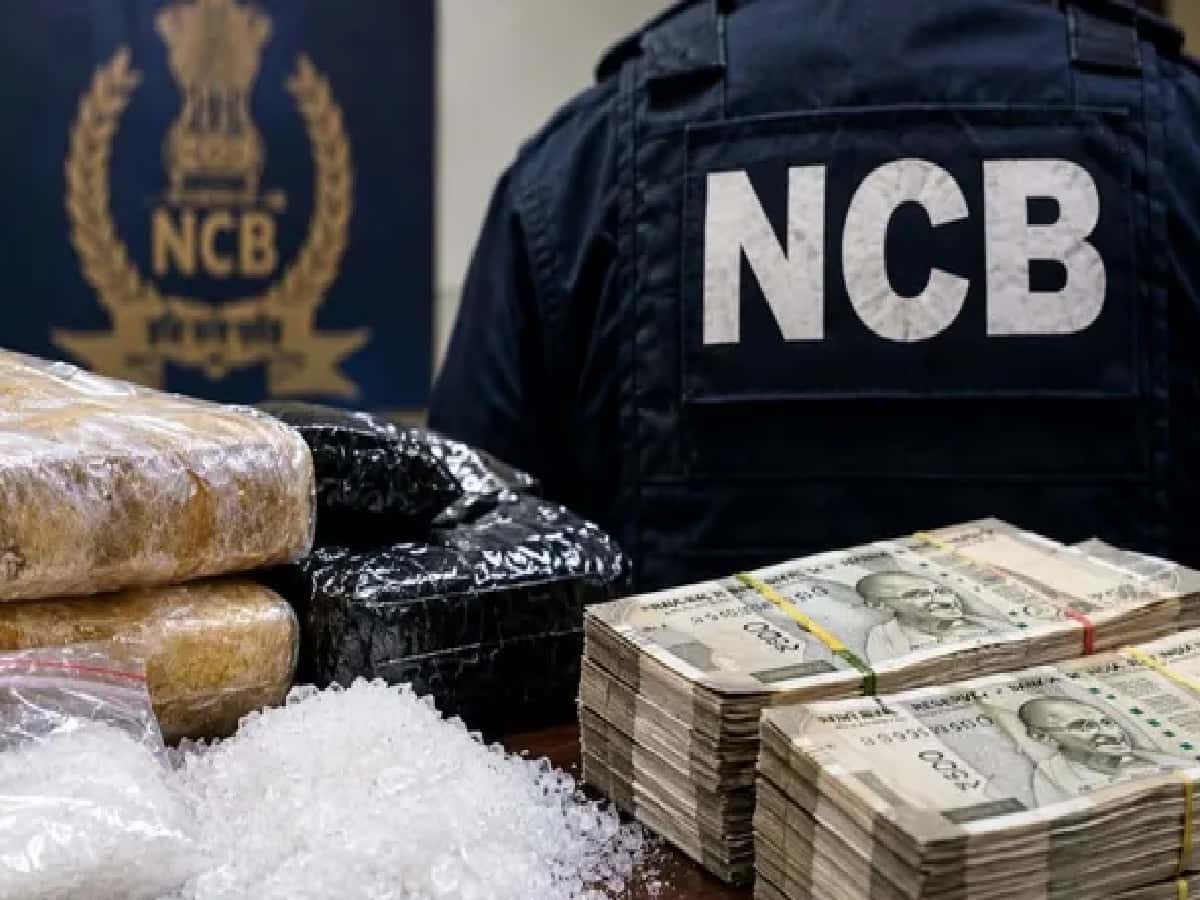
Operation Trident: NCB Raids 38 Hubs, Busts ₹100-Cr Narco-Hawala Ring
Striking a decisive blow against transnational narcotics syndicates operating along India’s northeastern frontier, the Narcotics Control Bureau (NCB) executed a massive multi-agency offensive code-named 'Operation Trident' targeting the notorious "Death Triangle Corridor" spanning the borders of India, Myanmar, and Bangladesh. Mobilizing 38 specialized inter-agency strike teams on the morning of October 23, federal authorities and state police commands carried out coordinated raids across 38 high-value hubs throughout Mizoram, Manipur, and Assam, systematically dismantling an entrenched cross-border narco-trafficking infrastructure. Moving far beyond individual contraband seizures to dismantle the cartel's complete financial architecture, the operation uncovered a ₹100 crore illicit hawala money-laundering network, froze 1,424 connected bank accounts, seized ₹17.82 crore in unexplained funds, and arrested 18 key syndicate operatives. Commending the joint anti-narcotics task force comprising central agencies and state police forces, Union Home and Cooperation Minister Amit Shah reiterated the government’s unyielding resolve to eradicate every organized drug network and achieve a drug-free India by December 31, 2029.
Strategic Strike Across the Northeast: Raids Span Aizawl, Champhai, and Zokhathar Border Hubs
The tri-state crackdown was launched following weeks of intensive electronic surveillance, financial tracking, and high-level inter-agency coordination conducted in close tandem with the Enforcement Directorate (ED) and local state police departments. While the international narco-syndicate operated its core logistical machinery out of Mizoram, its supply pipelines extended deep into transit corridors across Manipur, Assam, and neighboring Bangladesh. Federal search teams targeted key strategic locations including Aizawl, the border district of Champhai, and the vital commercial border trading town of Zokhathar along the India-Myanmar frontier. Simultaneously, tactical raids were executed along critical movement corridors in Churachandpur, Manipur, and throughout the Cachar administrative division of Assam, successfully severing the primary regional conduits utilized by traffickers to route foreign-origin narcotics into mainland domestic markets.
Syndicate Net Tightens: Key Operatives Nabbed in Delhi and Border Belts as Financial Base Collapses
A critical operational breakthrough in the multi-state manhunt occurred outside the Northeast, where syndicate operative Thangsintuang, alias Chintuang, alias Tluanga, was tracked down and arrested in Delhi following extensive multi-state surveillance. While the syndicate's Myanmar-based mastermind faces 10 criminal narcotics charges in Mizoram and remains at large across the international boundary, enforcement teams scored a major victory by capturing his close lieutenant, Vungkhanthana, who actively directed cross-border delivery schedules and transit handling from the Myanmar side. The decisive action builds on continuous pressure applied against the cartel's commercial ecosystem, including the previous arrest of hawala handler Lalrampari and the apprehension of regional transit coordinator Abu Saleh, alias Saifuddin, from Assam's Cachar district. By suffocating both physical transit routes and the ₹100 crore hawala laundering network fueling transactions across the Death Triangle, federal agencies have delivered a crippling blow to one of the region’s most dangerous narco-financing corridors.




