







Congress Shields Kharge Over Controversial 'Modi's Father' Remark in Patna
Mounting a fierce institutional defense, the Congress party clarified that Mallikarjun Kharge's "Modi's father will also go" remark was an ideological retort aimed at the RSS following audience heckling, as Bhupesh Baghel defended the phrasing as standard political parlance.
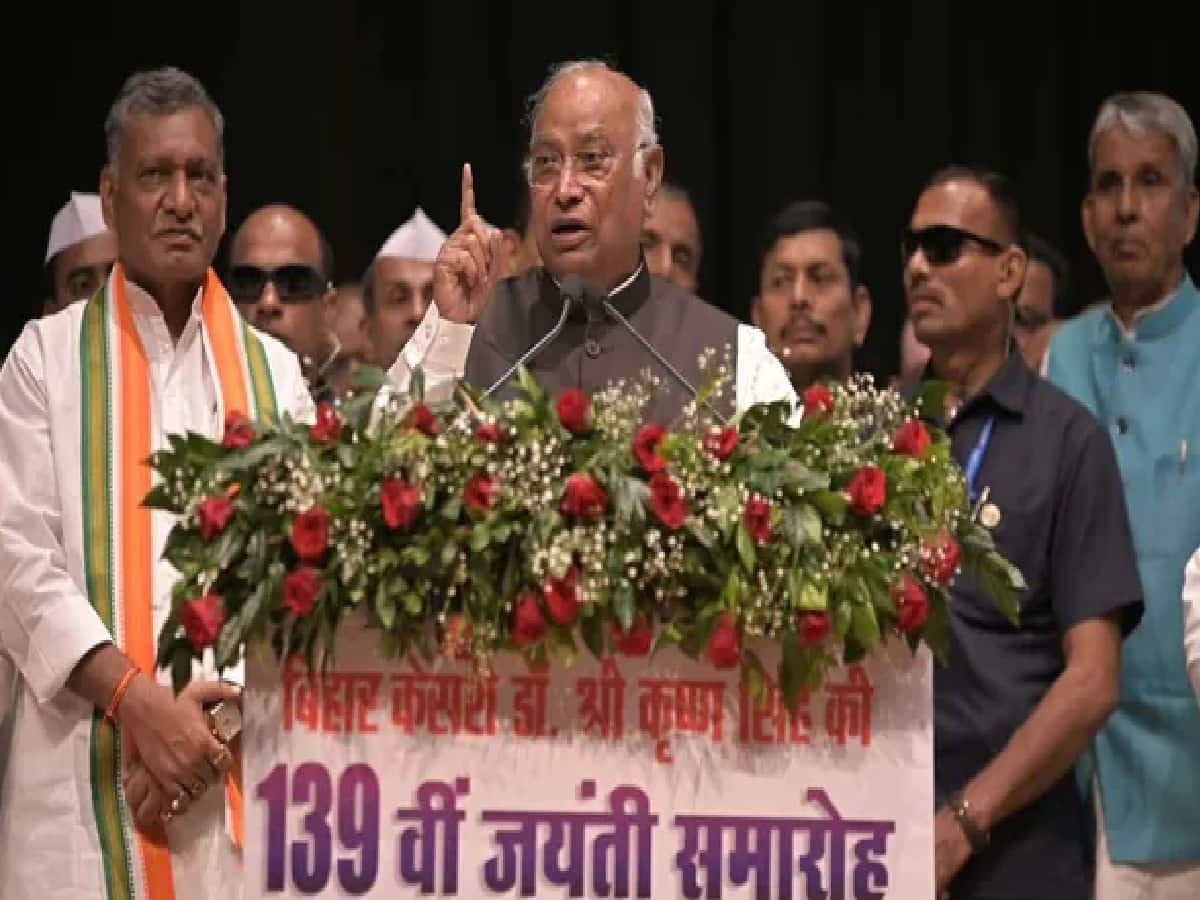
Amid escalating political backlash from the ruling Bharatiya Janata Party over Congress National President Mallikarjun Kharge’s remarks in Patna, the Congress leadership on Sunday launched an aggressive institutional defense, clarifying that the reference to Prime Minister Narendra Modi's "father" was directed at his ideological mentor, the Rashtriya Swayamsevak Sangh (RSS), rather than any personal or familial entity. Addressing media queries regarding the contentious exchange where Kharge declared that "even Modi's father will go," Congress media and publicity department chairman Pawan Khera insisted that the party chief’s remarks were distorted out of context by the BJP after being triggered by an intentional provocation from an audience heckler. The clarification comes as the verbal showdown between both major national parties intensifies, triggering nationwide political protests and sharp debates over campaign decorum and political rhetoric.
From Patna Heckling to Ideological Retort: Pawan Khera Explains Context of Kharge's Speech
Detailing the sequence of events during the commemorative event in Bihar, Pawan Khera asserted that the confrontation erupted when an individual in the auditorium attempted to disrupt the Congress chief by shouting: "Even if your father comes, Modi will not go." According to Khera, Kharge reacted instinctively to this specific challenge by countering that neither the Prime Minister nor his ideological parent—the RSS—could escape democratic accountability and electoral eviction by the people. Khera accused the BJP of engineering daily smear campaigns to divert public attention away from substantive governance issues, pointing to previous instances where political opponents conducted controversial "purification" rituals following opposition public addresses. By framing the phrase as a direct challenge to the Sangh Parivar’s institutional dominance over the central government, the Congress sought to dismantle allegations of personal animus while reframing the dispute as a foundational ideological battle between secular democratic institutions and right-wing political influence.
'Standard Colloquial Parlance': Bhupesh Baghel Backs Kharge, Targets PM Modi's Campaign Rhetoric
Bolstering the party's defensive posture, former Chhattisgarh Chief Minister and senior Congress leader Bhupesh Baghel dismissed allegations of obscenity or disrespect, arguing that the phrasing used by Kharge was merely a common regional idiom deployed across the country to denote inevitability in political power shifts. Baghel asserted that colloquial expressions declaring that an authority figure, along with their mentors or predecessors, will eventually be ousted from power are regular features of grassroots political discourse and carry no inherent vulgarity. Turning the offensive back on the ruling dispensation, Baghel claimed that no leader in modern Indian political history had degraded public discourse as routinely as Prime Minister Modi himself, alleging that the ruling party has persistently leveled derogatory personal attacks against opposition figures during electoral campaigns. As both political camps exchange sharp allegations over ethical standards and campaigning boundaries, the Patna rally confrontation has emerged as a key flashpoint in the ongoing narrative war between the Congress and the BJP.




