







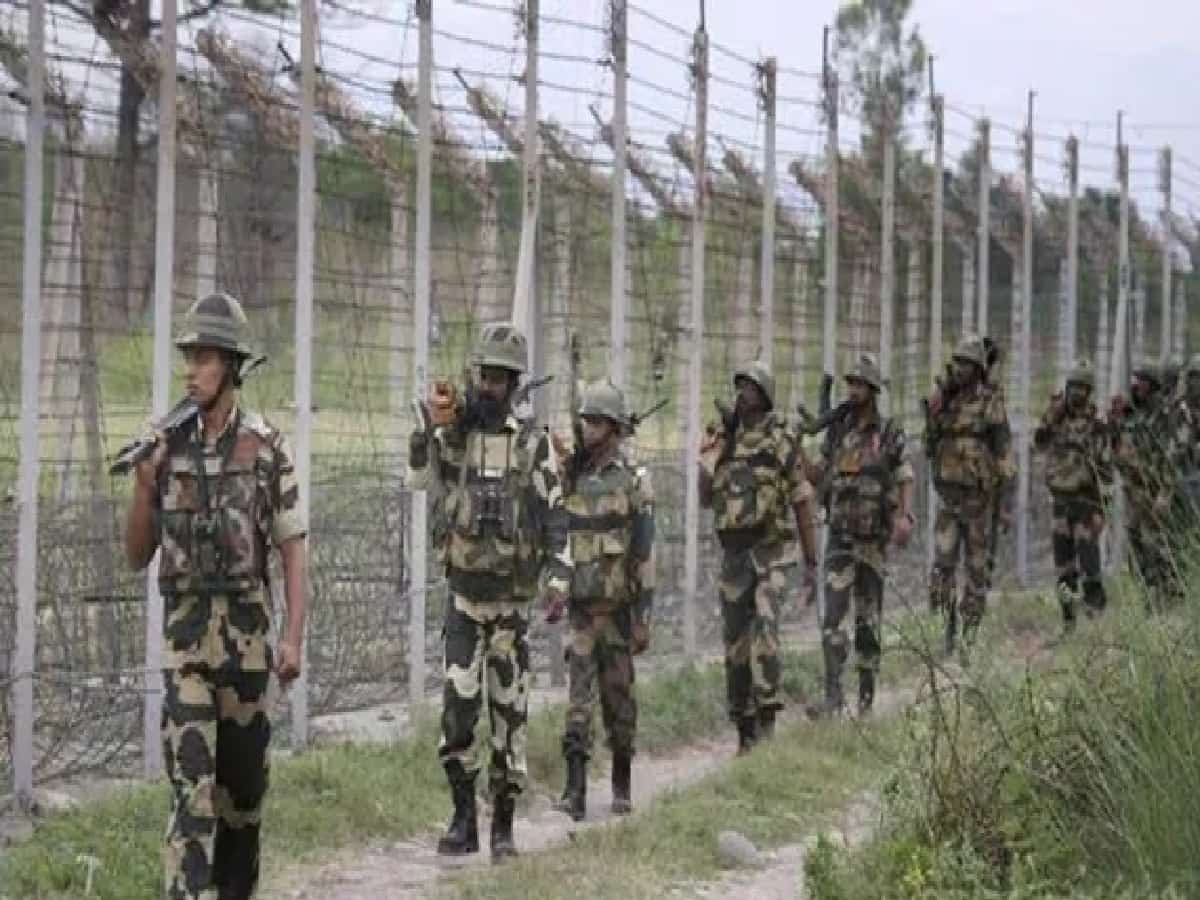
New ISI Chief Overhauls Infiltration: Compact BAT Strike Squads
Following a major leadership reshuffle in Pakistan’s military establishment roughly a month ago, newly appointed Inter-Services Intelligence (ISI) Director-General Major General Muhammad Shamrez Khan has rolled out an aggressive operational blueprint designed to revive stalling infiltration pipelines along the Line of Control (LoC). With Indian security forces maintaining an impenetrable multi-tier counter-infiltration grid that has repeatedly thwarted intrusion attempts from established launchpads in Pakistan-occupied Kashmir (PoK), Islamabad's security establishment is banking on Khan to radically overhaul its tactical playbook. According to disclosures from senior Indian Intelligence Bureau (IB) officials, the new spymaster is executing a patient yet determined redeployment strategy that pairs Pakistani military regulars directly with cross-border terror groups, aiming to force large groups of heavily armed terrorists into Jammu and Kashmir to sustain long-term subversive violence across the valley.
Tactical Shift on the LoC: Downsizing BAT Squads for Stealth Strikes
The cornerstone of the ISI’s revised doctrine lies in fundamentally restructuring the lethal Border Action Teams (BAT)—specialized assault units notorious for orchestrating brutal cross-border ambushes against Indian forward positions. Unlike conventional BAT configurations that previously mobilized unwieldy groups of seven to ten fighters, Khan's redesigned strike formations are downsized into nimble, high-mobility squads comprising strictly four to five operatives. Typically composed of two elite Pakistani Special Services Group (SSG) commandos operating in tandem with two or three seasoned terrorists, these compact units are engineered to exploit broken Himalayan terrain with minimal acoustic and thermal signatures. Indian intelligence assessments indicate that the primary objective of these miniaturized BAT modules is to stage simultaneous distraction strikes against Indian Army observation outposts, thereby drawing defensive fire and creating tactical blind spots to escort heavily armed infiltration groups across the fence.
Artillery Veteran to Spy Chief: Shamrez Khan’s Operational Playbook and Terror Nexus
Commissioned originally into the 40 Field Regiment of Artillery, Major General Muhammad Shamrez Khan brings significant on-ground tactical deployment expertise to the spy agency despite having limited prior tenure within traditional strategic intelligence desks. Khan previously commanded the paramilitary Sindh Rangers and, following his elevation to two-star general rank in 2023, took command of the Pakistan Army's 17th Infantry Division headquartered in Kharian—a formation historically tasked with planning and executing specialized BAT operations along sensitive frontier sectors. Since assuming helm of the ISI, Khan has engaged in multiple high-level operational meetings with Pakistan Army Chief General Asim Munir to synchronize military-intelligence maneuvers. Concurrently, Indian intelligence monitoring confirms that the ISI chief has convened direct strategy sessions with apex operational commanders of frontline terrorist cartels, including Lashkar-e-Taiba (LeT), Jaish-e-Mohammed (JeM), and Hizbul Mujahideen (HM), working systematically to clear launchpad backlogs and engineer fresh escalations across the Jammu and Kashmir theater.




