







Jensen Huang Showcases 10-Inch AI 'MicroDuck' Robots That Sit, Stand, on Command
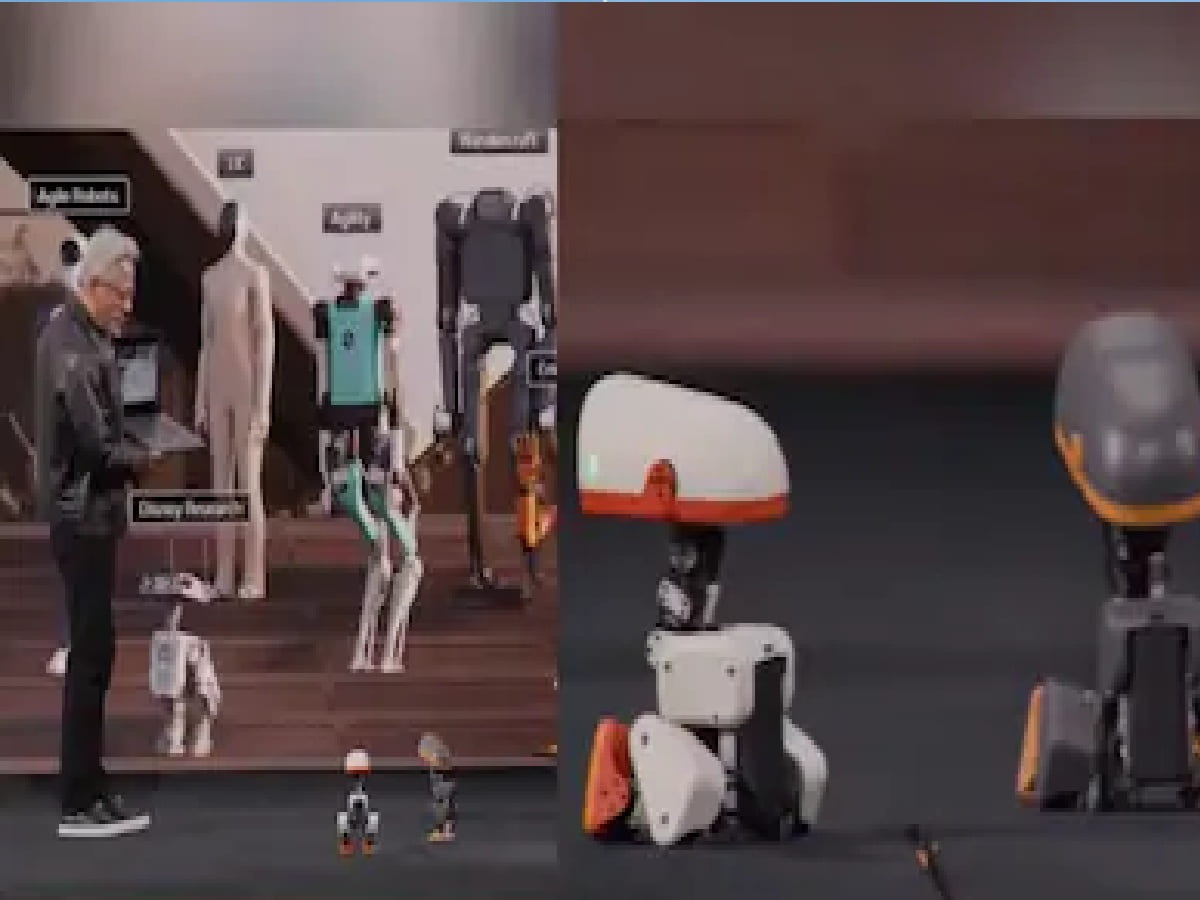
In an electrifying demonstration that bridged advanced simulation compute with embodied artificial intelligence, Nvidia CEO Jensen Huang unveiled a squad of autonomous, miniature humanoid robots during his keynote address at the GTC Berlin conference on the evening of October 21, 2026. The high-profile technical session took an engaging turn when four pint-sized bipedal machines, dubbed "MicroDuck," strolled onto the center stage entirely unassisted and formed a neat reception line directly in front of Huang. Demonstrating instantaneous physical responsiveness and spatial awareness, the tiny robots responded flawlessly to Huang’s spoken instructions and gestures—sitting down, rising, and lying down on prompt—transforming complex computational robotics into a crowd-pleasing spectacle of next-generation physical AI.
Stage Antics in Berlin: Playful MicroDucks Obey Real-Time Gestures
The presentation reached an entertaining peak when Huang directed the robotic lineup to sit and subsequently stand, instructions that the machines executed in synchronized harmony. When Huang playfully remarked that it was time to sleep, three of the robots instantly dropped flat onto the stage deck, while the fourth took a few comical, hesitating steps forward before lying down beside its peers, prompting Huang to laugh, applaud their lifelike behavior, and beckon them back to their feet. Engineered as an open-source hardware and software platform by global AI repository Hugging Face in partnership with France’s Pollen Robotics, each MicroDuck robot stands approximately 10 inches tall and weighs under two pounds. The platform was created specifically to democratize physical AI education for university students, independent researchers, and software engineers, offering a fully customizable and accessible architecture to program novel motor skills, test mechanical tweaks, and distribute robotic code globally.
Sim-to-Real Innovation: How Isaac Sim and Cloud Supercomputers Train Digital Twins
Beneath the miniature exterior lies an advanced software pipeline powered by Nvidia's robotics stack, including Isaac Lab, Isaac Sim, and the high-fidelity Newton physics engine. Huang walked the audience through the underlying architecture, revealing that the MicroDuck learned locomotion and balance through reinforcement learning orchestrated by an autonomous AI agent. Instead of undergoing tedious manual tuning, the robot's "digital twin" was first subjected to thousands of rigorous virtual physics simulations within Isaac Sim running on Nvidia cloud supercomputing clusters. After mastering balance and movement in cyberspace, the neural control policies were verified on an RTX Spark workstation laptop before being deployed directly to the physical robot's onboard micro-actuators without requiring additional real-world retraining. Highlighting the milestone in zero-shot sim-to-real transfer, Huang pointed out that these tiny machines embody the future of physical computing—conceived on workstation chips, perfected across hyperscale cloud simulations, and seamlessly brought to life in the physical realm.




