







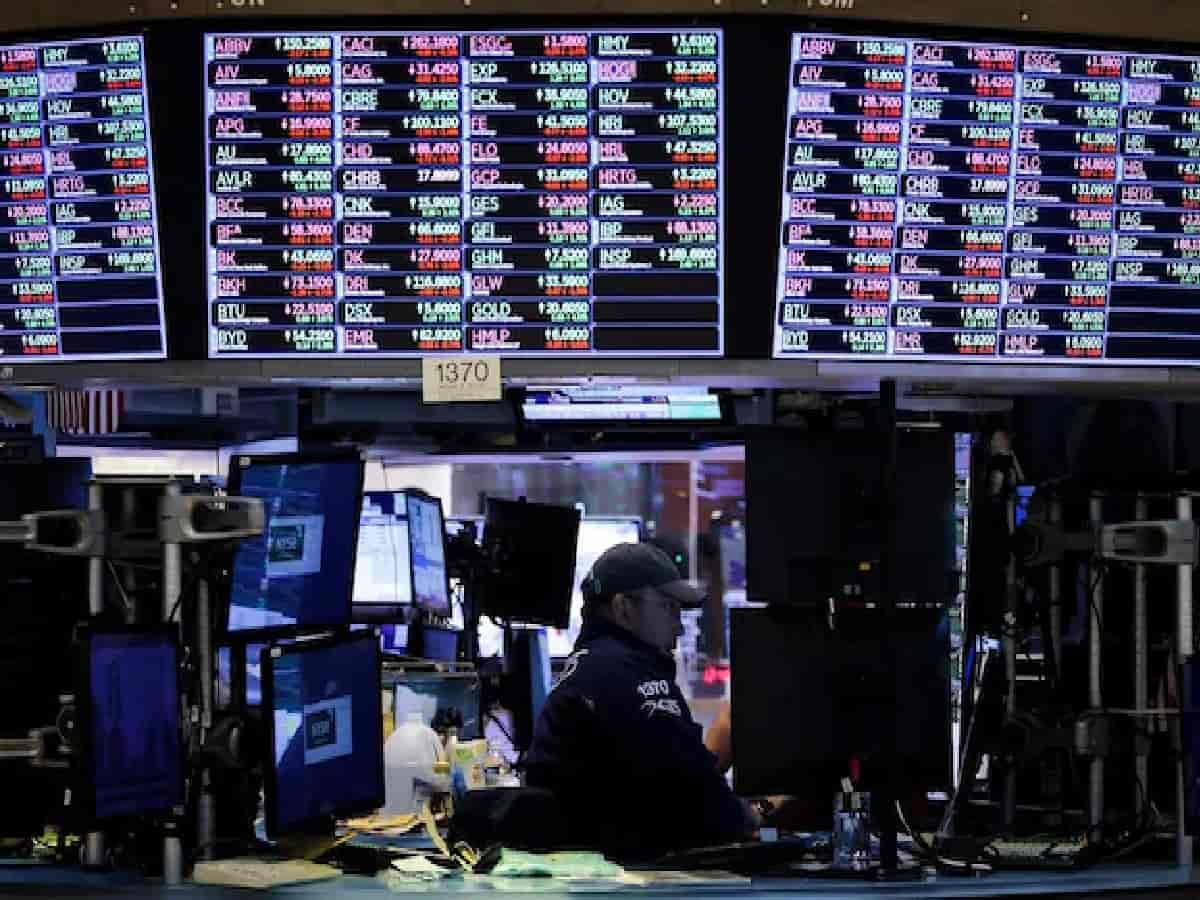
Dow Drops 652 Points as AI Jitters Spill Across Sectors and Oil Surges Past $116
Global financial markets closed the trading week under heavy selling pressure as an initial pullback in artificial intelligence and semiconductor heavyweights broadened into a wider market contagion across Wall Street. The Dow Jones Industrial Average dropped 652.82 points, or 1.23 percent, to finish Friday at 52,215.16, while the benchmark S&P 500 retreated 0.52 percent to 7,623.68 and the tech-heavy Nasdaq Composite slipped 0.21 percent to 25,955.34. Although tech shares experienced a minor late-session rebound, market sentiment was battered by a dramatic surge in energy commodities—with Brent crude breaking above $116 and WTI eclipsing $103 per barrel—sparking acute fears of resurgent inflation and pushing risk-averse investors out of equities ahead of a pivotal earnings week.
Defensive Havens Crack: American Express Layoffs and Broad-Based Sector Retreat
In a worrying development for portfolio managers, traditional defensive sectors that typically shield investors during market downturns failed to provide refuge on Friday. Consumer staples led the retreat with a drop of nearly 2 percent, while healthcare, industrials, financials, consumer discretionary, and communication services all suffered losses exceeding 1 percent, alongside declines of 0.5 to 1 percent across materials and utilities. Financial heavyweight American Express dropped over 3 percent after announcing a global workforce reduction of roughly 5 percent as part of an institutional restructuring to adapt to the artificial intelligence era, adding substantial downward drag to the Dow alongside drops in Caterpillar (-2%) and Goldman Sachs (-1%). Conversely, the energy sector rallied 2.5 percent tracking the crude spike, while select semiconductor names showed resilience, with Micron Technology gaining nearly 3 percent and Advanced Micro Devices (AMD) climbing roughly 2 percent as investors parsed corporate earnings strength against massive capital expenditure demands.
Yields Hover Near 5% as Middle East Strike Fears Propel Oil to Multi-Month Highs
Compounding equity headwinds, fixed-income markets witnessed renewed turbulence as the benchmark 10-year US Treasury yield surged more than 4 basis points to touch 4.999 percent, hovering just below the psychologically critical 5 percent mark after temporarily dipping beneath it earlier in the week. Bond investors remain increasingly anxious over the unprecedented corporate debt issuance required to construct hyperscale AI data centers and power infrastructure. Concurrently, energy markets experienced aggressive speculative buying, with West Texas Intermediate (WTI) crude surging 3.8 percent to settle at $103.27 per barrel and global benchmark Brent jumping 3.1 percent to $116.72 per barrel—its highest close since April. The sudden crude spike was driven by intelligence reports of impending military strikes by the United States and Israel against Iran, raising the specter of a broader Middle Eastern conflict that threatens key shipping chokepoints and casts doubt over future Federal Reserve interest rate cuts. While the Dow managed to salvage a 0.4 percent weekly gain, the S&P 500 fell 0.5 percent and the Nasdaq dropped 0.7 percent across the five-day stretch, setting up a high-stakes open for global markets next week.




