







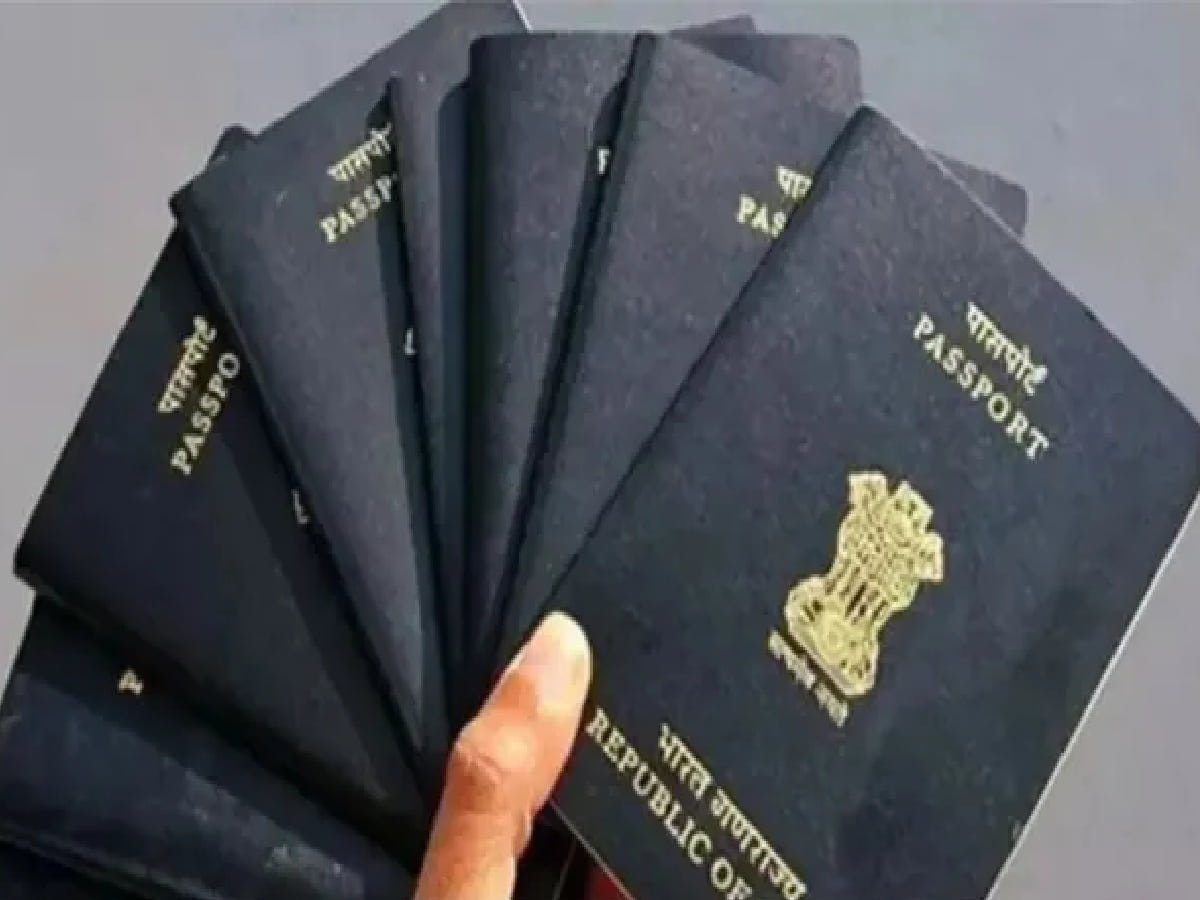
MP Fake Passport Bust: 31 Bangladeshi Passports Revoked
In a major national security crackdown against cross-border identity fraud, the Regional Passport Office, acting on a comprehensive investigation report submitted by the Madhya Pradesh Police’s Special Task Force (STF), has officially revoked 31 of the 70 Indian passports illegally secured by Bangladeshi nationals. The investigation uncovered a meticulously coordinated racket in which foreign infiltrators forged Indian identity credentials, assumed false names, and exploited local addresses across Madhya Pradesh to acquire genuine Indian travel documents. The epicenter of the local operation was traced to the Gwalior district, where 17 of the revoked passports were fraudulently processed using residential addresses in Simaria village, situated within Dabra tehsil. As the administrative process to cancel the remaining 39 passports accelerates, law enforcement agencies face a challenging intercontinental manhunt: 66 accused individuals linked to the syndicate remain absconding, with investigative trails indicating that the majority have already fled the country on these fraudulent passports and are currently hiding across Southeast Asia and East Asia.
The Dabra Connection: How 17 Passports Originated from Simaria Village
The discovery that 17 fraudulent passports were issued under the jurisdiction of Dabra in Gwalior district has sent shockwaves through regional administrative and intelligence corridors. Simaria, an otherwise unassuming rural village located along the agrarian belts of Dabra, was systematically exploited by the syndicate as an address mill to establish fictitious local residency. Infiltrators utilized counterfeit rent agreements, forged municipal documentation, and fabricated local recommendations to clear initial verification stages.
What makes the Gwalior angle particularly alarming to central counter-intelligence agencies is the geographic proximity of Dabra to critical national defense installations. Simaria and the surrounding Dabra tehsil sit merely eight to nine kilometers from the Border Security Force (BSF) Academy at Tekanpur, one of India’s premier paramilitary training and counter-insurgency institutes. In past decades, the Gwalior-Chambal belt has witnessed occasional counter-espionage probes involving suspected foreign agents operating under deep cover. The fact that dozens of undocumented foreign nationals lived, established paper trails, and obtained legitimate Indian passports right next to strategic defense nodes without raising immediate local alarms has prompted the STF and central intelligence bureaus to review local police verification files to determine whether the lapse was an outcome of systemic negligence or local official complicity.
The Mastermind and Modus Operandi: Riyal Chowdhury's Pan-India Network
At the heart of the fraudulent network was Riyal Chowdhury, alias Mityananda Bhikshu (also known in monastic circles as Bhante Metanand). A Bangladeshi national who originally crossed into India nearly a decade ago, Chowdhury initially settled in Assam, securing basic Indian documents before expanding his base into central India in 2021. Operating under the pious guise of a Buddhist monk, Chowdhury established a network across Buddhist monasteries and ashrams located in Bhopal, Dabra, Amla in Betul district, Chhindwara, Pandhurna, and Jabalpur. These spiritual sanctuaries were converted into operational hideouts and addresses where incoming Bangladeshi infiltrators were housed, trained in local customs, and systematically provided with fabricated paperwork.
The racket's assembly line for forged identities was thorough. The STF's forensic analysis of seized laptops revealed sophisticated templates used to manufacture fake Aadhaar cards, forged Voter Electoral Photo Identity Cards (EPIC), counterfeit Permanent Account Number (PAN) cards, fake Class 10 school marksheets, and fraudulent birth and residence certificates. Armed with these documents, the syndicate submitted online passport applications. Chowdhury, along with his key Bangladeshi associates Biplav Adhikari, Priyan Roy, and Joy Chowdhury, has already been arrested. The syndicate also relied heavily on local facilitators, leading to the arrest of Gaya Prasad Gautam and Gulabrai Gautam—who repeatedly stood as false witnesses on dozens of applications—as well as Naseem Akhtar, an authorized agent based at the Bhopal Passport Seva Kendra who assisted in bypassing administrative flags.
Global Fugitives: 66 Absconders Tracked Across Southeast Asia
While the masterminds and local facilitators are currently in custody, the STF is actively pursuing 66 absconding individuals who successfully leveraged these counterfeit documents to cross international borders. During sustained custodial interrogation, the arrested operatives admitted that once the Indian passports were issued and delivered, the recipients were quickly moved out of Madhya Pradesh. The genuine Indian passports allowed these individuals to secure international tourist, transit, and employment visas that would have been far more difficult or impossible to attain using their original documentation.
According to technical surveillance and intelligence inputs, the absconding individuals are believed to have dispersed across multiple transit hubs and overseas locations, including Indonesia, Malaysia, Myanmar, and China. Investigators note that several of these nations serve as primary corridors for unregulated transnational labor markets, illegal logistics, and international economic offenses. With the formal revocation of the initial batch of 31 passports, Indian authorities have updated the national and international immigration databases. As soon as a revoked passport number is scanned at any border checkpoint, airport electronic gate, or sea terminal, the immigration system automatically triggers an alert, enabling border officials to detain the individual and initiate extradition or deportation protocols.
Inter-State Nexus: STF Probes Links to Nagpur Fake Passport Racket
The investigation into the Gwalior-Dabra operation has expanded beyond Madhya Pradesh, uncovering potential structural intersections with an interstate syndicate previously busted in Nagpur, Maharashtra. Law enforcement agencies in Nagpur had earlier exposed a similar network where foreign nationals were provided forged residency documents and local voter cards to procure Indian passports. Recognizing the identical modus operandi—specifically the reuse of localized addresses, fraudulent witnessing, and compromised middle agents—the Madhya Pradesh STF has formally contacted the Maharashtra Police and Nagpur Crime Branch to cross-reference databases, phone logs, and financial conduits.
Investigators are also following a complex financial trail involving more than ten commercial bank accounts linked to the syndicate, several of which were opened under the names of Buddhist monks to function as mule accounts for laundering fees charged to infiltrators. The STF is examining whether the Nagpur and Madhya Pradesh networks shared common technical providers, document forgers, or overseas handlers who directed the placement of infiltrators across different states.
Reforming the System: STF Pushes for Stricter Verification Protocols
The scale of the passport fraud in Dabra, Bhopal, and Betul has prompted a comprehensive re-evaluation of ground-level police verification protocols across Madhya Pradesh. Addressing the operational status of the case, STF Deputy Inspector General (DIG) Rahul Lodha confirmed that the remaining 39 passports identified in the initial investigation are under active cancellation proceedings. Lodha emphasized that revoking these documents is essential not only for domestic accountability, but also to prevent these individuals from moving freely across international jurisdictions under false Indian identities.
The state government is now working in coordination with the Ministry of External Affairs (MEA) and the Ministry of Home Affairs (MHA) to institute biometric safeguards and digital field-verification mandates for all passport applications originating from shared religious, institutional, or rural addresses. The Dabra case serves as a critical case study in the vulnerability of documentation pipelines, illustrating how compromised local oversight can impact national security. As the STF coordinates with central agencies to track the global money trail and bring the 66 absconding fugitives to justice, the revocation of these 31 passports marks a significant first step in dismantling a sophisticated cross-border criminal enterprise.




