







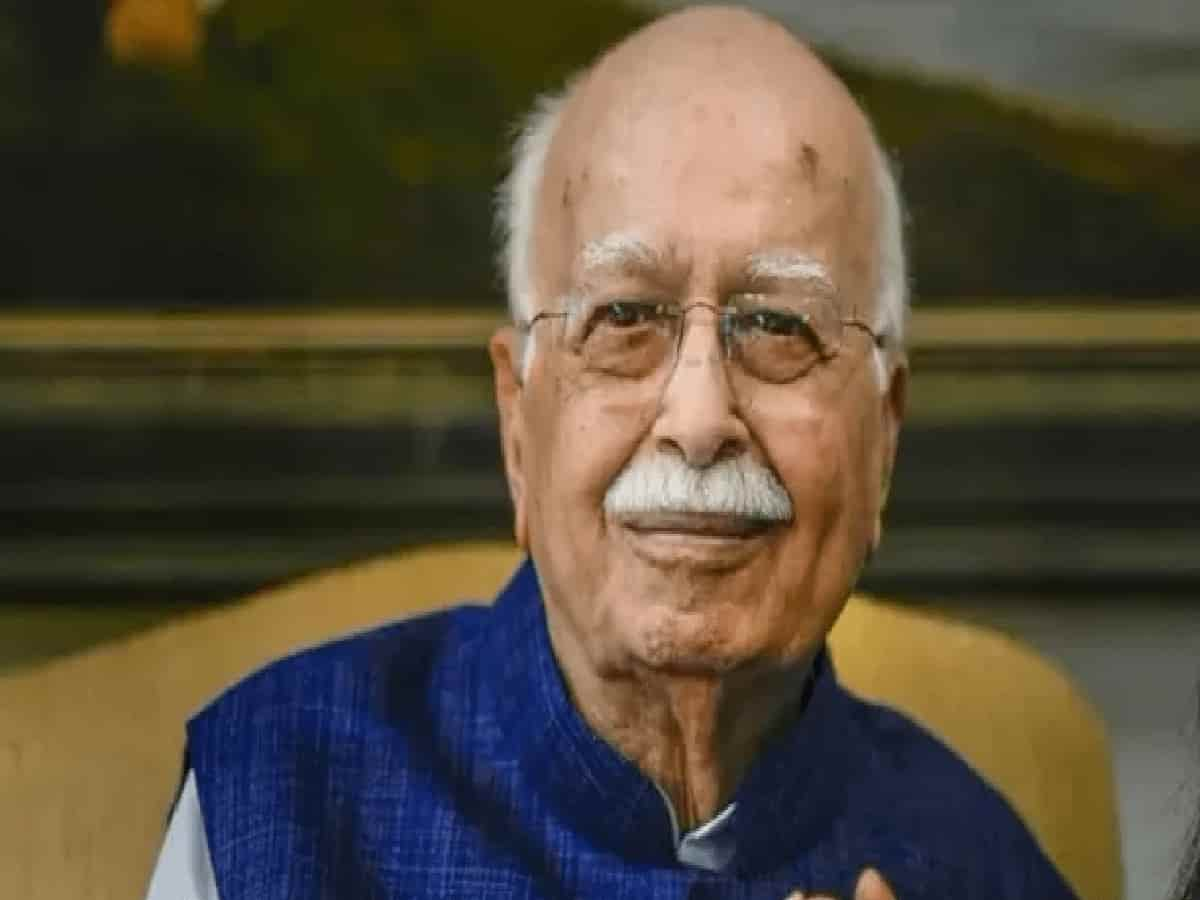
LK Advani Turns 99: PM Modi, Leaders Greet Veteran in 100th Year
In a landmark moment that bridges the dawn of modern India's independence with the contemporary political landscape, veteran statesman, former Deputy Prime Minister, and Bharat Ratna awardee Lal Krishna Advani celebrated his 99th birthday on Sunday, November 8, 2026, formally stepping into the hundredth year of his life. The momentous occasion sparked an outpouring of warm greetings, deep reverence, and reflective tributes from across the national political spectrum, led by Prime Minister Narendra Modi, Union Defence Minister Rajnath Singh, Union Road Transport and Highways Minister Nitin Gadkari, and senior members of the Union Cabinet. From party workers in remote constituencies to senior administrators in Lutyens' Delhi, the national leadership saluted Advani's decades of public service, underscoring his decisive role in nurturing democratic institutions, articulating an unwavering ideology, and transforming the Bharatiya Janata Party from a fringe two-seat presence in Parliament into a defining force in contemporary Indian politics.
A Century of Dedication: LK Advani Enters His 100th Year
Born on November 8, 1927, in the historic city of Karachi in undivided India, Advani’s personal journey mirrors the dramatic milestones of modern Indian history. Having witnessed the trauma of Partition firsthand as a young man, he rebuilt his life through steadfast commitment to public work, joining the Rashtriya Swayamsevak Sangh (RSS) as a pracharak in Rajasthan before transitioning into parliamentary politics through the Bharatiya Jana Sangh. As he enters his centennial milestone, party headquarters across state capitals organized celebratory prayer gatherings, special hawan rituals, and public retrospectives honoring the patriarch whose political career has spanned more than seven decades.
Scholars and political observers point to Advani's milestone as a rare living chronicle of India's political evolution. His parliamentary career, which began in the Rajya Sabha in 1970, saw him serve as Union Minister for Information and Broadcasting during the post-Emergency Morarji Desai government, Leader of the Opposition in both Houses of Parliament, Union Home Minister, and Deputy Prime Minister under Atal Bihari Vajpayee. His centennial threshold represents not merely the celebration of longevity, but the honoring of an institutional memory that shaped the country's multi-party democracy.
PM Narendra Modi Salutes Ideological Clarity and Intellectual Rigour
In a detailed tribute penned for the milestone, Prime Minister Narendra Modi described November 8 as a historic day for the country, praising Advani's transformative influence on Indian public life. The Prime Minister highlighted two defining attributes that set Advani apart throughout his career: an unshakeable ideological clarity and razor-sharp intellectual rigour. Modi noted that whether through parliamentary debates, published essays, or internal party manifestos, Advani had an unmatched ability to articulate complex national ideas with lucidity and conviction.
Recalling their long personal and professional association, Prime Minister Modi reminisced about his time assisting Advani during the historic 1991 general elections, when the senior leader contested from the Gandhinagar parliamentary constituency in Gujarat. Modi reflected on Advani’s meticulous work ethic, his insistence on thorough documentation, and his dedication to constituency welfare. The Prime Minister also lauded Advani's principled stand against the Emergency in 1975, when he endured months of imprisonment to defend civil liberties, a struggle that was later chronicled in his seminal work, A Prisoner’s Scrap-Book. He noted that Advani's lifetime devotion to the ideal of "Nation First" continues to serve as an enduring lodestar for public representatives across the country.
Tributes Pour in Across Party Lines: Rajnath Singh, Nitin Gadkari, and Cabinet Speak
Union Defence Minister Rajnath Singh took to public forums to express his deepest greetings, praising Advani for establishing high standards of probity, organizational dedication, and moral leadership in public life. Singh stated that Advani’s contribution toward building the party brick by brick, while upholding moral dignity through testing political trials, remains unmatched. He emphasized that generations of political workers continue to draw moral sustenance and tactical guidance from the former Deputy Prime Minister's extensive body of work.
Union Road Transport and Highways Minister Nitin Gadkari described Advani as a perpetual source of inspiration, praying for his sustained good health, peace, and long life. Gadkari emphasized that Advani’s gentle demeanor, combined with firm administrative resolve during his tenure as Home Minister, played an instrumental role in modernizing internal security frameworks and enacting robust anti-terror legislation. Union Commerce Minister Piyush Goyal observed that Advani remains a towering figure who exemplifies selfless service, party discipline, and absolute integrity in governance.
Joining the chorus of well-wishers, Union Minister for Parliamentary Affairs Kiren Rijiju lauded Advani's constructive parliamentary interventions, which commanded respect across ideological divides. Union Agriculture Minister Shivraj Singh Chouhan remarked that entering the hundredth year of life is an immense blessing and an emotional moment of pride for millions of party workers who regard him as an ideological father figure. Union Housing and Urban Affairs Minister Hardeep Singh Puri highlighted Advani's intellectual depth, referring to him as a foundational pillar of Indian nationhood, an avid connoisseur of literature and cinema, and a gracious statesman who elevated political discourse.
Defining Modern Indian Politics: The Vajpayee-Advani Partnership and the Rath Yatra
No assessment of LK Advani's career is complete without examining the legendary political partnership he forged with former Prime Minister Atal Bihari Vajpayee. Complementing each other’s strengths—Vajpayee with his poetic oratory and inclusive charisma, and Advani with his organizational precision, ideological focus, and administrative firmness—the duo re-engineered Indian coalition politics during the late 1990s, successfully demonstrating that stable national governance could flourish beyond single-party dominance.
Advani's pivotal leadership of the 1990 Ram Rath Yatra from Somnath to Ayodhya marked an undeniable turning point in post-colonial Indian sociopolitical dynamics. The mass mobilization reshaped public debates around cultural heritage, national identity, and genuine secularism versus political appeasement. By articulating a clear alternative to the dominant political status quo, Advani brought cultural nationalism from the margins into the mainstream of Indian public discourse. During his tenure as BJP President, the party expanded its footprint exponentially, emerging as the single-largest party in the Lok Sabha in 1996 and laying the bedrock for subsequent decades of political dominance.
Bharat Ratna and Living Legacy: Guiding Principles for Future Generations
The nation recognized his monumental contributions in 2024 by conferring upon him the Bharat Ratna, the Republic of India’s highest civilian honor. Beyond the realm of electoral victories, Advani’s personal conduct has consistently exemplified ethical restraint. When his name was drawn into unverified allegations during the hawala controversy in the mid-1990s, he immediately resigned his parliamentary seat and refused to re-enter electoral contests until cleared by the judiciary, creating a benchmark of personal probity rarely seen in contemporary public life.
Beyond statecraft, Advani's life has been marked by cultural engagement. Known to friends and family as a passionate reader of history, an insightful film reviewer, and a devotee of Indian classical arts, he also played a key role in revitalizing cultural awareness of Ladakh and the Indus Valley through the annual Sindhu Darshan festival. His landmark autobiography, My Country My Life, remains an essential historical text for understanding the turbulent currents that forged twenty-first-century India.




