







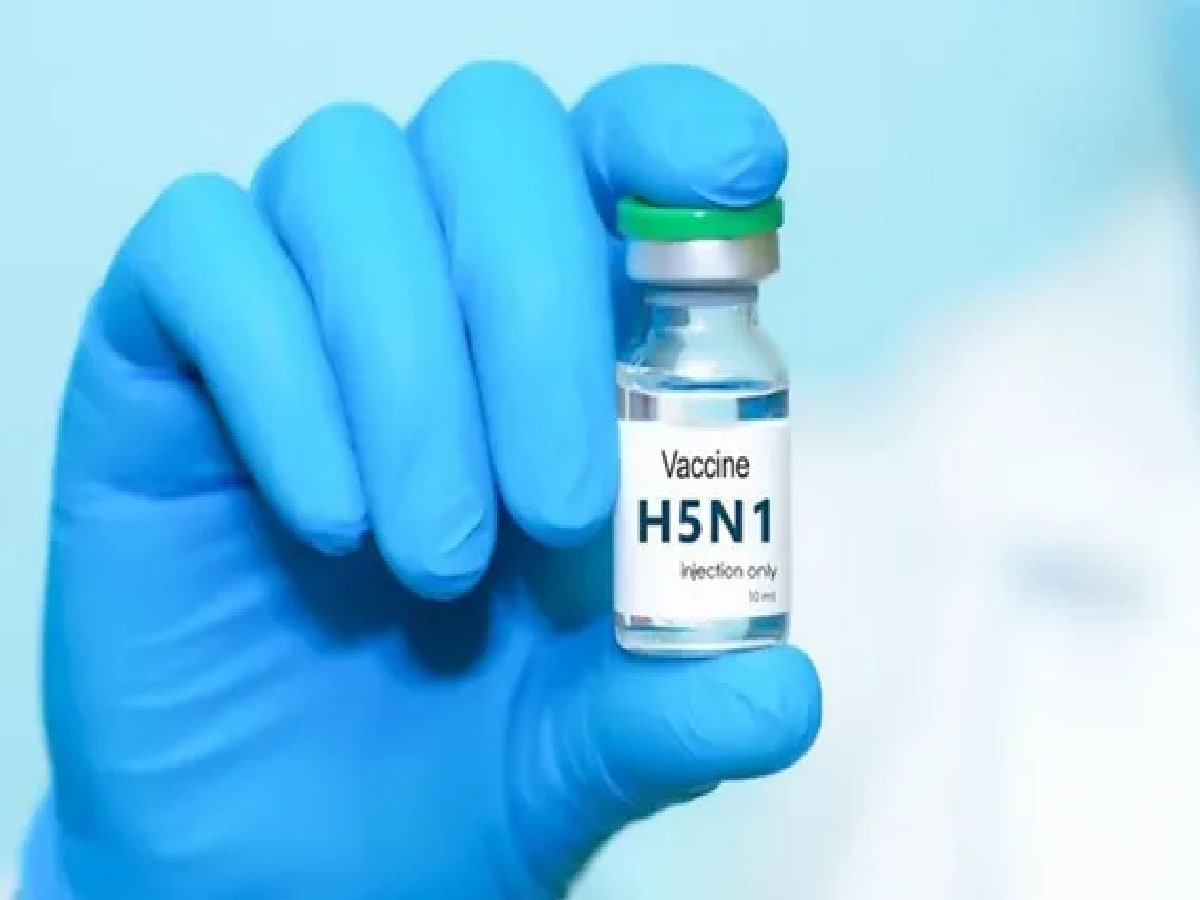
India's First Indigenous Bird Flu Vaccine Costs ₹1–2, Protects 6 Months
Offering a major scientific and economic breakthrough for India's poultry farmers, Union Minister of Agriculture and Farmers' Welfare Shivraj Singh Chouhan dedicated the country's first indigenous vaccine against Highly Pathogenic Avian Influenza (HPAI) H5N1—commonly known as bird flu—to the nation at the ICAR–National Institute of High Security Animal Diseases (ICAR-NIHSAD) in Bhopal on Friday, November 20, 2026. Developed by an eight-member scientific team at ICAR-NIHSAD under the guidance of Institute Director Dr. Aniket Sanyal and led by principal scientist Dr. S. Nagarajan, the inactivated vaccine specifically targets the H5N1 Clade 2.3.2.1a virus—the dominant strain responsible for recurring avian influenza outbreaks in Indian poultry flocks. According to institute scientists, a single dose is projected to cost an affordable ₹1 to ₹2 and provide chickens with six months of protective immunity, sparing commercial and backyard poultry producers from the devastating financial blow of mandatory mass culling whenever an outbreak strikes. Describing the innovation as a proud milestone for Atmanirbhar Bharat during the dedication ceremony (widely reported on Saturday, November 21, 2026), Chouhan honored the eight-member research team, directed officials to expedite commercial technology transfer so the vaccine reaches farms quickly, and announced that a state-of-the-art Biosafety Level-4 (BSL-4) high-containment laboratory will soon be established at ICAR-NIHSAD in Bhopal at a cost of ₹300 crore. Speaking at the event, ICAR Director General Dr. M.L. Jat noted that the formulation represents the world's first dedicated vaccine engineered specifically against the deadly Clade 2.3.2.1a variant of H5N1. For poultry farmers, hatchery operators, veterinary professionals, rural entrepreneurs, and consumers across Unnao, Lucknow, Kanpur, Gorakhpur, Varanasi, Bhopal, Indore, Hyderabad, Namakkal, and New Delhi, the launch promises stronger biosecurity, steadier egg and poultry supplies, and reduced zoonotic disease risk.
India's First Indigenous H5N1 Bird Flu Vaccine (Nov 2026): Technical & Economic Overview
To bring together the scientific specifications of the ICAR-NIHSAD vaccine, its estimated pricing and duration of protection, and the parallel ₹300 crore BSL-4 infrastructure announcement made by Union Minister Shivraj Singh Chouhan, the table below summarizes the verified facts:
| Vaccine / Policy Parameter | Verified Details (Dedicated Nov 20, 2026) | Impact on Poultry Sector & Public Health |
| Developing Institution & Scientific Team | Developed at ICAR–National Institute of High Security Animal Diseases (ICAR-NIHSAD), Bhopal by an eight-scientist team guided by Director Dr. Aniket Sanyal and led by Dr. S. Nagarajan; development work accelerated from September 2025. | Showcases domestic veterinary biotechnology leadership; all eight scientists were felicitated by Union Minister Shivraj Singh Chouhan. |
| Target Pathogen & Vaccine Type | Inactivated (killed) H5N1 vaccine engineered specifically against Highly Pathogenic Avian Influenza (HPAI) H5N1 Clade 2.3.2.1a in chickens. | According to ICAR DG Dr. M.L. Jat, it is the world's first vaccine specifically targeting Clade 2.3.2.1a, the primary strain driving Indian outbreaks for which no dedicated commercial vaccine previously existed. |
| Estimated Cost & Immunity Duration | Estimated at ₹1 to ₹2 per dose, conferring six months of protection in chickens (especially valuable for laying hens and breeder flocks). | Dramatically lowers preventive immunization costs compared with catastrophic losses from nearly 100% flock mortality and compulsory culling. |
| Commercial Rollout & ₹300 Crore BSL-4 Lab | Shivraj Singh Chouhan directed rapid market availability via commercial licensing and announced a ₹300 crore Biosafety Level-4 (BSL-4) laboratory at ICAR-NIHSAD, Bhopal. | Strengthens national preparedness against high-consequence zoonotic and transboundary animal pathogens. |
Why Targeting H5N1 Clade 2.3.2.1a Is a Game-Changer for Indian Poultry
For nearly two decades since India diagnosed its first H5N1 outbreak in 2006, poultry farmers across states from Madhya Pradesh and Uttar Pradesh to Andhra Pradesh and Tamil Nadu have operated under the constant threat of Highly Pathogenic Avian Influenza. Because H5N1 infections can trigger near-100 percent mortality in susceptible flocks and carry zoonotic risks to humans—with World Health Organization records tracking 1,003 human H5N1 cases and 479 deaths across 25 countries since 2003—standard containment has relied on stamping out entire farms through mass culling, movement bans, and prolonged disinfection. Until now, no commercial vaccine tailored specifically to the H5N1 Clade 2.3.2.1a strain circulating in Indian poultry was available. By using an inactivated (non-replicating) viral platform that safely stimulates protective antibodies without risking live-virus spread, the ICAR-NIHSAD vaccine offers six months of immunity at just ₹1 to ₹2 per bird, making routine flock protection viable even for small and medium-scale farmers.
Rapid Commercialization Push and ₹300 Crore BSL-4 Lab Expansion in Bhopal
Recognizing that laboratory success must translate swiftly into farm-level protection, Union Agriculture Minister Shivraj Singh Chouhan instructed agricultural and veterinary authorities on Friday to fast-track regulatory clearances and industry partnerships so the vaccine reaches poultry farms across India without delay. Simultaneously, his announcement of a ₹300 crore Biosafety Level-4 (BSL-4) facility at ICAR-NIHSAD in Bhopal marks a major expansion in India's high-containment animal health infrastructure—equipping Indian scientists to study dangerous emerging pathogens safely and respond even faster to future livestock and poultry disease threats.




