







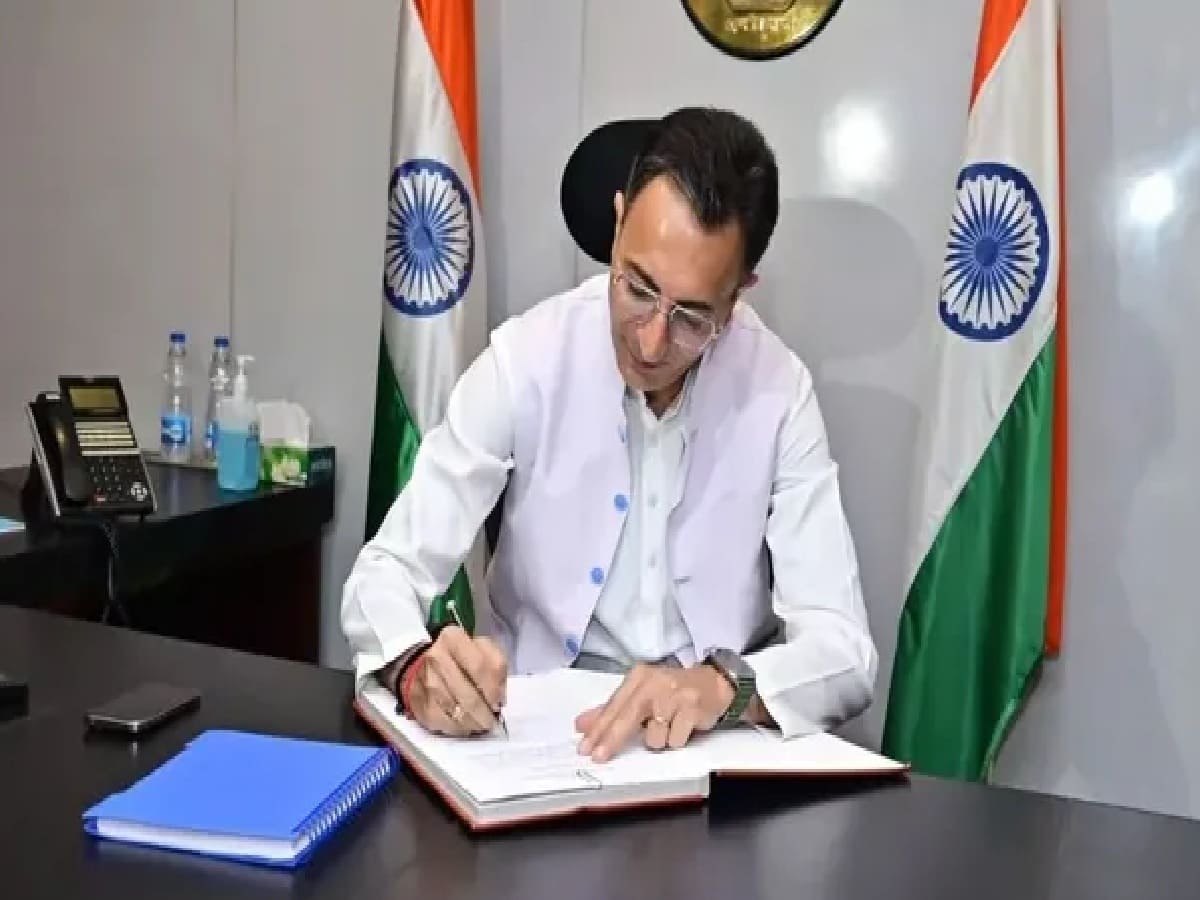
India, Nepal Must Co-Build to Boost Trade & Investment: Jitin Prasada
Calling on India and Nepal to move beyond conventional buyer-seller commerce toward deeper joint production and co-innovation, Union Minister of State for Commerce & Industry and Electronics & Information Technology Jitin Prasada has urged both neighboring nations to accelerate economic integration across manufacturing, cross-border infrastructure, clean energy, digital connectivity, and emerging technologies. Reported across national business and policy desks on Tuesday, November 24, 2026, the Minister's remarks came at the high-profile India–Nepal Business Roundtable jointly organized in New Delhi by the Confederation of Indian Industry (CII) and the Federation of Nepalese Chambers of Commerce and Industry (FNCCI) on the sidelines of Nepal Prime Minister Balendra Shah's landmark two-day state visit to India (November 22–23, 2026), which was also attended by Nepal Finance Minister Swarnim Wagle and leading industrialists from both nations. Framing the bilateral economic roadmap around complementary national strengths, Jitin Prasada emphasized that pairing India's vast consumer market, technological capabilities, and strong manufacturing ecosystem with Nepal's abundant natural resources, hydropower potential, young workforce, and expanding investment climate can unlock the next transformative chapter of bilateral prosperity. Capturing the spirit of the partnership in a memorable formulation, the Minister stated: "For India and Nepal, the length of our boundaries, the depth of our culture, and especially the strength of our youth will be the propelling factors driving the next phase of the India–Nepal growth story." Coming alongside the 10-pillar "Viksit Bharat and Samunnat Nepal" Joint Vision unveiled by Prime Minister Narendra Modi and Nepal Prime Minister Balendra Shah—which includes new transit access via Deendayal Port (Kandla) and Paradip Port, Integrated Check Posts (ICPs) at Banbasa, Bhairahawa, Sunauli, and Dodhara-Chandani, a new Dharchula–Darchula motorable bridge, an Agro-Industrial Park in Chitwan, and the newly launched Ayodhya–Janakpur Saryu-Kamala Express—Prasada's pitch signals strong institutional backing for cross-border trade and private investment across New Delhi, Kathmandu, Lucknow, Unnao, Kanpur, Gorakhpur, and Ayodhya.
India–Nepal Business Roundtable (Nov 2026): Key Sectors & Bilateral Vision
To bring together Minister of State Jitin Prasada's core economic recommendations at the CII–FNCCI Roundtable, the complementary strengths of India and Nepal, and the concrete trade, port, and connectivity outcomes announced during Nepal PM Balendra Shah's November 2026 state visit, the tables below summarize the bilateral push:
Five Priority Growth Sectors Highlighted by MoS Jitin Prasada
| Priority Sector | Complementary India–Nepal Strengths | Strategic Goal for Bilateral Trade & Investment |
| 1. Manufacturing & Joint Production | India's industrial scale and supply chains + Nepal's competitive labor and expanding industrial parks (including the India-assisted Chitwan Agro-Industrial Park). | Shift from one-way exports toward co-building and co-producing value-added goods for regional and global markets. |
| 2. Cross-Border Infrastructure & Transit | Upgraded rail, road, and port corridors linking Uttar Pradesh, Bihar, Uttarakhand, and Gujarat/Odisha with Nepal. | Lower logistics costs through Integrated Check Posts (ICPs) at Sunauli, Bhairahawa, Banbasa, and Dodhara-Chandani, plus transit access through Kandla and Paradip ports. |
| 3. Clean Energy & Hydropower | Nepal's immense Himalayan hydropower and renewable potential + India's grid infrastructure and clean-energy demand. | Expand cross-border power trade, clean-energy investment, and regional energy security. |
| 4. Digital Connectivity & Fintech | India's Digital Public Infrastructure (DPI), banking, and telecom ecosystems. | Facilitate smoother cross-border banking, telecom, and digital services for citizens and businesses living or trading across both nations. |
| 5. Emerging Technologies & Youth Innovation | Nepal's young demographic dividend + India's Electronics & IT startup and R&D ecosystem. | Equip young entrepreneurs and engineers in both countries to collaborate in AI, IT services, and modern tech ventures. |
Key Bilateral Economic & Connectivity Outcomes (Balendra Shah's Nov 22–23, 2026 Visit)
| Milestone / Initiative | Verified Details | Impact on Businesses & Citizens |
| CII–FNCCI Business Roundtable & MoU | Held in New Delhi with MoS Jitin Prasada, Nepal Finance Minister Swarnim Wagle, CII, and FNCCI; included an MoU to revive micro, cottage, and small enterprises and improve access to finance and markets. | Creates an institutional mechanism for Indian investors eyeing expansion in Nepal and Nepali firms seeking smoother market access in India. |
| Expanded Maritime Transit Access | India announced new transit trade access for Nepal via Deendayal Port (Kandla, Gujarat), with Paradip Port (Odisha) to follow once requisite infrastructure is ready. | Diversifies Nepal's sea-trade gateways beyond Kolkata/Haldia and reduces turnaround times. |
| Border ICPs, Bridges & Rail Links | Virtual foundation stone laid for Banbasa ICP; progress reviewed on Bhairahawa, Sunauli, and Dodhara-Chandani ICPs; Dharchula–Darchula motorable bridge and Ayodhya–Janakpur Saryu-Kamala Express inaugurated. | Directly benefits border trade corridors across Uttar Pradesh (Lucknow, Unnao, Kanpur, Gorakhpur, Ayodhya, Bahraich) and western/central Nepal. |
Addressing Non-Tariff Hurdles & Attracting Fresh Indian Capital to Nepal
During the CII–FNCCI deliberations, Nepali business leaders—backed by Finance Minister Swarnim Wagle—welcomed strong interest from Indian investors looking to expand operations in Nepal, while urging streamlined Bureau of Indian Standards (BIS) clearances, upgraded rail cargo corridors, and faster customs processing to help narrow Nepal's trade deficit. Jitin Prasada's emphasis on joint production directly answers that call: when Indian and Nepali enterprises co-invest in manufacturing and agro-processing inside Nepal for export back into India and third markets, trade becomes balanced, resilient, and mutually profitable.
What This Means for Industry & Trade Across Uttar Pradesh and North India
For manufacturers, logistics firms, MSMEs, and exporters across Lucknow, Unnao, Kanpur, Gorakhpur, Varanasi, Ayodhya, and New Delhi, the combination of new Integrated Check Posts at Sunauli and Bhairahawa, two-way Bhairahawa–Lucknow air route momentum, and high-level commercial backing from Commerce & IT MoS Jitin Prasada opens immediate avenues for cross-border joint ventures in food processing, clean energy, pharmaceuticals, IT services, and tourism.




