







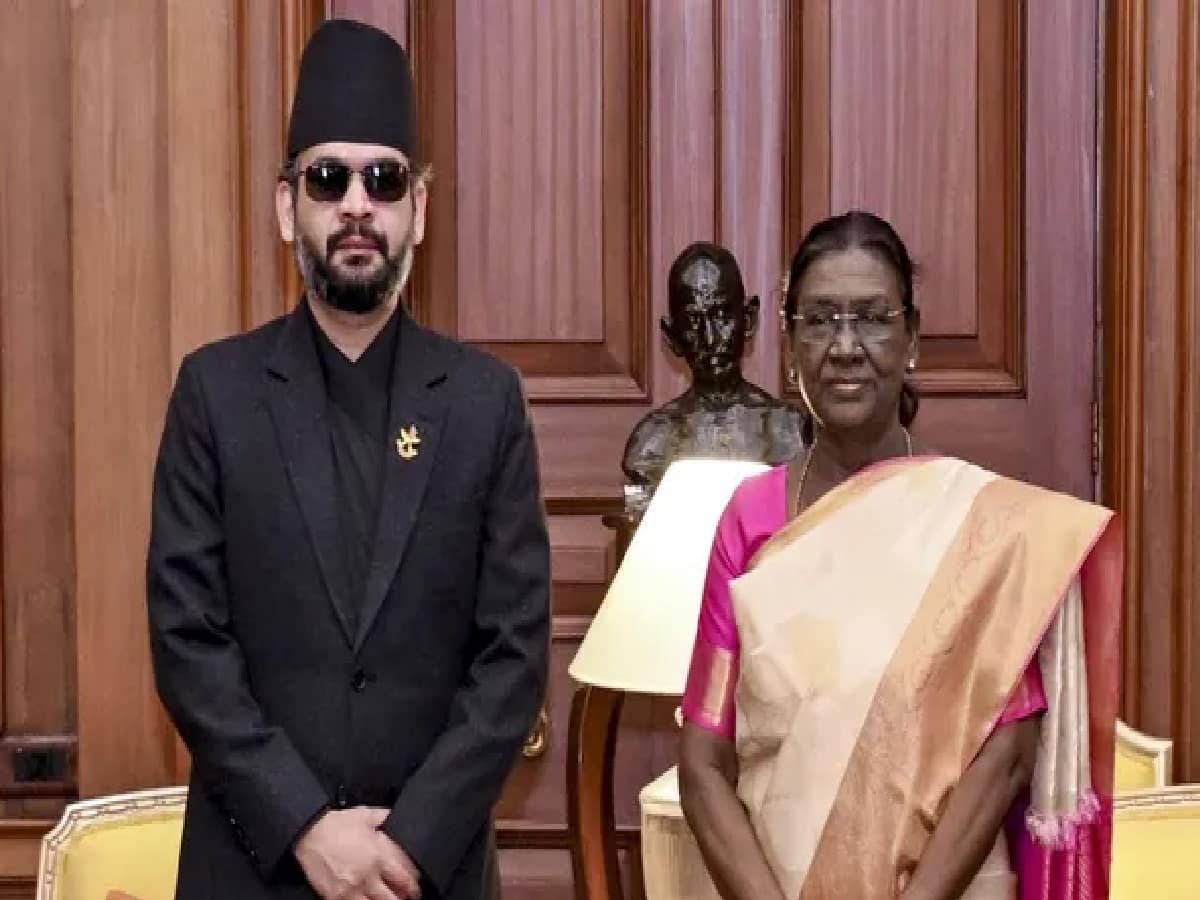
Climate Change a Shared Challenge for India & Nepal: President Murmu
Underscoring that ecological vulnerability across the Himalayas knows no political borders, President of India Droupadi Murmu has emphasized that climate change is a common challenge for both India and Nepal, calling for closer bilateral coordination to strengthen early warning systems and cross-border disaster management. Reported across national diplomatic desks on Tuesday, November 24, 2026, the President's remarks came during her high-level meeting with visiting Nepal Prime Minister Balendra Shah at Rashtrapati Bhavan in New Delhi on Monday afternoon, November 23, 2026, concluding Shah's landmark two-day state visit to India. Welcoming the 36-year-old Nepali leader to Rashtrapati Bhavan and congratulating his government on the decisive public mandate it secured in Nepal's March 2026 general elections, President Murmu noted that India–Nepal ties are anchored in a timeless shared civilizational heritage and deep people-to-people warmth. Extending heartfelt condolences over the loss of lives caused by the catastrophic August 2026 Rasuwa–Bhotekoshi floods in Nepal—a disaster that claimed at least 1,500 lives, left more than 5,000 missing, and inflicted estimated economic losses of $4.70 billion—the President reaffirmed that just as India delivered prompt humanitarian aid and technical assistance during the crisis, New Delhi will remain a steadfast partner in post-disaster relief and reconstruction (backed by India's newly announced ₹15,000-crore [NPR 24,000-crore] development assistance package, including ₹3,500 crore in grant assistance for reconstruction and infrastructure). Expressing confidence that the "Viksit Bharat and Samunnat Nepal" Joint Vision Document adopted during the visit will chart a forward-looking roadmap across trade, investment, infrastructure, connectivity, cultural exchange, startups, space, and innovation, President Murmu's message resonated strongly in Kathmandu as well—where Nepal Foreign Minister Shishir Khanal told reporters at Tribhuvan International Airport upon the delegation's return that Prime Minister Shah's India visit has restored positive momentum to bilateral relations.
President Droupadi Murmu & Nepal PM Balendra Shah Meet: Key Outcomes & Takeaways
To bring together the main highlights of President Droupadi Murmu's meeting with Prime Minister Balendra Shah at Rashtrapati Bhavan, the reconstruction and climate-resilience commitments linked to the Bhotekoshi floods, and Nepal Foreign Minister Shishir Khanal's assessment upon returning to Kathmandu, the tables below summarize the diplomatic milestone:
Rashtrapati Bhavan Meeting & Bilateral Assistance Highlights (Nov 23–24, 2026)
| Pillar of Discussion | Verified Details | Diplomatic & Regional Impact |
| 1. Joint Action on Climate Change & Early Warning Systems | President Droupadi Murmu stressed that climate change is a shared challenge for India and Nepal, calling for stronger early warning systems and disaster management. | Directly addresses Himalayan glacial lake outburst floods (GLOFs), monsoon cloudbursts, and transboundary river flooding affecting both Nepal and northern Indian states like Uttar Pradesh and Bihar. |
| 2. Bhotekoshi Flood Condolences & ₹15,000-Crore Assistance | Condoled the devastating August 2026 Rasuwa–Bhotekoshi floods (at least 1,500 dead, 5,000+ missing, $4.70 billion estimated losses) and pledged ongoing reconstruction support; India announced ₹15,000 crore (NPR 24,000 crore) in development assistance—comprising ₹3,500 crore in grants for post-disaster reconstruction and infrastructure plus an ₹11,500-crore Rupee Line of Credit for energy projects. | Translates solidarity into large-scale recovery funding and resilient infrastructure across affected Nepali districts. |
| 3. Mandate Congratulations & 'Joint Vision Document' | Congratulated PM Balendra Shah on his government's strong mandate in the March 2026 elections and praised the 'Viksit Bharat and Samunnat Nepal' Joint Vision Document covering trade, investment, connectivity, culture, digital services, startups, space, and innovation. | Aligns bilateral cooperation with the aspirations of young citizens in both countries. |
Nepal Foreign Minister Shishir Khanal's Statement in Kathmandu
| Context | Key Remarks at Tribhuvan International Airport, Kathmandu | Strategic Significance |
| Return from Two-Day State Visit (Nov 22–23, 2026) | Accompanied by Finance Minister Swarnim Wagle and senior officials, Foreign Minister Shishir Khanal stated that PM Balendra Shah's visit to India has restored positive momentum to bilateral ties and strengthened centuries-old friendship. | Highlighted Nepal's focus on economic growth, prosperity, people-to-people contacts, and tangible gains such as access to Deendayal Port (Kandla) and Paradip Port alongside Kolkata and Visakhapatnam. |
Why Transboundary Early Warning Systems Matter to Both Nepal and North India
Rivers originating in the Nepal Himalayas—including the Koshi, Gandak, Karnali (Ghaghara/Saryu), Rapti, and Mahakali (Sharda)—flow directly into the plains of Uttar Pradesh and Bihar. When extreme weather triggers flash floods or landslides in upstream valleys like Rasuwa–Bhotekoshi, real-time meteorological data sharing and coordinated early warning systems save lives on both sides of the open border.
Resonance Across New Delhi, Kathmandu and Border States Like Uttar Pradesh
For communities across New Delhi, Kathmandu, Lucknow, Unnao, Kanpur, Gorakhpur, Ayodhya, and Patna, the convergence between President Droupadi Murmu's climate-resilience message, India's ₹15,000-crore reconstruction and energy package, and Foreign Minister Shishir Khanal's upbeat assessment marks a renewed, people-centered chapter in India–Nepal partnership.




