







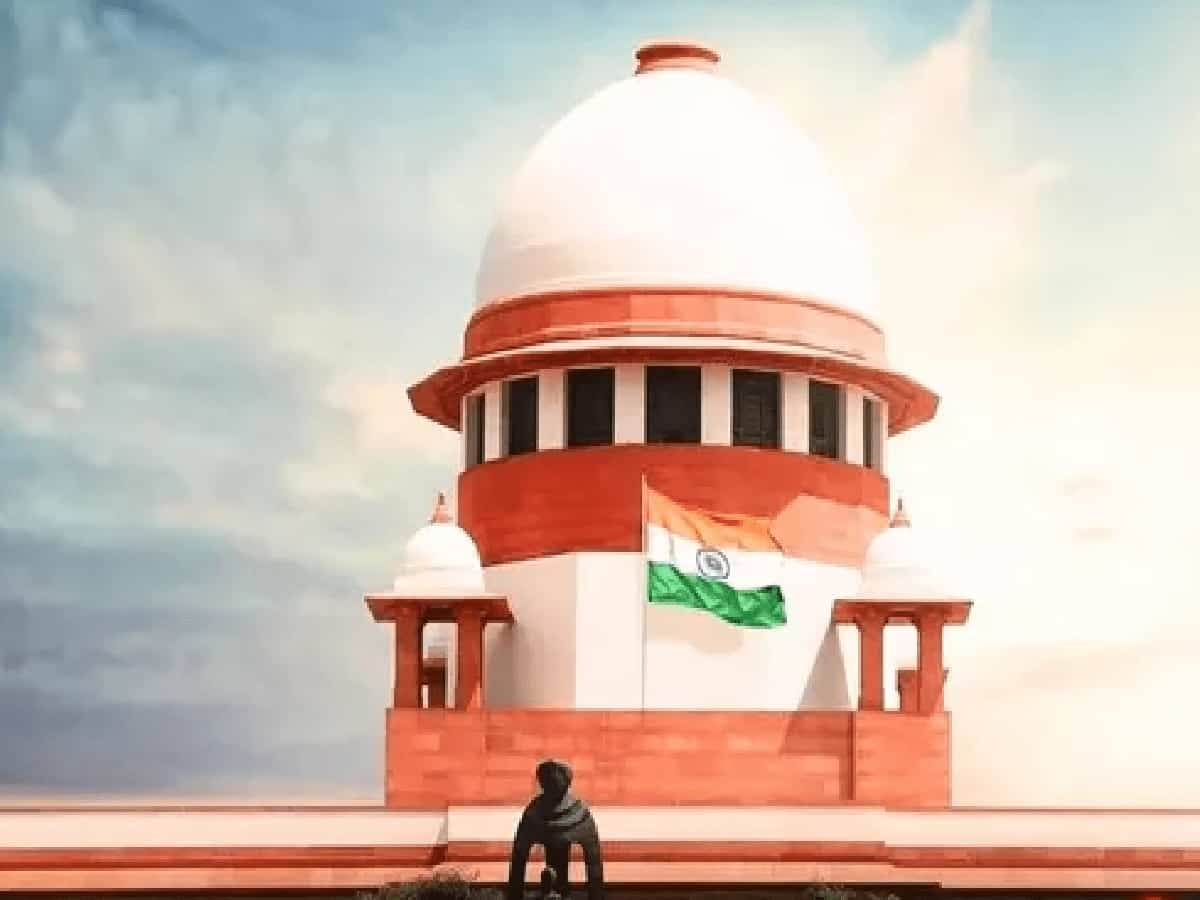
Grandson Has No Right in Grandpa’s Land Held by Dad: SC
In a landmark verdict clarifying generational property rights under personal law, the Supreme Court of India ruled that a grandson holds no birthright or coparcenary claim over property inherited by his father following the partition of a grandfather's estate. A division bench comprising Justice Augustine George Masih and Justice Sunita Agarwal delivered the decisive judgment, concluding a 29-year-old legal feud that originated in 1997. The bench held that when property devolves upon a male Hindu under Section 8 of the Hindu Succession Act, 1956, and is subsequently divided, it transforms into his separate and exclusive property. Consequently, he acts as its absolute owner and possesses the full legal authority to transfer, mortgage, sell, or alienate the asset, even to the total exclusion of his own sons.
The legal confrontation traces back to the estate of an intestate grandfather whose self-acquired or separate holdings became subject to partition among his primary legal successors. A daughter initiated a partition suit in 1993, which concluded through a compromise decree in February 1994, allotting an 1,811-square-foot parcel to one of the sons. In 1997, that son sold the allotted land to third-party purchasers. In the same year, his minor son, acting through his mother as natural guardian, filed a civil suit demanding partition and separate possession of a half-share. The plaintiff asserted that the plot retained its coparcenary character and that he acquired an automatic half-interest by birth. While the trial court initially granted a preliminary decree, the Madras High Court overturned the ruling. Upholding the High Court's determination, the Supreme Court dismissed the grandson's appeal without costs, confirming that the property ceased to be joint family property once partitioned among the grandfather’s immediate heirs.
Why a Grandson Is Excluded: The Mechanics of Section 8 and Class I Heirs
The statutory foundation of the apex court's ruling rests on Chapter II of the Hindu Succession Act, 1956, which codified and superseded traditional shastric principles regarding intestate succession. Writing for the bench, Justice Sunita Agarwal pointed out that Section 8 serves as a self-contained code governing the devolution of assets left behind by a Hindu male who dies without executing a will. Under this provision, property passes first to the relatives specified in Class I of the Schedule. The statutory Class I category encompasses the deceased male's widow, mother, sons, and daughters, who inherit simultaneously to the exclusion of all other distant relatives.
The bench noted that the statutory Schedule explicitly omits a "son's son" (grandson) from the list of Class I heirs when the son is alive. The grandson's interest is recognized under Class I only in the capacity of a predeceased son’s child. Because the appellant's father was alive when succession opened upon the grandfather's demise, the property passed directly to the father and his siblings as tenants in common. The codification under the 1956 Act did not preserve the pre-existing customary Hindu law rule that granted a grandson a concurrent birthright in his grandfather’s separate property while his father survived. As a result, the grandson possessed no legal standing to challenge the partition or stop his father from disposing of the asset.
Partition Breaks the Coparcenary: Inherited Property Becomes Absolute Ownership
A central legal issue evaluated by the bench was whether inherited property retains a coparcenary character in the hands of a son. Historically, under traditional Mitakshara coparcenary law, three generations of male descendants acquired an immediate interest by birth in ancestral property. However, the Supreme Court rejected the argument that a son inheriting assets under Section 8 holds them as a karta on behalf of his own undivided family. Drawing from landmark precedents, including Commissioner of Wealth Tax v. Chander Sen and Yudhishter v. Ashok Kumar, the court emphasized that interpreting Section 8 as creating a joint Hindu family estate would introduce internal contradictions into the statute.
The bench observed that if a son were deemed to hold inherited property on behalf of his male progeny, it would create two conflicting classes of Class I heirs: female heirs, such as daughters and widows, would take their inherited shares as absolute owners, whereas male heirs would be reduced to holding their shares under coparcenary restrictions. To avoid this gender-asymmetric outcome and preserve the statutory language of Section 8, the court reaffirmed that every Class I heir takes property in an individual, independent capacity. Once the partition decree divided the grandfather’s estate among his children, the joint coparcenary ceased to exist. The parcel allotted to the father became his exclusive personal property, giving him absolute authority to alienate it without requiring his son's consent.
Protection for Real Estate Buyers and Future Title Clearances
Beyond settling the immediate family dispute, the Supreme Court's verdict provides vital legal protection to bona fide property buyers and real estate transactions across India. Property purchases in suburban and urban markets often face long-running title challenges filed by adult children or minor grandchildren claiming that parental sales violated ancestral coparcenary rights. In this matter, third-party buyers who purchased the Chennai parcel in April 1997 spent nearly three decades defending their ownership title against litigation initiated by the seller's minor son.
By establishing that a father who receives property through Section 8 succession and an ensuing partition holds an absolute title, the apex court affirmed that buyers purchasing from such individuals are protected from subsequent claims by grandchildren. The bench also observed that the plaintiff had failed to challenge the original 1994 compromise partition decree or the registered 1997 sale deeds, seeking only partition on an assumed birthright that held no statutory basis. This ruling reinforces clarity in civil litigation by confirming that property devolved under Section 8 remains insulated from collateral coparcenary attacks.
Key Legal Takeaways on Grandfather Property Rights
The judgment establishes a clear framework for resolving disputes surrounding ancestral and inherited real estate across the country:
-
No Birthright Under Section 8: A grandson cannot claim a birthright in property inherited by his father from the grandfather under Section 8 of the Hindu Succession Act, 1956.
-
Class I Heirs Prevail Simultaneously: When a Hindu male dies intestate, his Class I heirs inherit the estate simultaneously to the total exclusion of all other relatives, including surviving grandsons.
-
Partition Establishes Absolute Ownership: Once an estate is divided among Class I heirs through a decree or deed, the allotted shares lose any collective coparcenary identity and become the individual property of each recipient.
-
Father Can Exclude Children: As an absolute owner, a father can sell, gift, or will his partitioned inheritance without requiring legal necessity or obtaining consent from his sons or daughters.
-
Security for Property Buyers: Buyers acquiring partitioned land from an heir who inherited under Section 8 hold safe and marketable title against retrospective partition challenges filed by descendants.




