







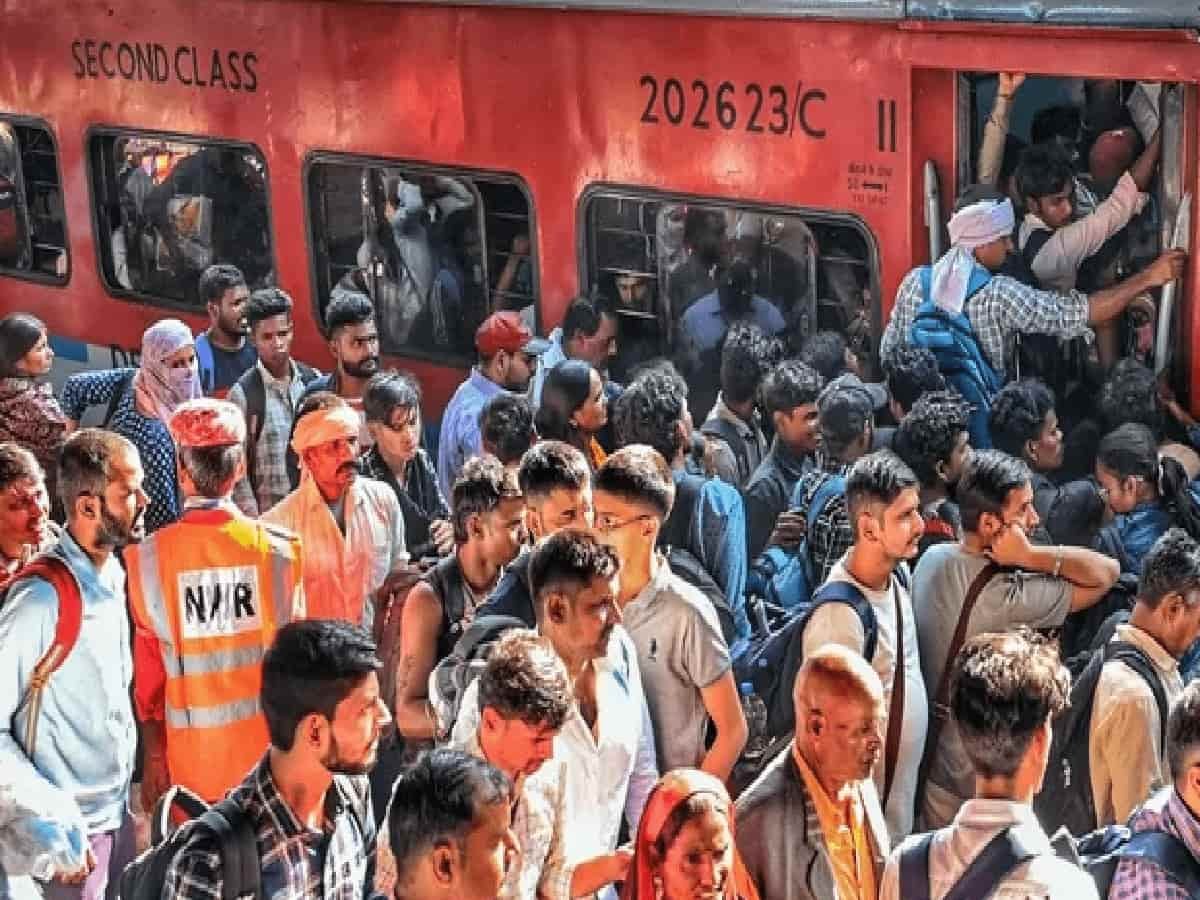
Diwali-Chhath Rush: Heavy Crowds at Stations as Travelers Head Home
As the golden glow of Diwali illuminates the country and the revered four-day festival of Chhath Puja draws near, India's transit infrastructure is witnessing an extraordinary surge of human movement. From the bustling platforms of New Delhi Railway Station and Anand Vihar Mega Terminal to Mumbai’s Chhatrapati Shivaji Maharaj Terminus (CSMT), Surat’s Udhna Junction, and the arrival terminals of Patna Junction, millions of migrant workers, students, and families are undertaking long journeys back to their native villages and hometowns. Commercial hubs across northern, western, and southern India have emptied out in waves, transforming railway stations, inter-state bus terminals (ISBTs), and national highways into vibrant, crowded hubs of festive anticipation. Carrying heavy metal trunks, bundled bedding, sweet boxes, and clothing bags, passengers are navigating serpentine lines and packed waiting areas, driven by an enduring commitment: to celebrate Diwali lights and the sacred Chhath Arghya surrounded by their loved ones.
Swelling Crowds on the Platforms: Scenes From Delhi to Patna
The scale of this annual seasonal migration is visible on railway platforms nationwide. Major junction terminals that typically handle standard passenger flow are managing record footfalls, particularly on eastward routes leading into Uttar Pradesh, Bihar, Jharkhand, and West Bengal. At terminals such as New Delhi, Anand Vihar, Lucknow Charbagh, Pandit Deen Dayal Upadhyaya (DDU) Junction, and Gorakhpur, holding areas have been activated outside main concourses to prevent dangerous platform bottlenecks.
At Patna Junction and Danapur, incoming passenger volume reached peak intensity over the weekend, with trains arriving from Surat, Ahmedabad, Mumbai, and Delhi packed to capacity. Families with small children and elderly parents stepped onto platforms carrying colorful travel gear, eager to complete the final leg of their journey home. For many who work in industrial factories, construction sectors, tech campuses, or distant commercial centers, the return home during the Diwali-Chhath corridor represents their solitary visit of the year. The long, exhausting hours spent on train floors or standing in vestibules fade into the background as travelers step off the train into the festive atmosphere of their hometowns.
Bus Terminals Stretched to Capacity: Inter-State Travelers Face Long Queues
While the railway network remains the primary artery for interstate travel, bus terminals are seeing equally intense demand. Inter-State Bus Terminals across the National Capital Region—including Kashmiri Gate, Sarai Kale Khan, and Anand Vihar—alongside major depots in Kanpur, Varanasi, and Ranchi, have reported non-stop passenger activity.
Buses operated by state transport corporations and private operators bound for regional destinations across Bihar, eastern Uttar Pradesh, and Jharkhand are running at full occupancy:
-
Fully Booked Schedules: Regular and express bus services booked out days in advance, prompting private fleet operators to deploy additional sleeper and semi-sleeper coaches to meet demand.
-
Unreserved Boarding Lines: Hundreds of impromptu travelers queued at ticket counters from dawn, willing to travel on unreserved seating or stand in aisles for hours just to ensure they reached their destinations before Lakshmi Pujan and Chhath rituals commence.
-
Highway Traffic Influx: Arterial highways, particularly the Yamuna Expressway, Purvanchal Expressway, and National Highway 19, saw elevated vehicular traffic as private cars, shared taxis, and chartered buses moved in steady convoys toward eastern districts.
Emotional Homecomings: Why Chhath and Diwali Transcend Travel Hardships
Despite the physical exhaustion, crowded coaches, and packed waiting sheds, the mood across transit hubs remains distinctly celebratory. Chhath Puja, an ancient Vedic festival dedicated to Surya Dev (the Sun God) and Chhathi Maiya, holds deep cultural and emotional significance across Bihar, Jharkhand, and the Purvanchal belt. For families observing the rigorous fast, returning home to clean local riverbanks (ghats), prepare sacred Thekua offerings in pure ghee, and offer evening and morning Arghya alongside extended family is a sacred spiritual duty that cannot be observed alone in a rented city apartment.
Across waiting halls, conversations center on festival preparations. Children excitedly talk about sparklers, firecrackers, and new festival clothes, while elders discuss sourcing sugarcane stalks, fresh coconuts, and clean bamboo baskets (soop) for the ritual offerings. The shared journey creates an immediate sense of community among fellow travelers; strangers share homemade snacks, watch each other's luggage in crowded corridors, and help mothers with infants navigate congested boarding gates. The collective desire to be home dissolves individual hardships into a shared celebration of heritage and belonging.
Extensive Railway Measures: Special Trains, War Rooms, and Holding Tents
To manage the heavy seasonal rush and ensure passenger safety, the Ministry of Railways and regional zonal authorities have mobilized extensive operational measures. Recognizing that regular scheduled services cannot absorb the massive passenger surge, Indian Railways has expanded festive operations, scheduling thousands of special train trips across high-demand routes connecting western and northern industrial zones to eastern hubs.
Key interventions implemented across the railway network include:
-
Dedicated Festival Specials: Over 100 dedicated Bihar-bound special train services, including festival-special Vande Bharat Express services operating tri-weekly between New Delhi and Patna, have added vital passenger capacity.
-
Designated Holding Enclosures: At 20 major high-density stations, large covered holding tents equipped with temporary booking counters, digital announcement boards, and drinking water have been set up outside station buildings, keeping platforms clear until trains are placed for boarding.
-
24/7 War Room and Heat-Map Tracking: A central monitoring war room is continuously tracking footfall patterns across 28 critical stations using digital heat maps, enabling real-time adjustments and crowd redirection.
-
Enhanced Security Presence: Teams from the Railway Protection Force (RPF) and Government Railway Police (GRP) have established round-the-clock patrol units to assist passengers, maintain orderly queues at unreserved coaches, and curb platform congestion.
Senior railway officials have reiterated appeals urging travelers to arrive within reasonable timeframes, follow queue discipline, and avoid boarding overcrowded vestibules or train roofs. With another major wave of passenger traffic anticipated in the days leading directly to the primary Chhath Puja arghya, transit authorities, state transport departments, and law enforcement agencies are remaining on high alert to keep India's festive homecoming safe, organized, and smooth.




