







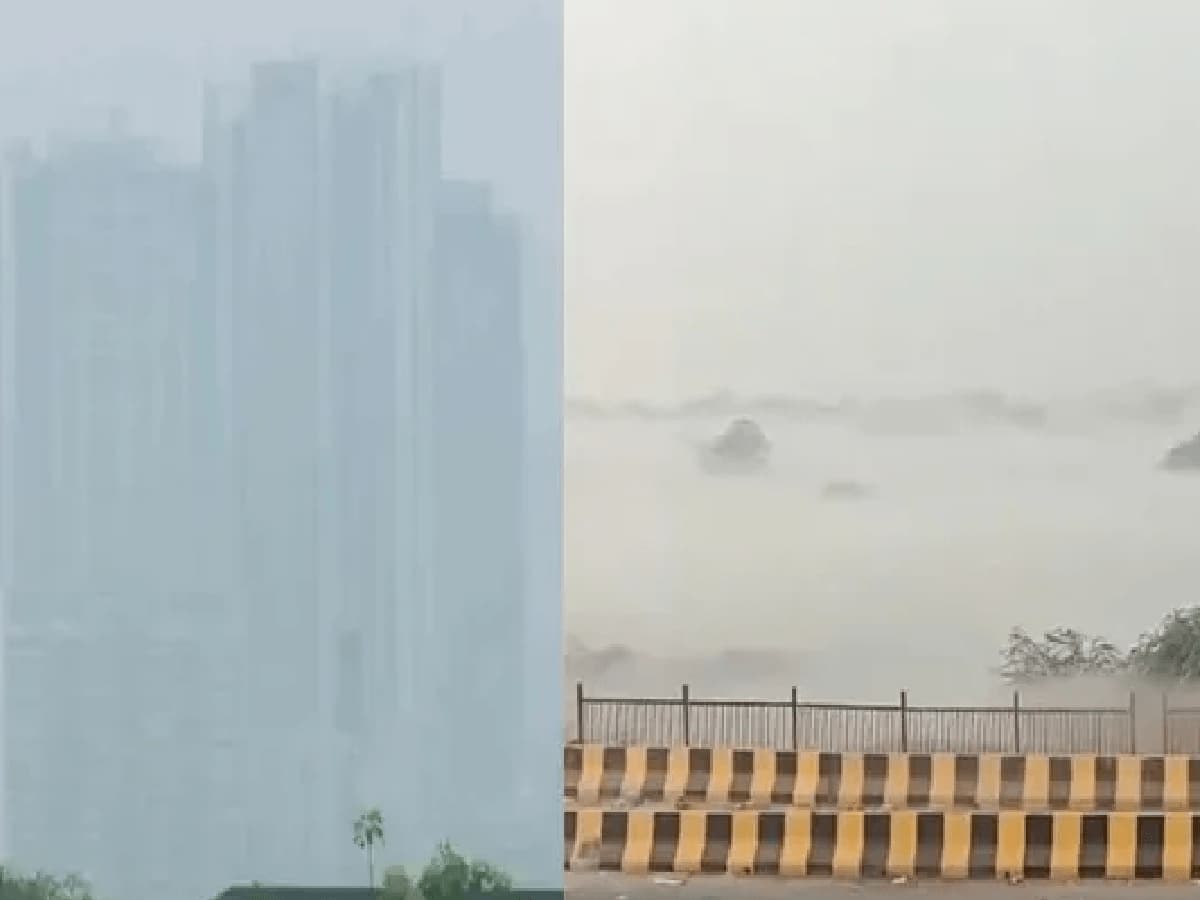
Delhi Air Turns Toxic Post-Diwali: AQI Crosses 404 Mark
A suffocating, grey blanket of toxic smog settled across the National Capital Region on Monday morning, November 9, 2026, as air quality plummeted into the 'Severe' zone following festive celebrations across north India. Real-time monitoring data released by the Central Pollution Control Board (CPCB) revealed that the citywide Air Quality Index (AQI) surged past the critical 400 benchmark at multiple monitoring stations, driven by calm surface winds, falling overnight temperatures, and localized emissions. Morning commuters navigated near-zero horizontal visibility along major arterial expressways, while hospitals and pulmonary clinics reported an influx of patients complaining of severe throat irritation, breathlessness, and burning eyes. Concurrently, western metropolis Mumbai recorded significantly cleaner conditions with an average AQI of 170—an improvement of roughly 30 percent compared to post-Diwali figures from the preceding year—even as regional capitals across northern India, including Lucknow and Jaipur, grappled with worsening haze.
Toxic Smog Engulfs National Capital: Burari and Vivek Vihar Worst Hit
According to the official CPCB air bulletin recorded at 9:00 AM on Monday, atmospheric conditions across Delhi deteriorated sharply overnight, trapping fine particulate matter (PM2.5 and PM10) close to the surface due to classic thermal inversion. While several trans-Yamuna localities registered very poor readings, the northern and eastern quadrants of the capital recorded severe numbers that posed immediate respiratory risks to healthy individuals and vulnerable groups alike.
Burari Crossing emerged as the most polluted pocket in the capital, logging an alarming AQI of 441. Vivek Vihar closely followed with a reading of 437, while the monitoring station at Delhi Technological University (DTU) touched 434. Major academic and residential hubs were similarly choked, with Delhi University North Campus and Jahangirpuri both registering 433, followed by Rohini at 430. In industrial and commercial corridors, Ghazipur recorded an AQI of 418, Mundka stood at 417, Punjabi Bagh touched 409, and both Narela and the institutional area of ITO recorded 407. Even localities recording 'Very Poor' air hovered close to the severe borderline, including Mathura Road at 396, Aya Nagar at 386, Talkatora Garden at 384, Lodhi Road at 370, Wazirpur at 365, R.K. Puram at 364, Najafgarh at 340, Akshardham at 337, and Anand Vihar at 335.
Emergency Defense: GRAP Stage 3 Enforced Across Delhi-NCR
Foreseeing this post-festive spike based on dynamic atmospheric projections from the India Meteorological Department (IMD) and the Indian Institute of Tropical Meteorology (IITM), the Commission for Air Quality Management (CAQM) had pre-emptively activated Stage 3 of the Graded Response Action Plan (GRAP-III) across the entire National Capital Region on Friday, three days ahead of Diwali. The emergency mandate covers Delhi along with peripheral NCR districts in Haryana, Uttar Pradesh, and Rajasthan.
Under the active GRAP-III protocol, strict curbs are being enforced on ground zero:
-
Construction and Demolition Shutdown: A complete statutory ban has been slapped on non-essential construction and demolition activities across Delhi-NCR, exempting only critical national security, healthcare, and public transit infrastructure.
-
Vehicular Restrictions: The plying of BS-III petrol and BS-IV diesel four-wheelers is strictly prohibited on Delhi roads, with traffic enforcement squads imposing ₹20,000 penalties on non-compliant motorists.
-
Intensified Dust Abatement: Municipal corporations have deployed mechanical road sweepers, anti-smog guns, and water sprinklers along high-density traffic corridors to settle loose road dust.
-
School Operations: State administrations across Delhi, Gurugram, Faridabad, Ghaziabad, and Gautam Buddha Nagar have been empowered to transition physical classes for primary school children (up to Class 5) to online or hybrid learning modes to minimize outdoor exposure.
Mumbai Air 30% Better Than 2025; Smog Shadows Lucknow and Jaipur
In contrast to Delhi's hazardous atmospheric state, coastal Mumbai witnessed a comparatively cleaner post-Diwali morning. A transient layer of haze lingered over suburban Bandra and Kalanagar, but the financial capital's overall average AQI stabilized at 170, firmly within the 'Moderate' bracket. Favorable sea breezes helped disperse airborne particulates, resulting in an air quality profile roughly 30 percent better than the levels documented during the same festive window in 2025.
However, localized pockets in Mumbai experienced elevated readings: Kherwadi in Bandra East touched an AQI of 264, followed by Shivadi at 226, Ghatkopar at 221, and Chembur at 216, falling into the 'Poor' band. Conversely, coastal promenades recorded cleaner air, with Worli logging 148 and Kurla registering an impressive 96 in the 'Satisfactory' category.
Further north and east, inland weather conditions mirrored Delhi’s stagnant air profile. In Uttar Pradesh's capital Lucknow, dense smog hung over major intersections, causing reduced visibility during peak morning office hours. In Rajasthan's capital Jaipur, a veil of pale winter fog enveloped historical monuments, with the local CPCB station recording an AQI of 204, categorized as 'Poor'.
Understanding the Four Stages of the Graded Response Action Plan
To systematically combat episodic air pollution, the central government formulated the Graded Response Action Plan (GRAP)—an incremental emergency response mechanism activated across four distinct phases depending on atmospheric deterioration:
-
Stage 1 (GRAP-I) – 'Poor' (AQI 201–300): Focuses on mechanized street sweeping, water sprinkling, strict emission checks on vehicles, and an absolute prohibition on open trash burning.
-
Stage 2 (GRAP-II) – 'Very Poor' (AQI 301–400): Mandates enhanced water sprinkling with chemical dust suppressants, increased municipal parking fees to discourage private vehicular commuting, higher frequency of public metro and bus services, and uninterrupted power supply to eliminate diesel generator usage.
-
Stage 3 (GRAP-III) – 'Severe' (AQI 401–450): Triggers a blanket halt on stone crushers, brick kilns, and non-exempt construction work; enforces strict bans on older BS-III petrol and BS-IV diesel passenger vehicles; and allows closure of primary school classrooms.
-
Stage 4 (GRAP-IV) – 'Severe+' (AQI >450): The most stringent emergency tier, prohibiting the entry of medium and heavy diesel freight trucks into Delhi (except those carrying essential commodities), halting public construction, and mandating 50 percent work-from-home quotas for public and private offices alongside physical school closures for senior grades.
How the Central Pollution Control Board Calculates AQI
The National Air Quality Index (AQI) acts as a unified public communication tool, transforming complex chemical concentration data of eight key ambient pollutants—PM2.5, PM10, Nitrogen Dioxide ($NO_2$), Sulfur Dioxide ($SO_2$), Carbon Monoxide ($CO$), Ozone ($O_3$), Ammonia ($NH_3$), and Lead ($Pb$)—into a single color-coded numeric score.
The CPCB classifies air quality into six progressive categories based on established public health impacts:
-
Good (0–50): Minimal health impact; clean and safe for all outdoor activities.
-
Satisfactory (51–100): Minor breathing discomfort to sensitive individuals.
-
Moderate (101–200): Breathing discomfort to people with asthma, lung, and heart diseases.
-
Poor (201–300): Breathing discomfort to most people on prolonged outdoor exposure.
-
Very Poor (301–400): Respiratory illness on prolonged exposure; triggers acute distress in cardiovascular patients.
-
Severe (401–500): Affects healthy individuals and seriously impacts those with existing medical conditions; outdoor exercise is strictly discouraged.
With meteorologists predicting stagnant wind speeds and dropping minimum temperatures across the Indo-Gangetic Plains over the coming days, CAQM task forces and regional municipal bodies remain on round-the-clock vigil. Citizens across Delhi-NCR are strongly advised to wear N95 filtration masks during outdoor transit, avoid early morning jogging, and use indoor air purification measures until ventilation conditions improve.




