







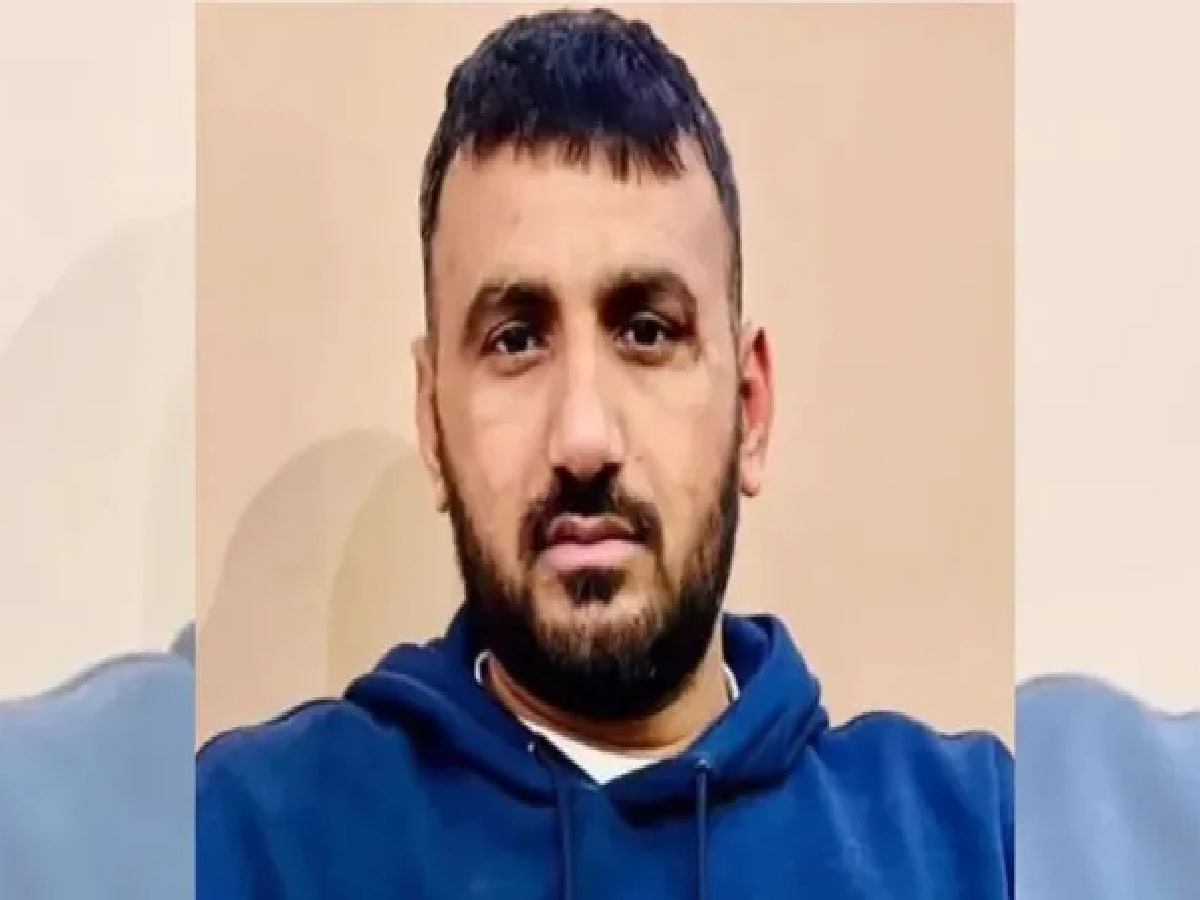
Bishnoi Aide Harry Boxer Detained in US Over Rohit Shetty Firing
In a major breakthrough against transnational organized crime syndicates operating out of North America, United States law enforcement authorities have detained notorious fugitive gangster Hari Chand Jat, alias Harry Boxer. Identified by Indian security agencies as one of Haryana's most-wanted criminals and a vital overseas operational commander for the incarcerated underworld don Lawrence Bishnoi, Boxer was apprehended in California late Friday night. The high-stakes operation was executed following actionable intelligence and digital surveillance shared by the Delhi Police Special Cell and central intelligence agencies. Operating from across the Atlantic, Boxer had emerged as a central figure coordinating the Bishnoi syndicate's extortion networks, contract hits, and high-profile intimidation campaigns targeting India's entertainment capital, Mumbai. His apprehension marks the latest in a series of coordinated strikes against Indian gang networks that have attempted to turn Western jurisdictions into safe havens for extortion rackets.
Transnational Crackdown: How US Authorities Cornered Harry Boxer
The detention of Harry Boxer in California was the culmination of months of discreet, multi-agency intelligence tracking across continents. According to senior officials within the Delhi Police Special Cell, Indian investigators had placed Boxer under intense digital surveillance after intercepting encrypted internet calls linking IP addresses in the western United States directly to local criminal foot soldiers in Haryana, Punjab, Rajasthan, and the National Capital Region (NCR). Boxer had previously come under the scrutiny of US immigration officials in January 2026, when he entered the country and attempted to file an application for political asylum. While he was temporarily released during the initial procedural processing of his paperwork, Indian security agencies quickly intervened through diplomatic and Interpol channels, flagging his extensive criminal dossier and active Red Corner Notices.
Armed with real-time location logs and communication intercepts supplied by Indian counter-terror and crime branches, federal agents from US Immigration and Customs Enforcement (ICE) and federal task forces located Boxer in California. The gangster was taken into custody without incident and moved to a federal holding facility. Indian security officials confirmed that formal communication has already been established through the Ministry of External Affairs (MEA) and the Ministry of Home Affairs (MHA) to pursue his deportation or extradition, cutting off one of the Lawrence Bishnoi cartel's most vocal and operationally active overseas handlers.
The Rohit Shetty Firing: Extortion and Intimidation in Bollywood
Harry Boxer was propelled to national attention following a brazen shooting incident outside the Mumbai residence of prominent Hindi film director and producer Rohit Shetty. In the early morning hours of February 1, 2026, unidentified motorcycle-borne gunmen fired five rounds directly at the outer facade and gate of Shetty's residential bungalow in Mumbai's upscale Juhu area before fleeing through suburban backstreets. Although no injuries were reported, the early-morning attack sent shockwaves through the film fraternity. Within hours of the gunfire, social media accounts directly linked to the Lawrence Bishnoi syndicate surfaced online, claiming full responsibility for orchestrating the attack.
The investigation gained urgency when intelligence units intercepted a widely circulated audio recording that claimed accountability on behalf of the syndicate. In the recording, an operative identifying himself as Arjun Bishnoi explicitly named Harry Boxer and fugitive gangster Shubham Lonkar as the key conspirators who planned and executed the operation. The recorded message delivered an ultimatum to Rohit Shetty, claiming that the filmmaker had been warned repeatedly not to resist the gang's commercial extortion demands or associate with individuals hostile to the cartel. The speaker chillingly described the five-round shooting as a "small teaser," cautioning that anyone within Bollywood who defied the syndicate's directives or sheltered its rivals would face lethal consequences. The Mumbai Police Crime Branch immediately lodged an FIR under the Maharashtra Control of Organized Crime Act (MCOCA) and the Arms Act, naming Boxer as a primary conspirator operating abroad.
From Boxing Ring to Underworld: The Rise of Hari Chand Jat
The trajectory of Hari Chand Jat, alias Harry Boxer, reflects a disturbing pattern of athletic talent co-opted by organized crime. Originally hailing from Haryana, Boxer was a dedicated pugilist who competed in regional amateur championships before working as a professional boxing trainer at athletic academies in Jaipur, Rajasthan. In sporting circuits, he was known for his physical conditioning, agility, and tactical ring discipline. However, in the late 2010s, Boxer became entangled in local real estate disputes, campus rivalries, and recovery muscle-for-hire networks across northern Rajasthan and southern Haryana.
His background in physical combat and local network of young recruits soon caught the attention of senior lieutenants within the Lawrence Bishnoi and Goldy Brar syndicates. The cartel actively targets frustrated athletes and sports trainers, leveraging their organizational reach and street credibility to manage logistics and recruit young, impressionable shooters. Adopting the moniker "Harry Boxer," he steadily transitioned from local brawls to armed assaults, contract homicides, and interstate extortion rings. As state police departments clamped down on the syndicate following high-profile killings across northern India, Boxer procured fraudulent identity papers and fled the country, eventually making his way through human-trafficking corridors into North America. From there, he managed overseas safe houses, arranged cross-border hawala money conduits, and acted as an operational bridge between Bishnoi's jailhouse orders and active ground shooters.
Tightening International Perimeter: US Detentions of Bhau and Faridpuria
Boxer's capture in California is not an isolated event; it represents a significant tightening of the international perimeter around Indian gang bosses who have sought refuge in Western nations. For years, transnational fugitive syndicates exploited the backlogs of foreign asylum adjudication systems to operate with near impunity from cities across the US, Canada, and Europe. However, intensified bilateral cooperation between New Delhi and Washington has fundamentally altered this operational landscape.
Just days prior to Boxer's apprehension, US federal authorities detained two other high-profile Indian fugitives on American soil: notorious Haryana crime boss Himanshu Bhau and Bishnoi syndicate lieutenant Neeraj Faridpuria. Both men, who had similarly fled India on forged documents to orchestrate extortion networks from abroad, were rounded up in coordinated operations by American agencies acting on detailed intelligence packages supplied by the Delhi Police Special Cell. The back-to-back detentions of Himanshu Bhau, Neeraj Faridpuria, and Harry Boxer demonstrate that the safe harbors long exploited by Indian criminal networks in North America are rapidly closing.
The Legal Road Ahead: Extradition Dossiers and Enforcement Action
With Harry Boxer secured in US federal custody, Indian law enforcement agencies have initiated an coordinated legal campaign to secure his return. Police departments across Delhi, Haryana, Rajasthan, and Maharashtra are compiling an exhaustive master dossier detailing Boxer's extensive criminal history, which encompasses multiple First Information Reports (FIRs) alleging murder, attempted murder, armed robbery, and systemic extortion.
The National Investigation Agency (NIA) and the Delhi Police Special Cell are coordinating with the US Department of Justice to ensure that Boxer's fraudulent entry and asylum claims are swiftly rejected, facilitating his expeditious deportation under immigration law rather than through protracted bilateral extradition litigation. Investigators in Mumbai note that securing custody of Boxer will provide vital forensic insights into the broader financial networks funding the Bishnoi gang, the overseas communication channels utilized to coordinate attacks, and the identities of local sleeper modules stationed within commercial hubs across India. As US judicial proceedings get underway, Boxer's detention stands as a clear warning to fugitive syndicates: international borders will no longer shield criminals from the reach of the law.




