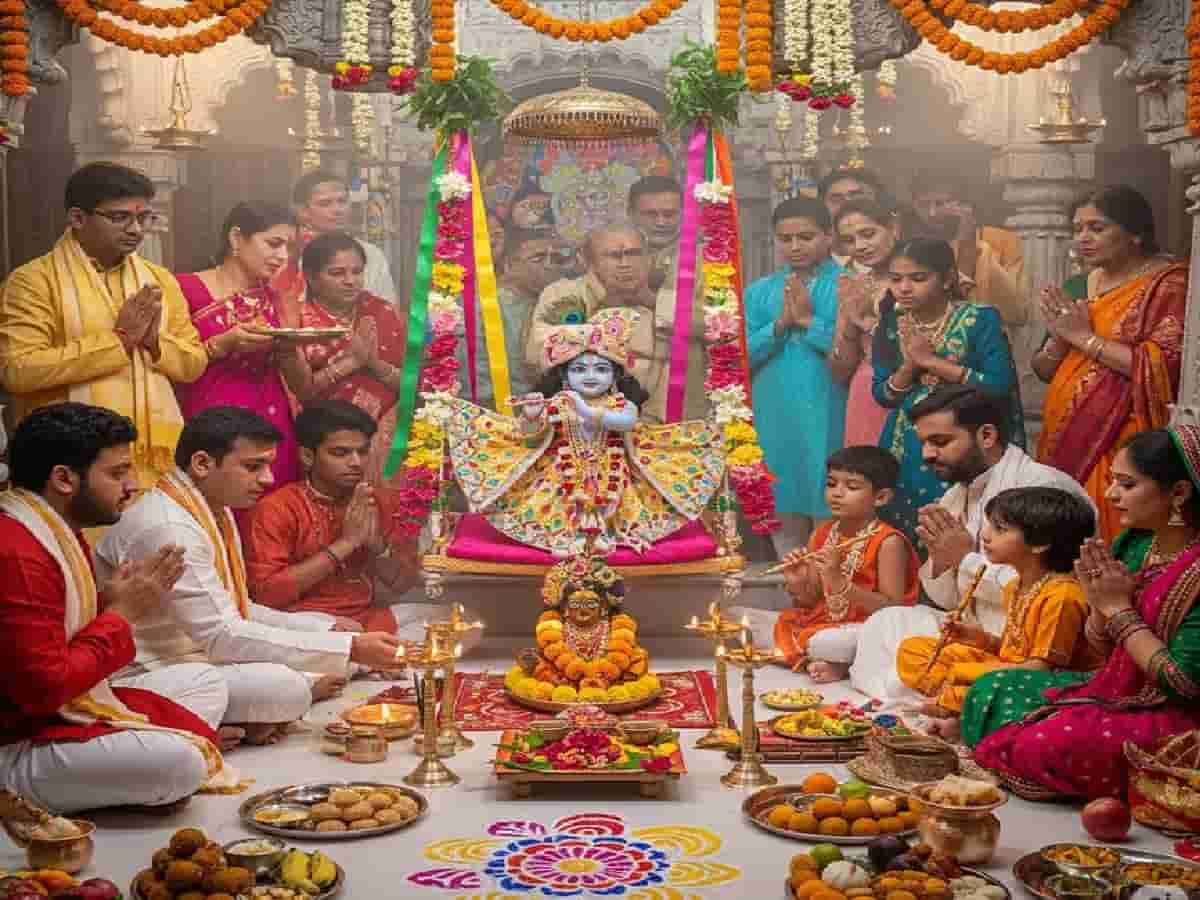
Why Do We Swing Laddu Gopal on Janmashtami, Exploring the Mythological and Astrological Significance
The divine festival of Krishna Janmashtami is celebrated with immense devotion, grandeur, and sanctity across Hindu households worldwide. Marking the auspicious birth anniversary of Lord Krishna on the eighth day (Ashtami) of the Krishna Paksha in the month of Bhadrapada—falling on September 4, 2026—the celebrations witness millions immersing themselves in intense prayer and service. A central ritual of this sacred night is decorating a cradle and lovingly swinging the child form of the deity, Laddu Gopal. But what is the profound mythological, cultural, and astrological significance behind swinging the Lord on his birthday
The Mythological Origin and Symbolism of Swinging Laddu Gopal
The tradition of swinging Lord Krishna originated from the heartlands of Braj, including Mathura and Vrindavan, eventually spreading across the globe as a cherished ritual. Swinging Laddu Gopal serves as a tender expression of maternal love, boundless affection, and immense joy over the divine child's birth.
Mirroring the divine motherly love of Yashoda, devotees participate in the ritual to establish a deeply personal and emotional connection with the Lord. Culturally, the act symbolizes the celebration of new life and divine joy, welcoming the playful infant Krishna into the hearts and homes of his worshippers.
Astrological Benefits and Flow of Positive Energy
Beyond spiritual devotion, performing the cradle ritual carries significant astrological weight. According to traditional beliefs, swinging Laddu Gopal on Janmashtami bestows several profound benefits upon households:
-
Mitigating Planetary Afflictions: The ritual is believed to help neutralize negative planetary influences and astrological doshas in a devotee's birth chart.
-
Infusing Positive Energy: The joyous atmosphere, devotional hymns, and sacred rituals transmit vibrant positive energy throughout the living space.
-
Invoking Prosperity: Participating in the cradling ceremony invites good fortune, peace, domestic harmony, and enduring prosperity into the family.
Traditional Rituals and Observances on Janmashtami
Janmashtami celebrations extend far beyond the swing. On this holy day, devotees engage in all-night vigils, singing devotional bhajans, dancing to Krishna hymns, and performing midnight worship to mirror the exact hour of the Lord's birth. Many faithful followers observe a rigorous day-long fast, breaking it only after midnight following the birth anniversary celebrations and the distribution of sacred prasad, uniting communities in shared devotion and spiritual grace.