







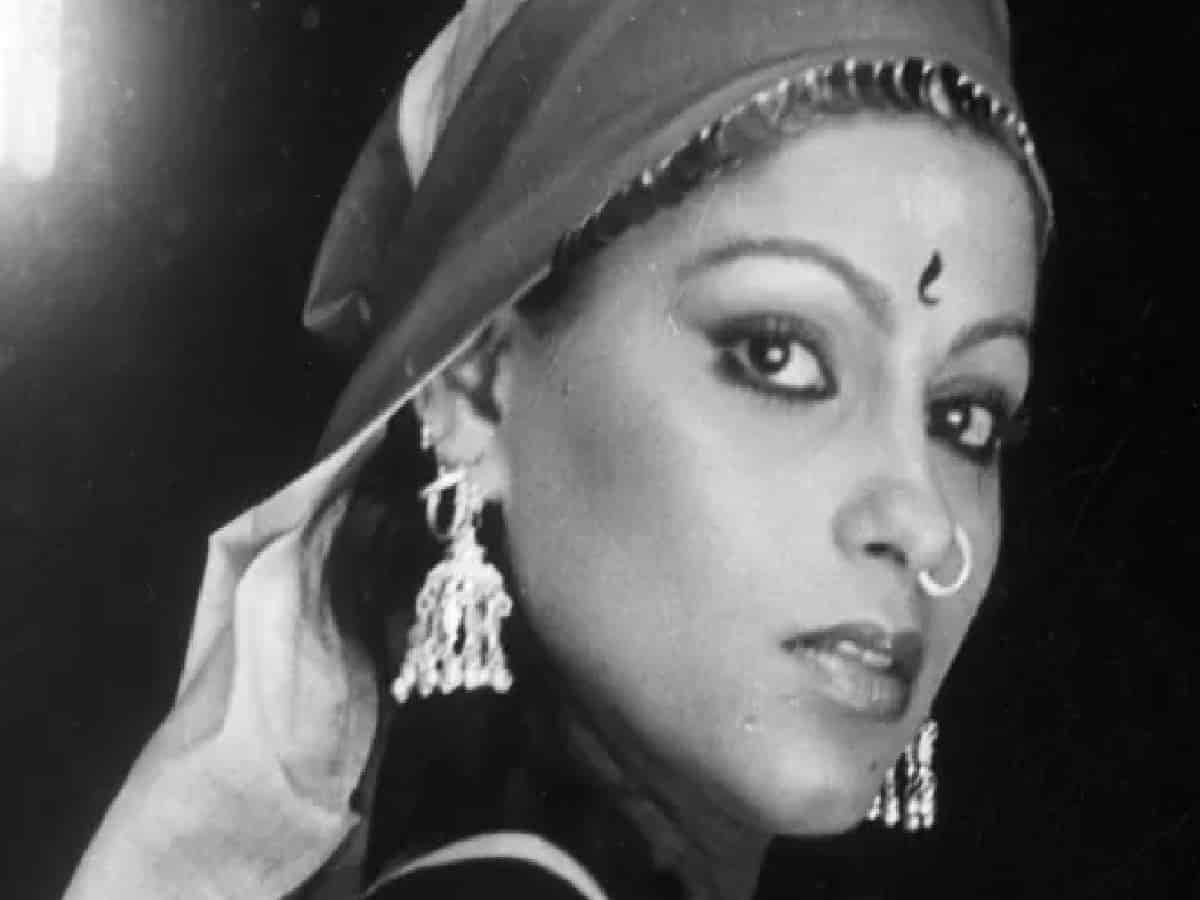
Simple Kapadia: Debuted at 18 With Rajesh Khanna, Died at 51
The history of Hindi cinema is filled with personalities whose artistic footprints remain deeply cherished despite their lives being cut short in their prime. Among the most compelling yet bittersweet narratives is that of actress and National Award-winning costume designer Simple Kapadia. Known in popular culture as the younger sister of iconic screen siren Dimple Kapadia and the maternal aunt of author-producer Twinkle Khanna, Simple stepped into the limelight at the tender age of 18, sharing screen space with the era's undisputed original superstar and her real-life brother-in-law, Rajesh Khanna. While the bright lights of movie stardom promised instant glamour, her true creative triumph did not lie in front of the lens. Instead, it blossomed behind the scenes, where her visionary aesthetic eye revolutionized Bollywood costume styling and earned her the country's highest artistic honors.
Born on August 15, 1958, into the prominent business family of Chunnibhai and Betty Kapadia, Simple grew up in Mumbai surrounded by cinematic conversation. Her elder sister Dimple had achieved overnight superstardom with Raj Kapoor’s 1973 teenage romance Bobby, setting astronomical industry expectations for the Kapadia siblings. When filmmaker Shakti Samanta began casting for his ambitious 1977 musical drama Anurodh, the spotlight fell squarely upon 18-year-old Simple. Cast opposite Rajesh Khanna—who had married Dimple in 1973—Simple was thrust into mainstream media scrutiny before she had even developed her own footing. Although the film's Laxmikant-Pyarelal soundtrack, featuring Kishore Kumar's immortal melody "Aapke Anurodh Pe," struck a chord across the country, Simple faced unforgiving public comparisons with her sister's natural screen presence.
A Decade on Silver Screens: Navigating 20 Films Across Bollywood
Despite the harsh critical reception that accompanied her debut, Simple demonstrated undeniable resilience by staying in the commercial film circuit for nearly a decade. She went on to appear in approximately 20 feature films, working alongside several of the industry's biggest male leads and celebrated filmmakers. In 1978, she reunited with Rajesh Khanna for the gripping crime thriller Chakravyuha, followed by J. Om Prakash's action drama Aap Ke Deewane in 1980.
Throughout the early 1980s, Simple appeared in a variety of supporting and ensemble roles, sharing the screen with legendary stars. She featured alongside Dev Anand in the heist thriller Lootmaar (1980), worked with Rishi Kapoor and Padmini Kolhapure in Nasir Hussain’s musical Zamaane Ko Dikhana Hai (1981), and took on character parts in emotional family dramas such as Jeevan Dhaara (1982) and Dulha Bikta Hai (1982). In 1985, she explored parallel cinema with the art-house project Rehguzar, starring opposite Shekhar Suman. However, navigating commercial cinema without a true passion for acting took its toll. Recognizing that her heart lay in color palettes, textile design, and garment craftsmanship rather than performing memorized lines, she made the decisive choice to bid farewell to acting forever following a dance sequence in the 1987 film Parakh.
A Second Act in Fashion: Winning the National Film Award for Rudaali
Walking away from acting marked the turning point of Simple Kapadia’s creative life. Rather than retreating into quiet obscurity, she channeled her innate visual taste and knowledge of cinematic staging into the nascent field of Bollywood costume design. During an era when formal film styling was still finding its identity in Mumbai studios, Simple brought meticulous research, authentic regional tailoring, and character-driven wardrobes to film sets.
Her defining masterpiece arrived with Kalpana Lajmi’s critically acclaimed 1993 rural drama, Rudaali. Tasked with outfitting the cast across Rajasthan's arid desert backdrop, Simple designed traditional ethnic attire for her sister Dimple Kapadia, who delivered a career-defining performance as the grief-stricken professional mourner Shanichari. The earthy textures, traditional block prints, and layered garments earned widespread acclaim. For her remarkable craftsmanship, Simple Kapadia—alongside co-designer Mala Dey—was awarded the prestigious National Film Award for Best Costume Design at the 40th National Film Awards ceremony. The coveted national honor served as ultimate vindication, cementing her authority as a top-tier industry technician whose creative vision transcended her early acting phase.
The Go-To Stylist for Bollywood's Biggest Stars
Following the success of Rudaali, Simple became one of the most sought-after wardrobe designers in Hindi cinema. Her versatility allowed her to seamlessly transition from gritty period realism to glamorous high-fashion aesthetics. She became a favored costume stylist for leading actors, developing bespoke looks for Sunny Deol, Tabu, Amrita Singh, Sridevi, and Priyanka Chopra. Her extensive design portfolio included major commercial productions like Ghatak: Lethal, Shaheed, Indian, Ajnabee, and Rok Sako To Rok Lo.
Beyond feature film wardrobes, Simple established a reputation for styling top celebrities at public galas, red carpet events, and high-profile wedding receptions. Fellow technicians and actors remembered her as a fiercely independent, warm professional with an eye for detail and an instinctive understanding of how fabric moved on screen. On the personal front, Simple dedicated her life to raising her son, Karan Kapadia, maintaining a tightly knit, loving bond with Dimple, her nieces Twinkle and Rinke, and son-in-law Akshay Kumar.
A Life Cut Tragically Short: Battle with Cancer and Enduring Legacy
Just as Simple was enjoying the peak of her creative and entrepreneurial career, tragedy struck. In 2006, she was diagnosed with cancer. Despite the severe physical pain and grueling cycles of medical therapy, her colleagues recalled that she remained remarkably brave, continuing to consult on design projects and support her family with cheerful optimism.
After fighting the illness for three agonizing years, Simple Kapadia passed away in an Andheri hospital in Mumbai on November 10, 2009, at the premature age of 51. Her passing left an irreplaceable void in the Kapadia family, with Dimple and nephew Akshay Kumar subsequently guiding young Karan Kapadia, who later entered Hindi cinema as an actor with the 2019 film Blank.
Though her life was cut tragically short, Simple Kapadia’s life journey remains an inspiring masterclass in self-discovery and reinvention. Having the courage to walk away from an unfulfilling acting career and forge an acclaimed path in fashion design proved that one’s destiny is defined by authentic passion rather than inherited expectations.




