







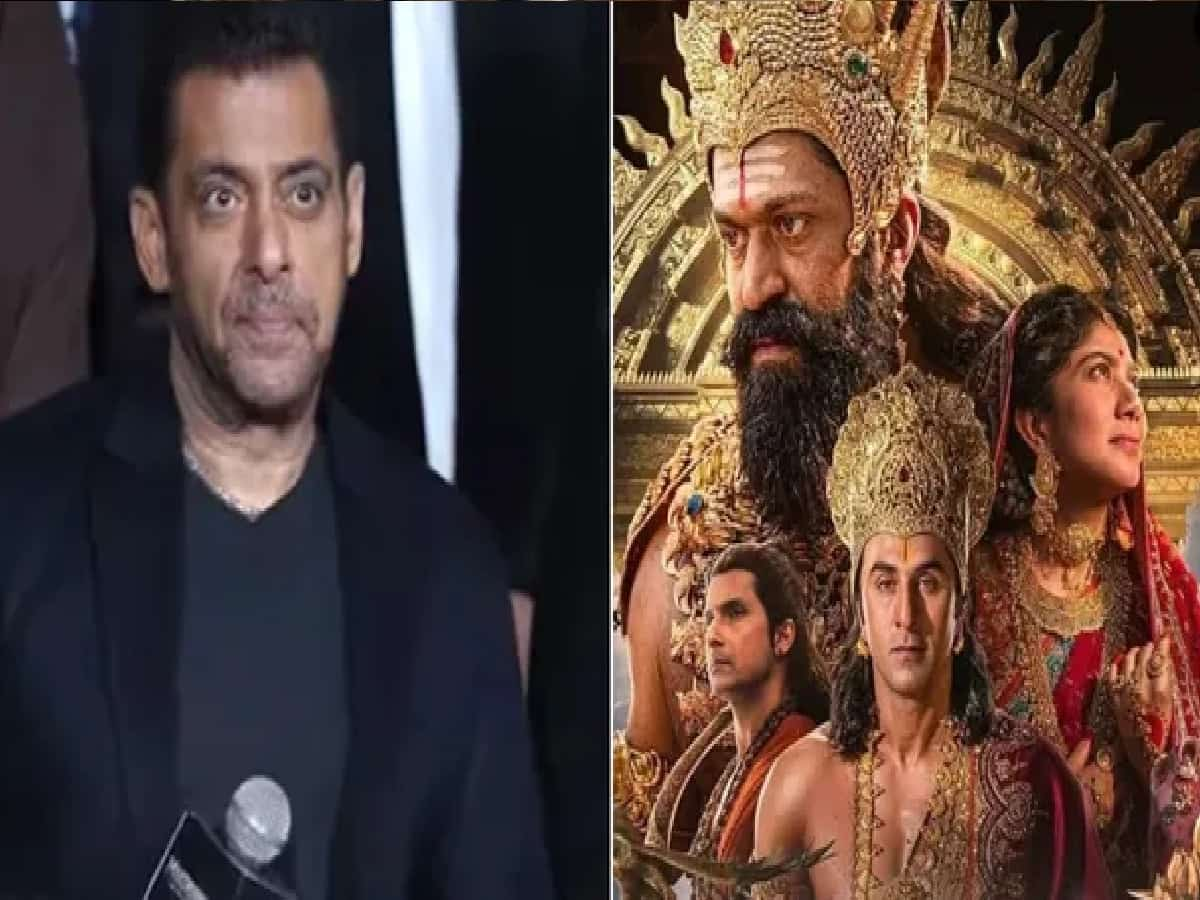
Salman Khan: I Was Going to Play Lord Ram 20 Years Ago
At a time when the Indian film industry is abuzz with discussions surrounding grand cinematic adaptations of the Ramayana, Bollywood superstar Salman Khan has shared an unexpected revelation from his career archives. Speaking in Mumbai during the promotional launch event for his war drama Maatrubhumi: May War Rest in Peace, the actor disclosed that nearly two decades ago—long before mega-budget mythologies and high-end visual effects became common in Indian cinema—he was actively preparing to portray Lord Ram on the silver screen. The project, however, was quietly shelved before cameras could roll following an unexpected media episode that prompted the makers to reconsider their plans. Weighing in on the contemporary discourse surrounding director Nitesh Tiwari's mythological production Ramayanam Part 1 starring Ranbir Kapoor, Salman urged critics and audiences to shift their attention away from production expenditures and computer graphics, championing Ramanand Sagar's iconic 1987 television serial as the definitive standard for storytelling.
The Shelved Epic: How Media Attention Halted Salman's 'Ramayana'
Recalling the conceptual stages of the unrealized production, Salman revealed that the ambition to bring the Sanskrit epic to modern cinema originated within his own family circle. Approximately twenty years ago, during the mid-2000s, Salman's brother envisioned a feature-length cinematic retelling of the Ramayana, with Salman cast in the titular role of Maryada Purushottam Lord Ram and his brother slated to play Lakshman. At the time, Bollywood had not yet entered the era of digital universe-building or multi-part mythological epics, making the concept a bold, uncharted venture for mainstream commercial cinema.
However, the film faced immediate hurdles shortly after early plans surfaced in industry circles. Salman recounted that one evening, as he and his brother were departing a venue, they were swarmed by photojournalists who captured candid photographs of the pair. The following day, sections of the entertainment press published the images with superimposed crowns digitally placed over their heads, accompanied by headlines mocking their prospective casting as Ram and Lakshman. Sensing that the project risked being trivialized by media scrutiny before creative work could properly develop, the team decided to shelve the production permanently. Rather than subjecting sacred figures to media sensationalism, the family opted to walk away from the ambitious endeavor, leaving Salman's portrayal of Lord Ram as one of Hindi cinema's intriguing unfilmed chapters.
Ramanand Sagar’s Enduring Standard: Character Over High-End VFX
Salman's candid reflections arrived amid ongoing debates across the Indian film trade regarding the scale, visual presentation, and box office viability of modern mythological adaptations. When asked directly by journalists which version of the Ramayana held a special place in his heart, the superstar bypassed modern cinematic offerings and expressed his admiration for television pioneer Ramanand Sagar’s landmark 1987 adaptation. Describing the vintage television series as a classic that captured the spiritual core of the epic, Salman noted that the emotional simplicity and devotional sincerity of the 1980s broadcast created an emotional bond with viewers that high technology cannot replicate.
Expanding on the public commentary surrounding Ranbir Kapoor’s newly released Ramayanam Part 1, which industry trackers have framed around a staggering ₹4,000-crore budget and complex international VFX pipelines, Salman offered a perspective on artistic priorities. The actor emphasized that discussing the epic primarily through the lens of capital expenditure and digital wizardry does a disservice to the sacred literature. He urged audiences, critics, and commentators to look past production costs and instead focus on the virtues, sacrifices, and moral depth of Lord Ram, Goddess Sita, and King Ravana. Reflecting on his own role in Maatrubhumi, Salman remarked that true heroism on screen should draw inspiration from the values embodied by Lord Ram—representing the ideals of a dutiful son, a steadfast brother, a devoted husband, and a disciplined warrior standing firm on the battlefield.
Inside 'Maatrubhumi': Galwan Valley Saga and the December Box Office Clash
Beyond mythological narratives, the Mumbai media event spotlighted Salman Khan’s forthcoming theatrical release, Maatrubhumi: May War Rest in Peace. Directed by Apoorva Lakhia and produced under the banner of Salman Khan Films (SKF), the high-stakes patriotic war drama is inspired by the real-life confrontations of the 2020 Galwan Valley clash between Indian and Chinese armed forces in eastern Ladakh. Starring opposite Salman is versatile actress Chitrangada Singh, alongside an ensemble cast depicting the valor, tactical grit, and sacrifices made by Indian military personnel stationed along frozen high-altitude borders.
Addressing scheduling adjustments, the makers confirmed that Maatrubhumi is locked for a nationwide theatrical release on December 4, 2026, shifting slightly from its earlier targeted dates to give post-production teams sufficient room to refine the film's combat sequences and background visual effects. In a show of gratitude toward veteran audiences, Salman announced a special welfare initiative during the launch, confirming that cinema tickets for the film will be priced at a nominal ₹11 for senior citizens aged 75 and above throughout the domestic theatrical run. The December 4 release sets up an intriguing box office face-off on Dalal Street and across national multiplex circuits, as Maatrubhumi is slated to go head-to-head with Shraddha Kapoor's much-anticipated cinematic project, Itha.
Cultural Reverence: Why the Ramayana Remains Indian Cinema's Holy Grail
Salman Khan’s commentary highlights the unique position the Ramayana occupies within the Indian collective consciousness. Over the decades, attempts to bring the foundational epic to contemporary screens have drawn intense public scrutiny. While modern filmmaking technologies offer the ability to render fantastical kingdoms, celestial weapons, and divine battles with photographic clarity, filmmakers routinely discover that technical execution alone cannot substitute for emotional and spiritual resonance.
By highlighting the contrast between the technical spectacle of contemporary projects and the simple, character-driven storytelling of Ramanand Sagar, Salman's observations mirror a growing sentiment among cinema enthusiasts. Whether exploring historical wartime conflicts in Maatrubhumi or contemplating timeless spiritual lore, the essence of cinematic storytelling rests in the moral convictions of its characters. As Salman prepares to lead the box office charge this December, his unexpected stroll down memory lane provides an insightful glimpse into what might have been, reminding audiences that even the biggest stars treat India’s greatest epic with deep artistic reverence.




