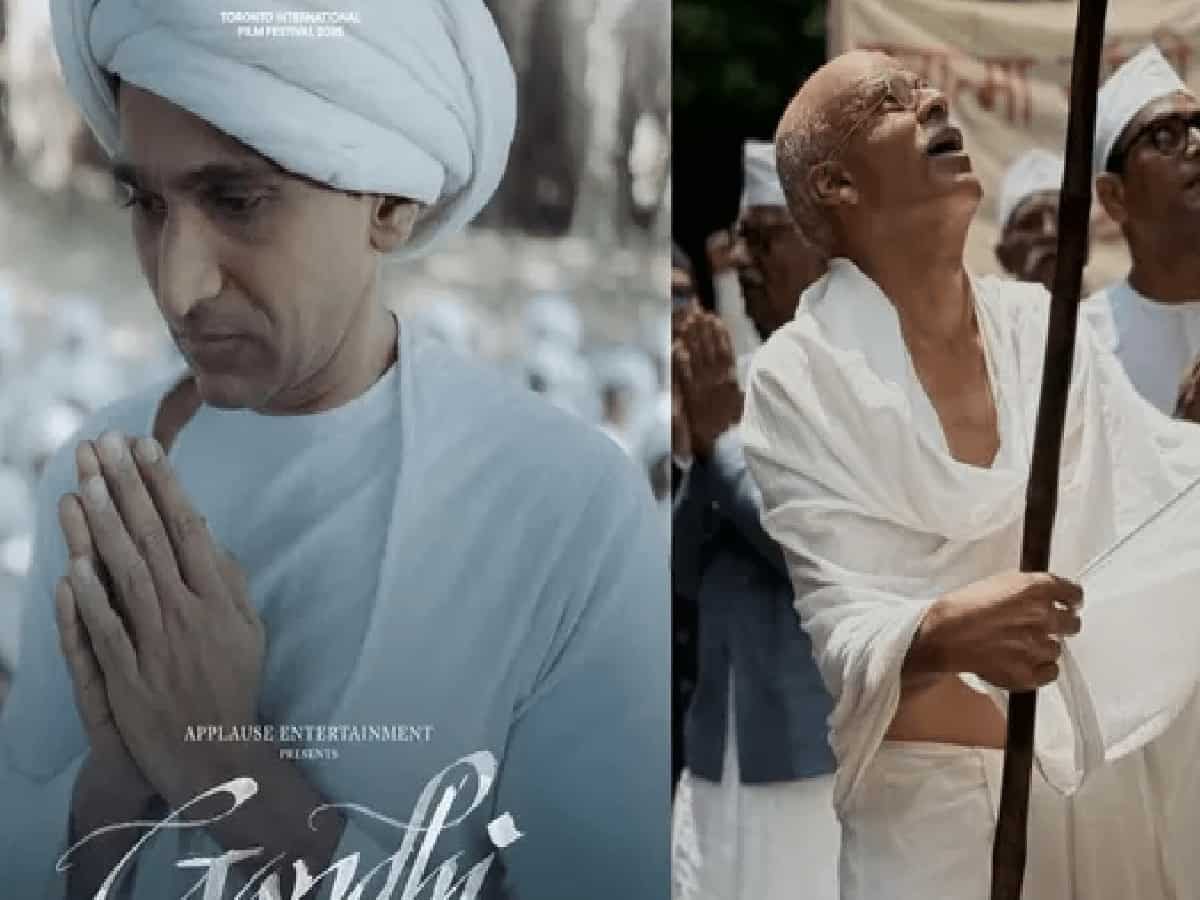
From Pratik Gandhi's Epic Series to Manoj Bajpayee's New Film, Indian Cinema Rediscovers the Mahatma
While the Father of the Nation, Mahatma Gandhi, was never known to be a dedicated patron of cinema during his lifetime, filmmakers across decades have persistently turned their lenses toward his transformative philosophy, political convictions, and complex personal relationships. From monumental biographical epics to contemporary slice-of-life social satires, celluloid interpretations of Gandhi continue to evolve with each generation of storytellers. In an era marked by historical period dramas like The Bengal Files, Swatantra Veer Savarkar, and the acclaimed web series Freedom at Midnight, cinematic fascination with Gandhi is witnessing a major renaissance, headlined by director Hansal Mehta's sprawling three-season biographical series starring Pratik Gandhi and Sudhir Mishra's upcoming feature film 'Gandhi and My Mother' featuring Manoj Bajpayee stepping into the role of the Mahatma for the very first time.
Decades of Cinematic Portrayals: From Attenborough's Classic to Lage Raho Munna Bhai
Cinema's engagement with Gandhi spans diverse genres, each illuminating distinct facets of his historic footprint:
-
Richard Attenborough's Global Magnum Opus (1982): Sir Richard Attenborough's Academy Award-winning Gandhi, starring Ben Kingsley, chronicled Bapu's life in monumental scale, tracing his early civil rights struggles in South Africa, his return to lead India's non-violent freedom movement, and his tragic assassination in 1948.
-
Shyam Benegal's Focus on the Crucible of South Africa: A decade and a half later, master director Shyam Benegal helmed The Making of the Mahatma, intentionally bypassing Gandhi's later political peak to focus strictly on his 21 formative years in South Africa starting from 1893, capturing how a young, inexperienced barrister faced systemic racism, learned from adversity, and evolved into an extraordinary moral force.
-
Intimate Domestic Drama in Gandhi, My Father: Directed by Feroz Abbas Khan, Gandhi, My Father shifted the narrative away from public rallies to explore the strained, heartbreaking personal equation between Mahatma Gandhi and his rebellious eldest son, Harilal Gandhi.
-
Narrative Catalyst and Modern Gandhigiri: In cinematic landmarks such as Sardar, Kamal Haasan's Hey Ram, and The Legend of Bhagat Singh, Gandhi's ideological presence provided essential historical tension; however, Rajkumar Hirani's blockbuster Lage Raho Munna Bhai emerged as the most commercially successful adaptation, modernizing his concepts of satyagraha into everyday "Gandhigiri" to solve modern social conflicts with wit and warmth.
Hansal Mehta's 'Gandhi': Unraveling Mohandas the Human Across Three Epic Seasons
Acclaimed filmmaker Hansal Mehta has embarked on one of the most comprehensive long-format adaptations of Gandhi's life, adapted directly from celebrated historian Ramachandra Guha's authoritative biographies, Gandhi Before India and Gandhi: The Years That Changed the World:
-
Festival Acclaim and Vision: After premiering at the prestigious Toronto International Film Festival (TIFF), the multi-season series approaches the subject by looking at the ordinary individual first, dissecting the gradual psychological journey that transformed Mohandas Karamchand Gandhi into the revered Mahatma.
-
Ten Years on Stage to the Screen: Leading man Pratik Gandhi, who has portrayed the Mahatma on Gujarati and Hindi theatrical stages for a decade in 100-minute productions, brings deep emotional familiarity to the multi-hour canvas.
-
The 1888 Genesis: The first season begins in 1888, catching Mohan as a vulnerable 18-year-old student venturing to London to discover himself, laying the groundwork for subsequent seasons that chronicle his South African trials and triumphant return to lead the Indian subcontinent.
Manoj Bajpayee as Gandhi: Sudhir Mishra's Unconventional Narrative in 'Gandhi and My Mother'
In an intriguing casting revelation, versatile powerhouse actor Manoj Bajpayee takes on the role of the Father of the Nation for the first time in director Sudhir Mishra's upcoming cinematic venture:
-
Rejecting Conventional Repetition: Acknowledging that Gandhi's conventional biography has been told numerous times, Sudhir Mishra noted that repeating familiar textbook narratives holds little artistic value, choosing instead a novel meta-narrative structure.
-
The Plot Core of 'Gandhi and My Mother': The film centers on an emotional, interpersonal dynamic where an aging mother encourages her filmmaker son to direct a project on Mahatma Gandhi. As the son immerses himself in production, deep ideological and emotional differences emerge between mother and son.
-
Enduring Relevance Across Generations: The continuing wave of new films and series reaffirms that Mahatma Gandhi's legacy is far from a frozen chapter in school textbooks; rather, his principles of non-violence, moral courage, and truth invite fresh creative introspection in every passing era.