







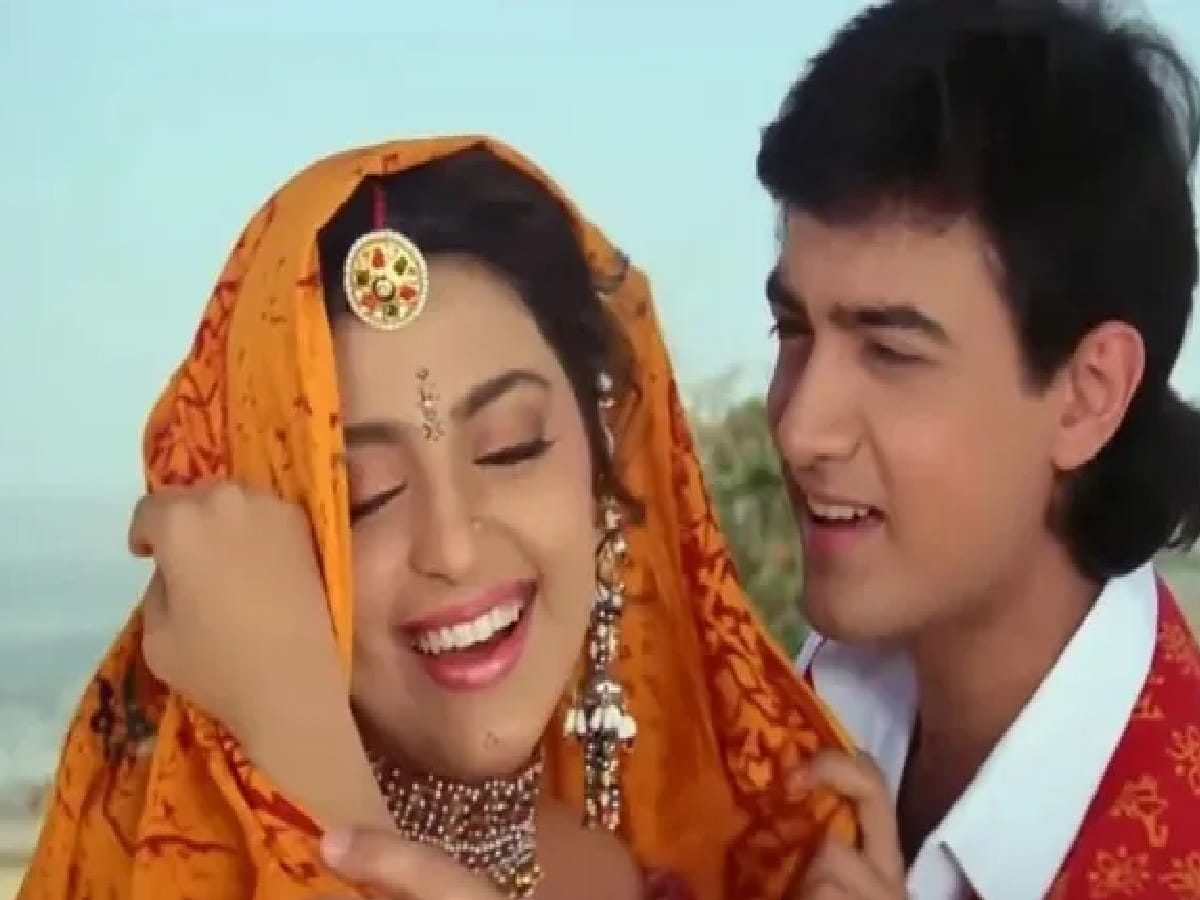
33 Years of 'Ghoonghat Ki Aad Se': Aamir & Juhi's 90s Hit Remains Iconic
Certain melodies in Hindi cinema transcend charts and decades, echoing from bustling street corners, wedding processions, auto-rickshaws, and family living rooms long after their theatrical release. Thirty-three years ago, when Aamir Khan and Juhi Chawla teamed up for the beloved 1993 family romantic comedy Hum Hain Rahi Pyar Ke, few could have predicted that one playful, flirtatious duet from the soundtrack would remain an undisputed favorite among 1990s music lovers even in 2026. That track is "Ghoonghat Ki Aad Se," a sparkling romantic number brought to life by the golden-era playback voices of Kumar Sanu and Alka Yagnik, composed by the chart-topping duo Nadeem–Shravan, and penned by celebrated lyricist Sameer. Whether you grew up rewinding audio cassettes in Lucknow, Kanpur, Patna, Jaipur, Bhopal, Mumbai, New Delhi, Kolkata, or Bengaluru, or still hear its unmistakable opening beats at festive gatherings today, "Ghoonghat Ki Aad Se" captures the pure innocence and infectious joy that defined 1990s Bollywood romance.
Why 'Ghoonghat Ki Aad Se' Became a Cultural Phenomenon in 1993
Released on July 23, 1993, Hum Hain Rahi Pyar Ke arrived at the height of Nadeem–Shravan’s musical dominance. While the album boasted several memorable tracks—including "Yunhi Kat Jaayega Safar," "Mujhse Mohabbat Ka," "Woh Meri Neend Mera Chain," and "Bambai Se Gayi Poona"—it was "Ghoonghat Ki Aad Se" that swept across towns and villages alike.
Alka Yagnik’s expressive, mischievous vocals paired effortlessly with Kumar Sanu’s velvety delivery, turning the six-minute duet into an instant favorite among young women and college-goers of the 1990s. Even three decades later, the song’s rhythmic tabla-dholak groove and Sameer’s relatable lyrics continue to spark instant nostalgia across radio stations and digital streaming playlists.
Aamir Khan and Juhi Chawla's Unmatched On-Screen Chemistry
A major reason "Ghoonghat Ki Aad Se" remains etched in collective memory is the effortless, natural chemistry between Aamir Khan (playing Rahul Malhotra) and Juhi Chawla (playing runaway bride Vyjayanti Iyer). After Shah Rukh Khan, Aamir Khan formed Juhi Chawla’s most celebrated on-screen pairing—having first created magic together in Qayamat Se Qayamat Tak (1988) and later reuniting in classics like Ishq (1997).
In Hum Hain Rahi Pyar Ke, their banter felt wonderfully unforced and endearing. Rather than relying on grand choreography or lavish sets, the picturization of "Ghoonghat Ki Aad Se" thrived on stolen glances, playful teasing, and genuine warmth—making the romance feel deeply relatable to everyday audiences.
Lesser-Known Facts About 'Hum Hain Rahi Pyar Ke' and Aamir Khan's Screenwriting Debut
Directed by Mahesh Bhatt and produced by Tahir Hussain, Hum Hain Rahi Pyar Ke was made on a modest budget yet emerged as one of the highest-grossing Hindi films of 1993, even winning the Filmfare Award for Best Film. What many casual viewers still do not realize is that Aamir Khan co-wrote the screenplay alongside Robin Bhatt—marking the very first film of Aamir’s illustrious career in which he took on formal screenwriting duties.
| Film & Song Highlight | Verified Production & Musical Details |
| Song & Film Title | "Ghoonghat Ki Aad Se" from Hum Hain Rahi Pyar Ke (Released July 23, 1993) |
| Lead On-Screen Pair | Aamir Khan (Rahul Malhotra) and Juhi Chawla (Vyjayanti Iyer) |
| Playback Singers | Kumar Sanu and Alka Yagnik |
| Music & Lyrics | Composed by Nadeem–Shravan; Lyrics by Sameer |
| Director, Writers & Cast | Directed by Mahesh Bhatt; Screenplay by Aamir Khan & Robin Bhatt; features Dalip Tahil, Navneet Nishan, Tiku Talsania, and child actor Kunal Kemmu |
| South Indian Remakes | Remade in Telugu as Bhale Maavayya (1994) and in Malayalam as Priyam (2000) |
Alongside Aamir and Juhi, the film featured a memorable ensemble cast including Dalip Tahil, Navneet Nishan, Tiku Talsania, Mushtaq Khan, and a young Kunal Kemmu. Following its sweeping box office triumph in Hindi, the heartwarming story was subsequently adapted in South Indian cinema—remade in Telugu as Bhale Maavayya (1994) starring Suman and in Malayalam as Priyam (2000) starring Kunchacko Boban—while "Ghoonghat Ki Aad Se" remains a timeless jewel of 1990s Indian film music.




