







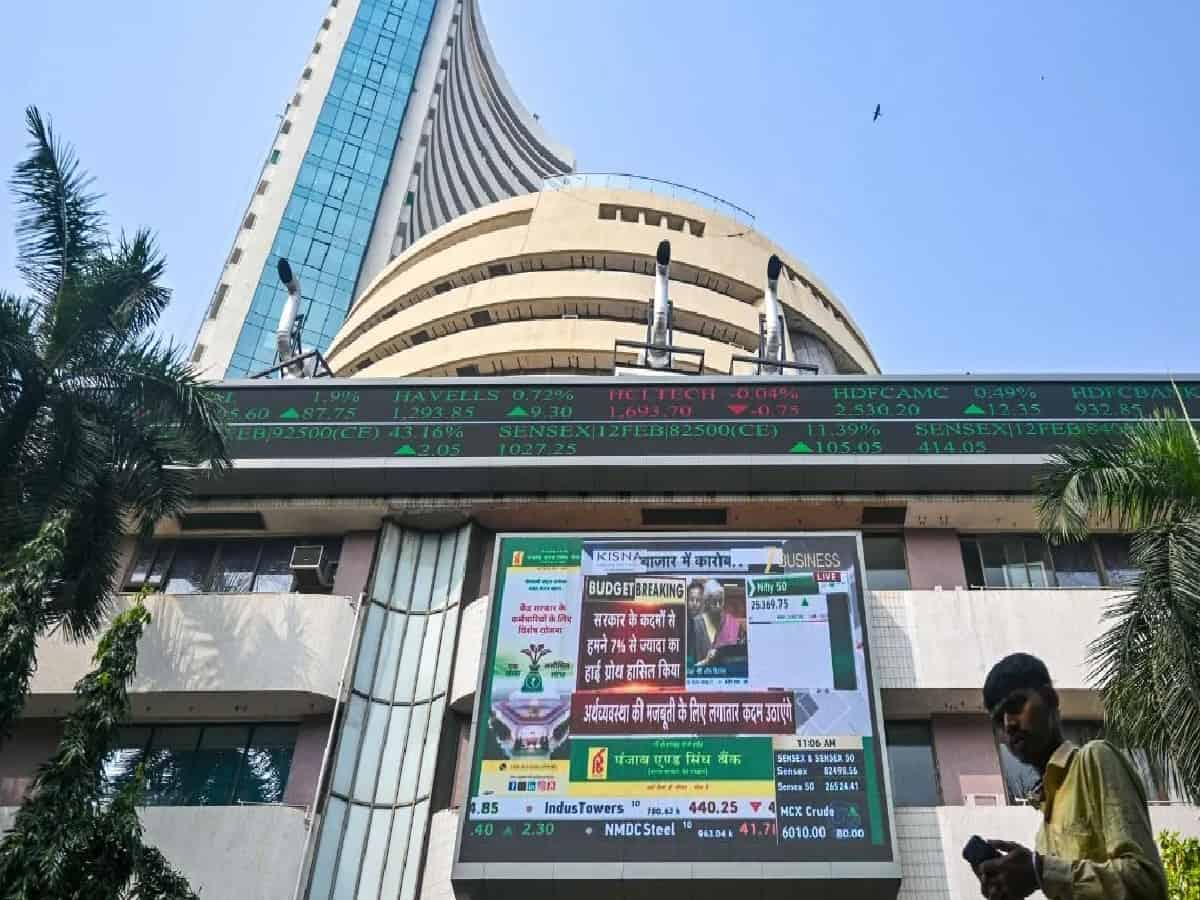
FPIs Make Big Comeback on Dalal Street, Buy ₹1.15 Lakh Cr in Nov 2026
Following months of relentless selling that weighed heavily on Indian equity benchmarks and the rupee, Foreign Portfolio Investors (FPIs) have staged a dramatic and historic comeback on Dalal Street, pumping nearly ₹1.15 lakh crore into domestic shares in less than three weeks of November. According to official depository figures released by the National Securities Depository Limited (NSDL) and widely reported across Indian financial markets on Saturday, November 21, 2026, overseas institutional buyers have recorded net equity inflows of ₹1,14,959 crore up to November 20, 2026—representing not only the highest single-month foreign inflow of 2026, but also an all-time monthly inflow record surpassing the previous peak of ₹70,896 crore logged in November 2020. The sharp reversal stands in stark contrast to the persistent outflows witnessed through most of the calendar year, including net equity sales of ₹34,843 crore in October 2026 and ₹35,861 crore in September 2026. Market analysts attribute this sudden shift in global capital allocation to a convergence of domestic and international triggers: a steep sell-off in overvalued Artificial Intelligence (AI) stocks across the United States, South Korea, Taiwan, and Japan, clearer political visibility in Washington after the Democratic Party captured majorities in both the House of Representatives and the Senate in the US midterm elections, softer international crude oil prices, resilient corporate earnings in India, and more attractive large-cap valuations following earlier market corrections. Sectoral deployment data show that foreign funds concentrated heavily on domestic consumption and credit growth, led by ₹43,100 crore in Financial Services, followed by ₹8,100 crore in Consumer Durables/Other Consumer Products, ₹7,600 crore in Telecom, ₹7,600 crore in Automobiles, ₹5,100 crore in IT and Hardware, ₹3,000 crore in FMCG, and ₹2,600 crore in Other Services. Yet despite November's blockbuster buying spree, NSDL figures underscore a sobering reality: because FPIs pulled out roughly ₹4.5 lakh crore between January and October 2026—including a massive ₹1.18 lakh crore outflow in March alone—foreign investors still remain net sellers for the full calendar year. For retail shareholders, mutual fund SIP investors, market brokers, and savers across Unnao, Lucknow, Kanpur, Varanasi, Mumbai, Ahmedabad, Bengaluru, Hyderabad, and New Delhi, understanding both the opportunities and limits of FPI flows is vital before deploying capital.
FPI Buying in Indian Equities (Up to Nov 20, 2026): Flow Trends & Sector Allocation
To bring together the exact NSDL monthly investment figures, the year-to-date outflow context, and the sector-wise breakup of where foreign institutional money has been deployed in November 2026, the tables below summarize the verified market data:
| FPI Flow Metric / Period | Verified NSDL / Market Figure | Market Significance |
| November 2026 Net Equity Inflow (Till Nov 20) | +₹1,14,959 Crore (~₹1.15 lakh crore) | Highest monthly FPI equity inflow of 2026 and an all-time monthly inflow record on Dalal Street. |
| October 2026 Net Equity Flow | -₹34,843 Crore (Net Outflow) | Followed September's -₹35,861 crore sell-off before sentiment flipped sharply in November. |
| Peak Monthly Outflow in 2026 (March) | -₹1.18 Lakh Crore (Net Outflow) | Marked the single worst month of foreign selling during the 2026 withdrawal cycle. |
| Cumulative Jan–Oct 2026 Outflow vs. Full-Year Status | ~₹4.5 Lakh Crore withdrawn (Jan–Oct) | Even after ₹1.15 lakh crore of November buying, FPIs remain net sellers on a full-year 2026 basis. |
Top Sectors Attracting Foreign Institutional Inflows in November 2026
| S. No. | Sector Name | FPI Net Investment (₹ Crore) | Key Investment Driver |
| 1 | Financial Services | ₹43,100 Crore | Strong bank balance sheets, credit growth, and below-average FPI positioning. |
| 2 | Other Consumer Products | ₹8,100 Crore | Domestic discretionary demand and festive/wedding season momentum. |
| 3 | Telecom | ₹7,600 Crore | Tariff stability, ARPU expansion, and digital data consumption. |
| 4 | Automobiles | ₹7,600 Crore | Rural recovery, easing commodity costs, and strong festive dispatches. |
| 5 | IT & Hardware | ₹5,100 Crore | Selective value buying after global tech valuation resets. |
| 6 | FMCG | ₹3,000 Crore | Defensive earnings visibility and easing input inflation. |
| 7 | Other Services | ₹2,600 Crore | Broad-based allocation across domestic logistics, hospitality, and healthcare. |
Why Global AI Selling, US Midterm Results, and Lower Oil Sparked the Turnaround
Behind the sudden ₹1,14,959 crore surge of overseas money into Mumbai's stock exchanges lies a major global rotation out of crowded artificial intelligence trades. As valuation concerns triggered sharp sell-offs in AI-linked technology stocks across the United States, South Korea, Taiwan, and Japan, global fund managers began reallocating capital toward large emerging markets with lower direct AI concentration and strong domestic demand—putting India at the top of the list. At the same time, the outcome of the US midterm elections, where the Democratic Party won majorities in both the House of Representatives and the Senate, reduced immediate policy uncertainty in Washington, while falling global crude oil prices improved India's inflation and current account outlook. Combined with reasonable large-cap valuations after months of consolidation and steady Q2 corporate results, foreign funds moved aggressively into index heavyweights—particularly Financial Services (₹43,100 crore), Consumer Products (₹8,100 crore), Telecom (₹7,600 crore), and Automobiles (₹7,600 crore).
What FPI Buying Means for Ordinary Investors—and Why Caution Still Matters
While renewed foreign inflows provide strong liquidity support for large-cap banking, financial, and automotive stocks—helping cushion the Sensex and Nifty during global volatility—market experts caution that FPIs remain net sellers for 2026 overall after withdrawing roughly ₹4.5 lakh crore between January and October. Because institutional flows can shift rapidly in response to US Treasury yields, rupee movements, crude oil swings, or global AI market trends, retail investors should never buy stocks blindly on headline FPI numbers alone. Instead, disciplined investors should anchor decisions in company fundamentals, earnings visibility, reasonable valuations, and long-term asset allocation.




