







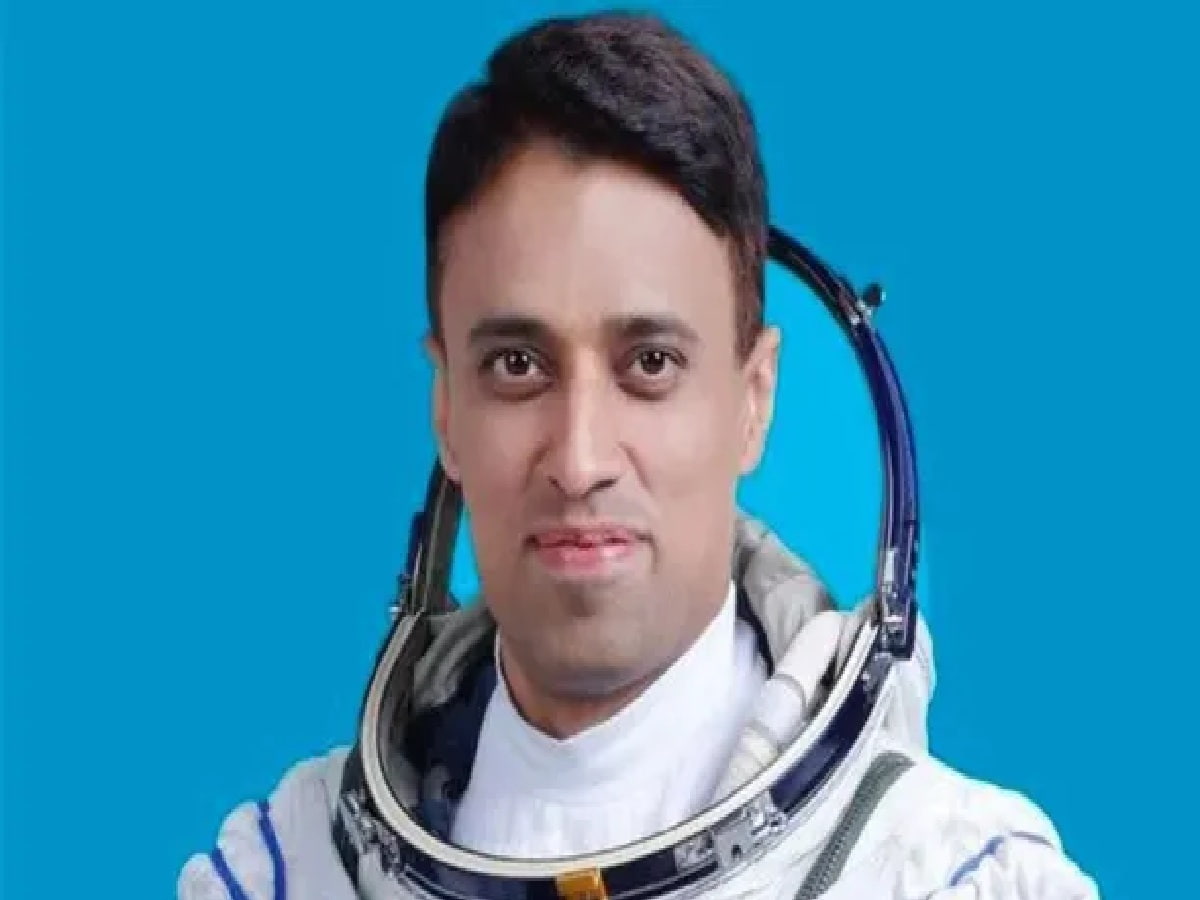
Zeeshan Ali Becomes First Foreign Astronaut Bound for Tiangong
Following official crew confirmation by the China Manned Space Agency (CMSA) on Tuesday, November 24, 2026 and a successful morning liftoff on Wednesday, November 25, 2026, 40-year-old Pakistan Air Force pilot Muhammad Zeeshan Ali has etched his name into spaceflight history as Pakistan's first orbital astronaut and the first foreign traveler to visit China's orbiting Tiangong space station. Highlighted across international science and policy desks on Wednesday, November 25, 2026, the milestone followed CMSA's Tuesday press briefing at the Jiuquan Satellite Launch Centre in northwestern China, where officials formally named Zeeshan Ali as payload specialist aboard the Shenzhou-24 mission alongside mission commander and spacecraft pilot Tang Hongbo (51) and flight engineer Wu Yi (39). Carrying the three-member crew atop a Long March-2F carrier rocket, Shenzhou-24 lifted off from Jiuquan at 8:18 AM Beijing time (5:48 AM IST / 5:18 AM PKT) on Wednesday, with docking at Tiangong scheduled roughly 3.5 hours after liftoff. Built upon the bilateral astronaut cooperation agreement signed in February 2025 between CMSA and Pakistan's space agency SUPARCO, the mission assigns Zeeshan Ali to spend about a week aboard Tiangong installing and initializing four Pakistani scientific experiments in microgravity before returning to Earth aboard the Shenzhou-23 spacecraft—which has been docked at the orbital station since May—while Tang Hongbo and Wu Yi remain in orbit for a six-month rotation alongside Shenzhou-23 crewmate Zhu Yangzhu. For space observers, researchers, and readers across Islamabad, Beijing, Jiuquan, New Delhi, Lucknow, Mumbai, and Bengaluru, the flight marks the operational debut of international crew participation aboard China's space station.
Shenzhou-24 & Zeeshan Ali's Tiangong Flight: Crew Roles, Training & Return
To bring together the three-person Shenzhou-24 crew roster and spacecraft turnaround plan, how Muhammad Zeeshan Ali prepared in China and what scientific work he will oversee in orbit, and how the SUPARCO-CMSA partnership shapes wider regional space cooperation, the tables below organize the verified mission facts:
Shenzhou-24 Crew Roster & Mission Architecture (November 24–25, 2026)
| Mission Component | Verified Details | Operational Role & Timeline |
| Mission Commander & Pilot | Tang Hongbo (51, China — veteran taikonaut). | Commands Shenzhou-24 and remains aboard Tiangong for a six-month station rotation. |
| Flight Engineer | Wu Yi (39, China). | Serves as flight engineer on Shenzhou-24 and stays aboard Tiangong for a six-month stay alongside Tang Hongbo and Zhu Yangzhu. |
| Payload Specialist (First Foreign Visitor) | Muhammad Zeeshan Ali (40, Pakistan Air Force pilot). | First Pakistani astronaut in orbit and first non-Chinese astronaut to visit Tiangong; conducts ~1 week of microgravity science before returning via Shenzhou-23. |
| Launch & Docking Schedule | Named officially at Jiuquan press conference on Tuesday, November 24, 2026; launched Wednesday, November 25, 2026 at 8:18 AM Beijing time (5:48 AM IST / 5:18 AM PKT) aboard a Long March-2F rocket. | Automated rendezvous and docking with Tiangong scheduled approximately 3.5 hours post-liftoff. |
Scientific Objectives & Bilateral Space Cooperation Milestones
| Dimension | Key Facts & Quotes Reported | Significance |
| Intensive Training & Mandarin Preparation | Selected from roughly 200 applicants alongside backup finalist Khurram Dawood; trained in centrifuges, simulators, emergency drills, experiment protocols, and Mandarin—quoting a classic Chinese poem on climbing higher to see farther during Tuesday's press conference. | Enabled seamless technical integration with Chinese flight controllers and crewmates aboard Tiangong. |
| Orbital Experiments & Return Vehicle | Will install and initialize four Pakistani microgravity experiments (which run over 6–12 months aboard the station alongside ~90 broader Shenzhou-24 science tests in space biology, medicine, materials science, and physics) and return on Shenzhou-23. | Establishes practical orbital payload workflow for SUPARCO scientists without requiring a six-month crew stay. |
| Bilateral Agreement & Future Roadmap | Follows the February 2025 CMSA–SUPARCO astronaut agreement and coincides with the 75th anniversary of China–Pakistan diplomatic ties; SUPARCO also cited tentative 2028 lunar mission collaboration building on 2024's iCube-Qamar orbiter on Chang'e-6. | Positions Tiangong as an active multinational research platform as China expands international partnerships. |
Why Opening Tiangong to Partner Nations Signals a New Space Era
For decades, human orbital stations operated under two distinct spheres—the US-led International Space Station (ISS) consortium and China's independent Tiangong complex. By welcoming Muhammad Zeeshan Ali as the first international astronaut aboard Tiangong and utilizing a staggered crew-return architecture via Shenzhou-23, Beijing has demonstrated a repeatable short-duration flight model for partner space agencies—an approach closely watched across New Delhi, Bengaluru, Lucknow, Mumbai, Islamabad, and Beijing as multiple nations expand human spaceflight capabilities.
What to Watch Next During Zeeshan Ali's Week in Orbit
Over the next several days across Jiuquan, Beijing, Islamabad, New Delhi, and global space-tracking communities, attention will focus on Shenzhou-24's docking with Tiangong, live outreach broadcasts from the station, verification data from the four installed SUPARCO microgravity experiments, and Muhammad Zeeshan Ali's upcoming undocking and landing aboard the Shenzhou-23 return capsule.




