







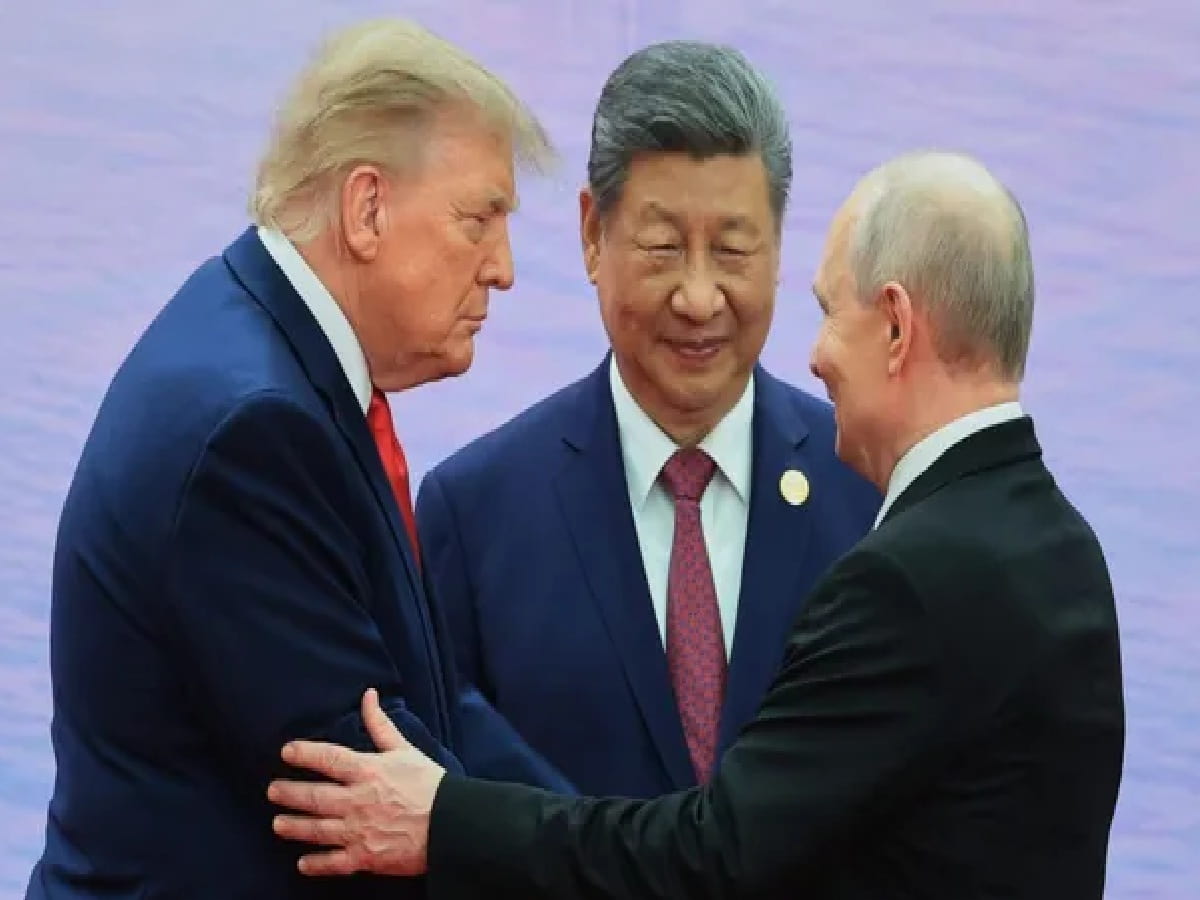
What Is 'Yalta 2.0' Trump, Xi & Putin Meet in Shenzhen for Key Talks
At a pivotal moment of global geopolitical flux, the world's three most consequential leaders—United States President Donald Trump, Chinese President Xi Jinping, and Russian President Vladimir Putin—are converging in the southern Chinese technology hub of Shenzhen for an extraordinary, high-stakes trilateral summit. Taking place on Thursday, November 19, 2026, on the sidelines of the Asia-Pacific Economic Cooperation (APEC) Summit, the gathering marks the first direct three-way diplomatic encounter among the heads of state of Washington, Beijing, and Moscow. Widely dubbed "Yalta 2.0" by international commentators and diplomatic historians, the Shenzhen summit unfolds against a turbulent backdrop: two active regional wars in Ukraine and Iran, a dangerous regulatory vacuum following the February 2026 expiration of the New START nuclear treaty, fierce technological rivalry over artificial intelligence (AI) and advanced semiconductors, and fragile trade truces between the world's largest economies. Preceded by warm airport welcomes and bilateral engagements between Trump and Xi—whom Trump described as a "friend" sharing a "very special relationship"—and bilateral talks between Trump and Putin, the trilateral meeting tests whether personal leader-to-leader diplomacy can stabilize an increasingly fractured international order. For policymakers, strategic analysts, financial markets, and readers across New Delhi, Mumbai, Bengaluru, Hyderabad, Chennai, Kolkata, Lucknow, Washington, Beijing, and Moscow, the deliberations in Shenzhen carry far-reaching consequences for global security, energy prices, and multilateral governance.
From Yalta 1945 to Shenzhen 2026: Understanding the 'Yalta 2.0' Comparison
The historical shorthand "Yalta 2.0" draws its name from the landmark Yalta Conference held from February 4 to 11, 1945, at the Livadia Palace in Crimea, where US President Franklin D. Roosevelt, Soviet leader Joseph Stalin, and British Prime Minister Winston Churchill met as World War II neared its end. While that wartime gathering partitioned postwar Europe into competing spheres of influence, modern diplomats note both striking parallels and fundamental differences in Shenzhen today. The table below compares the two historic moments alongside the core agenda items on the negotiating table in November 2026:
| Strategic Dimension | The 1945 Yalta Conference | The 2026 Shenzhen Trilateral ('Yalta 2.0') | Global & Geopolitical Implications |
| Participating Powers | United States, Soviet Union, and Great Britain (wartime Allied powers). | United States, China, and Russia (world's three largest nuclear powers and UNSC permanent members). | Reflects the 21st-century shift in global power dynamics from Europe toward the Indo-Pacific and Beijing. |
| Nuclear Arms Control | Preceded the atomic age (first US nuclear test occurred months later in July 1945). | Follows the February 2026 expiration of New START; Trump seeks a "new, better, and modern" three-way treaty including China. | China (~600+ warheads) remains reluctant to accept parity caps alongside the US and Russia (5,000+ warheads each). |
| Active Regional Conflicts | Negotiated the final defeat of Nazi Germany and the postwar division of Germany and Eastern Europe. | Addresses the ongoing Russia-Ukraine war and the escalating US-Iran conflict—without Ukraine or Tehran at the table. | Raises concerns among middle powers (from Kyiv and Brussels to Tokyo and Taipei) over great-power dealmaking. |
| Trade, Tariffs & AI Race | Focused on postwar political architecture and establishing the United Nations. | Centers on the expiring US-China trade truce (January 10 deadline), rare earth exports, and AI/semiconductor competition. | Directly shapes global supply chains, energy markets, and technological governance for the coming decade. |
Nuclear Arms Control Vacuum and the Wars in Ukraine and Iran
At the top of the security agenda is the urgent void left by the expiration of New START in February 2026—the final bilateral pact limiting deployed strategic nuclear warheads and delivery vehicles between Washington and Moscow. While President Trump has championed bringing Beijing into a trilateral nuclear arms control framework, Arms Control Association Executive Director Daryl Kimball has cautioned that a single summit is unlikely to resolve deep asymmetries, given that China's nuclear arsenal remains a fraction of the stockpiles held by the United States and Russia.
Simultaneously, the ongoing wars in Ukraine and Iran present acute diplomatic friction. Kremlin foreign affairs adviser Yuri Ushakov and spokesman Dmitry Peskov have confirmed that Ukraine features prominently in discussions as Moscow seeks relief from Western sanctions and a negotiated settlement. However, Kyiv's absence from the room—alongside diverging interests between Washington, Beijing, and Moscow over the US-Iran conflict—underscores the limits of top-down summitry when directly affected nations are excluded from the table.
Trade Truces, Rare Earths, and the US-China Artificial Intelligence Race
Running parallel to security talks are intense economic and technological negotiations. Ahead of the summit, US Treasury Secretary Scott Bessent and US Trade Representative Jameson Greer reviewed compliance with last year's bilateral trade understanding with Chinese Vice Premier He Lifeng ahead of its January 10 expiration, pressing Beijing on agricultural purchases and rare-earth mineral export curbs.
Equally critical is the battle for supremacy in artificial intelligence and advanced semiconductors—where export controls, next-generation computing chips, and competing visions for global AI regulation intersect. Ultimately, whether Shenzhen is remembered as a genuine turning point toward great-power stability or merely a symbolic photo opportunity will depend on whether Washington, Moscow, and Beijing can translate personal rapport into binding, verifiable agreements in the months ahead.




