







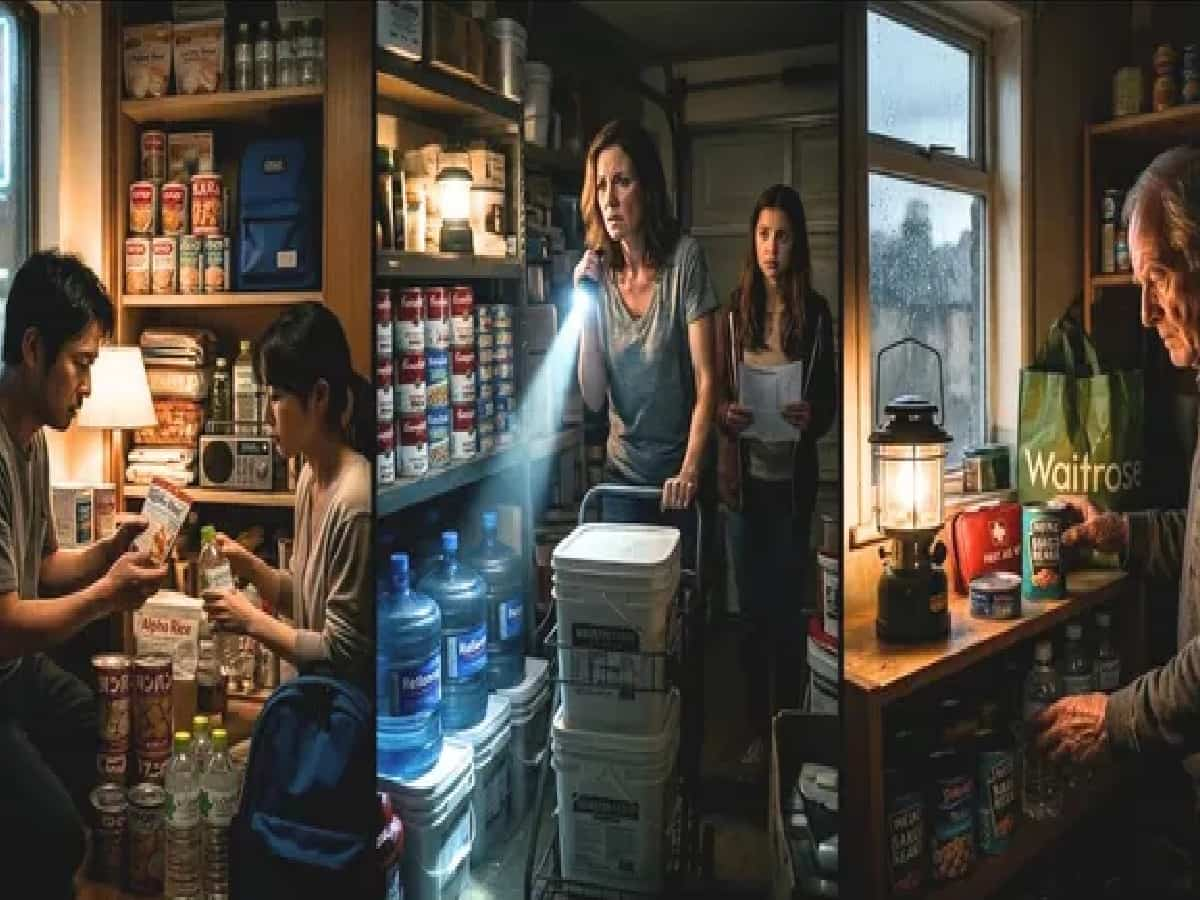
US, UK, Japan & Europe Are Urging Citizens to Stockpile Emergency Rations
Developed nations including the United States, Britain, Japan, and European states are escalating crisis resilience advisories, instructing households to stockpile 3 to 10 days of food, water, and medical essentials—while the Pentagon prepares 90-day military base self-sufficiency against cyberattacks, extreme weather, and geopolitical conflicts.
Developed economies across Europe, North America, and East Asia are escalating civil preparedness advisories, urging citizens and defense establishments to stockpile essential survival supplies—including potable water, non-perishable food, prescription medicines, and emergency communication gear. Prompted by an overlapping matrix of heightened geopolitical friction, vulnerabilities to state-sponsored cyberattacks, critical infrastructure failures, and severe climate disruptions, governments across the United Kingdom, Japan, Sweden, Finland, Germany, and the United States are formalizing decentralized emergency resilience protocols. Rather than signaling an imminent localized panic, these strategic measures represent a calculated, coordinated shift toward civil self-reliance, ensuring that civilian populations and vital military installations can sustain themselves without immediate state intervention if national power, transportation, and communication grids collapse during an unforeseen crisis.
From Britain's 'Be Ready' Drive to Nordic Protocols: How Europe Is Prepping for Grid Collapse
Across Europe, national authorities have rolled out calibrated resilience frameworks designed to sustain households for periods ranging from 72 hours to 10 full days. In the United Kingdom, the government’s "Be Ready" public awareness initiative advises families to secure a minimum three-day emergency kit equipped with bottled drinking water, canned provisions, essential prescription medications, battery-operated or wind-up radios, flashlights, heavy-duty power banks, and sufficient hard cash to handle widespread electronic payment failures. Meanwhile, Nordic and Baltic nations—including Sweden, Finland, Norway, and Lithuania—alongside Germany, France, Switzerland, Ireland, and Czechia, have updated their comprehensive civil defense manuals, warning citizens that modern hybrid warfare and digital espionage can disrupt water filtration, domestic food logistics, and telecommunications networks overnight. By urging families to independently weather the initial days of a regional blackout or natural catastrophe, civil defense planners aim to reduce immediate strain on first responders and emergency healthcare services during catastrophic events.
Pentagon’s 90-Day Defense Blueprint and Japan’s Upcoming Nov 2 Disaster Directive
While European civilian directives emphasize short-term family survival, the United States defense apparatus has enacted a far more rigorous standard for its armed forces, establishing an operational mandate for military bases to operate independently of civilian supply chains and local commercial power grids for up to 90 consecutive days. This extended contingency framework ensures that frontline commands maintain strategic deterrence, operational continuity, and counter-offensive capabilities even in the face of devastating cyber strikes against the national power grid, persistent maritime blockades, or prolonged systemic infrastructure disruption. Concurrently in East Asia, Japan’s newly established National Disaster Management Agency is set to unveil updated national guidelines on November 2, 2026, advising households across metropolitan regions to stockpile survival kits for a baseline of three days, with a strong recommendation to extend supplies to seven days. Framed against the ever-present threat of high-magnitude earthquakes and severe weather phenomena, the Japanese government warns that transportation arteries, municipal water supplies, and electricity transmission lines could suffer prolonged outages, making proactive domestic stockpiling an indispensable layer of national security.




