







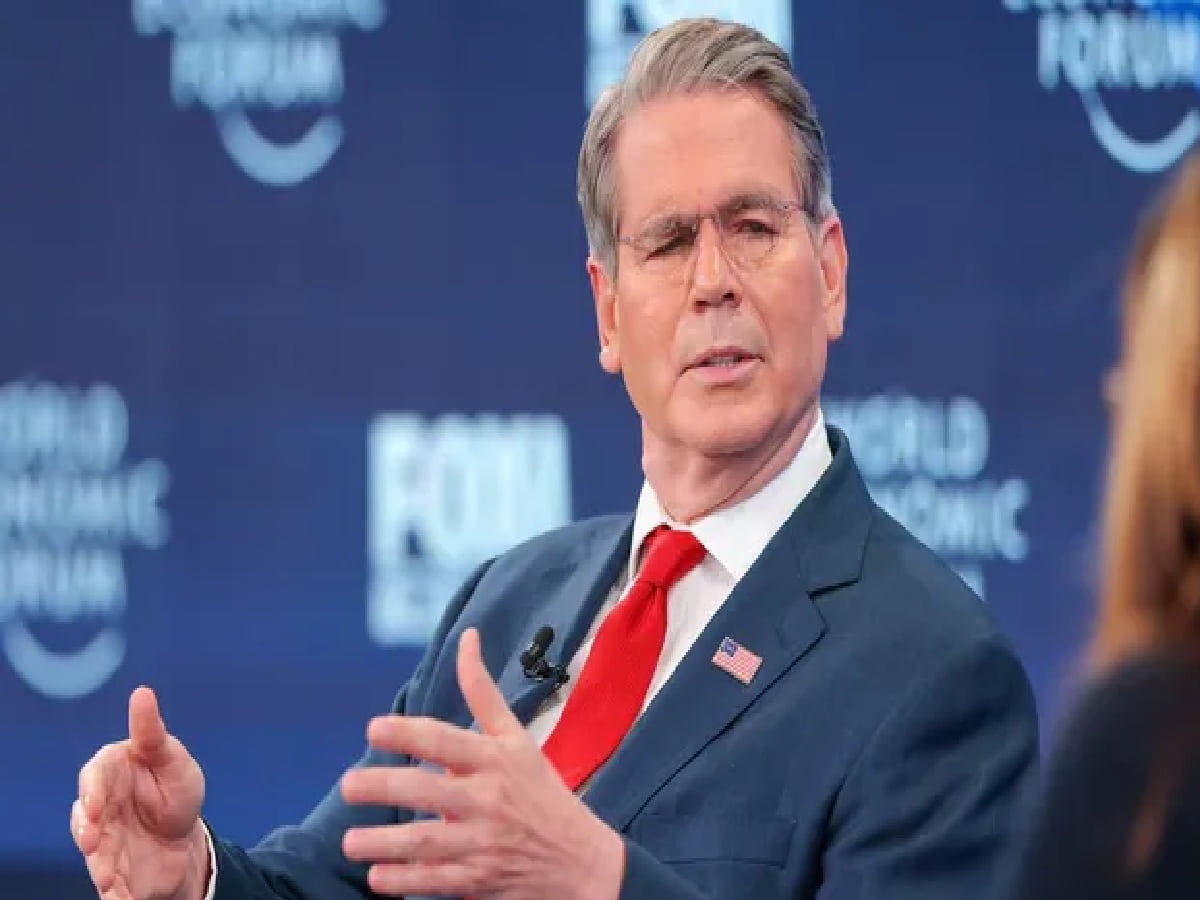
US Treasury Chief Bessent Stays at Military Base Over Iran Threats
United States Treasury Secretary Scott Bessent has confirmed that he continues to reside at a US military installation on Secret Service advice following threats against his life linked to Iran, even as he vowed to maintain relentless economic and financial pressure on Tehran. Speaking in a wide-ranging interview with CNBC on Friday, November 20, 2026—shortly after returning from President Donald Trump's diplomatic trip to Asia and in remarks widely reported across international financial and security outlets on Saturday, November 21, 2026—Bessent declined to divulge classified details of the specific threats (which US media reports have linked to heightened intelligence warnings around potential Iranian plots in Washington), instead framing Tehran's hostility as proof that American sanctions are biting. "If the Iranians are after me, it means that they are being squeezed. We're going to continue squeezing them," Bessent declared, underscoring the Treasury Department's ongoing campaign tightening financial sanctions, maritime oil-transfer curbs, and banking restrictions against Iran nearly nine months after joint US and Israeli military strikes launched against Iran in late February 2026 sparked a simmering regional conflict that persists despite intermittent diplomatic talks. During the same CNBC appearance, Bessent also disclosed a major strategic understanding reached during President Donald Trump's bilateral and trilateral meetings in Shenzhen, China, on Thursday, November 19, alongside Chinese President Xi Jinping and Russian President Vladimir Putin on the sidelines of the Asia-Pacific Economic Cooperation (APEC) summit: according to Bessent, Trump and Xi agreed that human oversight must always remain central to military decisions involving artificial intelligence (AI)—or "SI" (superintelligence)—and that autonomous systems must never be permitted to launch major military operations on their own. For global financial market participants, defense analysts, technology leaders, and readers across Unnao, Lucknow, Kanpur, Mumbai, Bengaluru, Hyderabad, New Delhi, and Washington, Bessent's remarks illustrate the twin tracks of Washington's foreign policy: unyielding financial coercion against Tehran alongside guardrails on military AI and nuclear risk with Beijing and Moscow.
US Treasury Secretary Scott Bessent's CNBC Briefing (Nov 20, 2026): Iran, Sanctions & AI Guardrails
To bring together the security arrangements surrounding Treasury Secretary Scott Bessent, the Treasury Department's sanctions campaign against Iran, and the key geopolitical takeaways from the Shenzhen summit, the table below summarizes the verified facts:
| Policy / Security Area | Verified Details & Statements (Nov 20, 2026) | Geopolitical & Economic Impact |
| Security Relocation & Iranian Threats | Scott Bessent confirmed on CNBC that he is still living at a US military base (after relocating from his Washington, D.C. residence earlier in November under Secret Service guidance) due to unspecified threats from Iran. | Reflects elevated US counter-intelligence vigilance following Justice Department indictments and intelligence warnings of Iranian retaliation plots. |
| Sanctions & Economic Pressure on Iran | Bessent vowed to intensify financial pressure: "If the Iranians are after me, it means that they are being squeezed. We're going to continue squeezing them". | US Treasury is tightening sanctions on Iranian oil transfers, banking conduits, and financial networks amid the regional conflict triggered by February 2026 US–Israeli strikes. |
| Trump–Xi Agreement on Military AI ('SI') | Bessent revealed that Donald Trump and Xi Jinping agreed in Shenzhen (Nov 19, 2026) that humans must always remain involved in military decisions made by AI / superintelligence ('SI'), barring autonomous execution of major military strikes. | Establishes a critical bilateral red line on autonomous warfare even while the US and China compete intensely for AI leadership. |
| Shenzhen Trilateral, Trade & Chip Policy | In Shenzhen, Trump, Xi, and Russian President Vladimir Putin also reaffirmed that a nuclear war must never be fought; Bessent noted Nvidia's H200 remains the top AI chip China can purchase under license and said Washington seeks to "de-risk" rather than fully decouple from China ahead of December's G20 summit in Miami. | Signals measured economic management alongside strict export controls on frontier semiconductor hardware. |
Why Treasury Secretary Bessent Remains Under Military Base Protection
As the chief architect of the Trump administration's financial warfare strategy against Tehran—encompassing sanctions on regional banking channels, maritime oil-transfer restrictions, and asset freezes—Scott Bessent has become a high-profile target for Iranian retaliatory threats. Having relocated earlier this month from his Washington, D.C. home to a secured US military base on Secret Service instructions, Bessent confirmed on Friday that he remains inside the installation while insisting the threats will not alter Treasury policy. Pointing to the ongoing military and diplomatic standoff that followed the February 2026 US and Israeli strikes on Iran, Bessent argued that Tehran's targeting of senior US economic officials demonstrates that Washington's sanctions squeeze is eroding Iran's financial lifelines.
Inside the Trump–Xi Shenzhen Understanding on Human Control Over Military AI
Beyond the Middle East crisis, Scott Bessent highlighted a landmark outcome from Thursday's Shenzhen talks between President Donald Trump and Chinese President Xi Jinping—held alongside a rare trilateral meeting with Russian President Vladimir Putin during the APEC summit. According to Bessent, Trump and Xi reached a clear consensus that human decision-makers must never be removed from the loop when artificial intelligence—referred to by the administration as "SI" or superintelligence—is used in military contexts, ruling out autonomous AI authorization for major military actions. While stressing that the United States intends to maintain its technological lead in frontier AI and keep tight licensing limits on advanced chips like Nvidia's H200, Bessent added that Washington aims to "de-risk" rather than fully decouple trade ties with Beijing ahead of further tariff discussions at December's G20 summit in Miami.




