







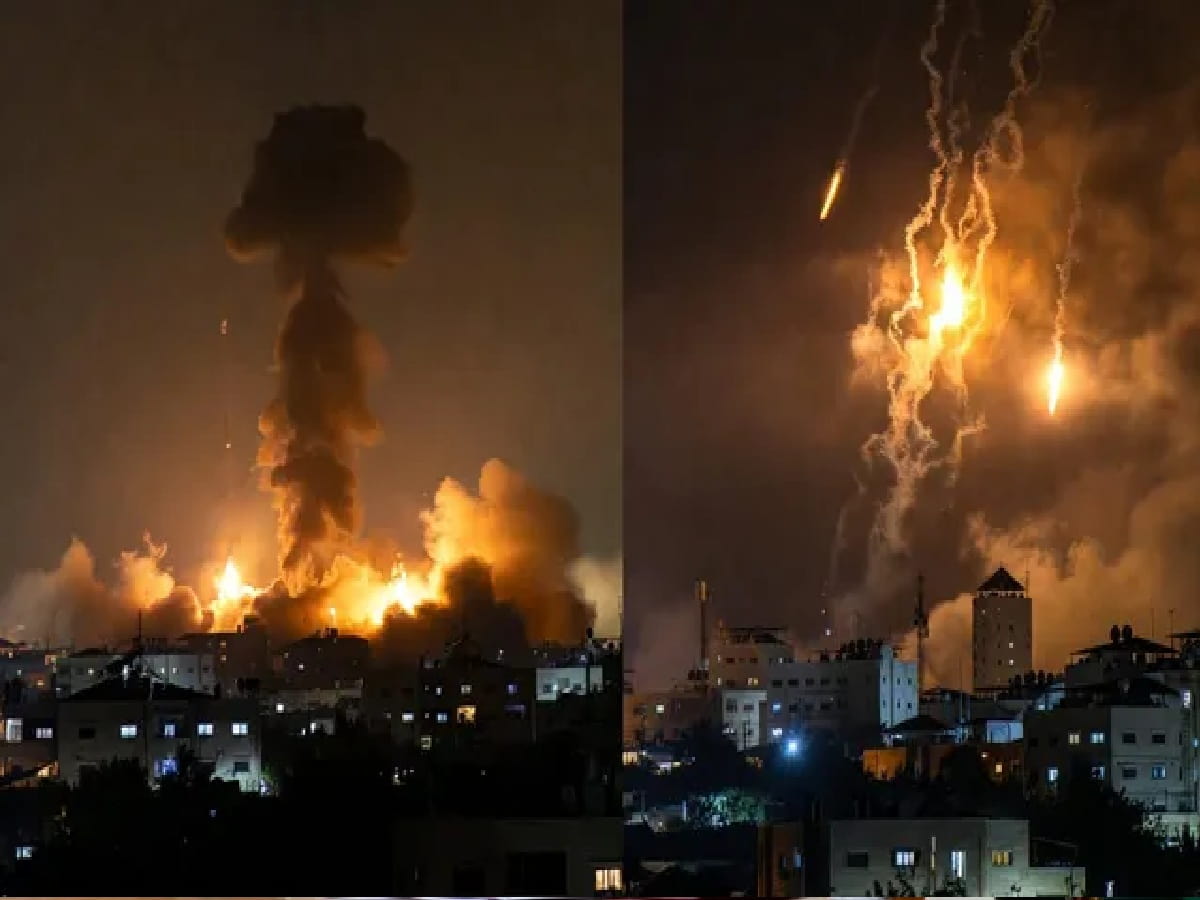
US Strikes Iran's Qeshm Island Missile Site; Bahrain Bases Targeted
Military tensions across the Persian Gulf and the strategic Strait of Hormuz escalated sharply after United States fighter jets carried out precision airstrikes against an Islamic Revolutionary Guard Corps (IRGC) missile launch site on Iran's Qeshm Island on Tuesday, November 17, 2026. Describing the operation as an act of "self-defense" executed with precision-guided munitions, a U.S. military official stated that the strike directly answered repeated IRGC aggression targeting American forces and military installations across the region. Emphasizing operational readiness, the official affirmed that U.S. Central Command (CENTCOM) remains highly vigilant and fully postured to safeguard American personnel and assets throughout the Middle East. The American strike followed Tehran's latest retaliatory drone operation against Bahrain—which hosts the headquarters of the U.S. Navy's Fifth Fleet. Earlier on Tuesday, the IRGC announced that it had launched drones targeting a U.S. military radar system at Bahrain's Sheikh Isa Air Base, characterizing the assault as retaliation for alleged U.S. drone incursions into Iranian airspace while warning Manama over its security alliance with Washington. Both U.S. and Bahraini defence officials confirmed that air defence batteries intercepted the incoming drones without causing casualties or damage to American equipment. On the Iranian side, Hormozgan Province Deputy Governor Ahmad Nafisi confirmed that five to six explosions shook Qeshm Island during the Tuesday assault, but maintained that residential neighborhoods, commercial zones, and critical public-service infrastructure suffered no damage, adding that emergency services remain on full alert. By early Wednesday morning, November 18, the standoff widened further across the Gulf as the Bahrain Defence Force intercepted a fresh wave of Iranian aerial threats and Kuwait's armed forces activated air defence systems against hostile drones, prompting emergency mobile alerts across Manama. Because Qeshm Island commands the northern shoreline of the Strait of Hormuz—a vital maritime chokepoint through which roughly a fifth of global petroleum transits—the renewed exchange has rattled global energy markets and shipping corridors. For energy watchers, overseas Indian families across the Gulf, diplomats, and readers in New Delhi, Mumbai, Lucknow, Kochi, Hyderabad, Bengaluru, Chennai, and Kolkata, the latest flare-up underscores fragile regional stability despite ongoing Omani and Qatari mediation.
Timeline of the Qeshm Island Airstrike and Gulf Drone Exchanges
Unfolding amid nearly nine months of broader regional conflict and stalled diplomatic mediation, Tuesday and Wednesday's military exchanges centered on the Strait of Hormuz and Gulf bases hosting U.S. forces:
| Date & Location | Actor & Military Action | Official Casualty / Damage Assessment |
| Tuesday, Nov 17, 2026 (Sheikh Isa Air Base, Bahrain) | Iran's IRGC launched one-way attack drones targeting a U.S. military radar installation (marking the third Iranian strike toward Bahrain in under a week). | Bahrain Defence Force and CENTCOM confirmed all drones were intercepted with zero casualties or equipment damage. |
| Tuesday, Nov 17, 2026 (Qeshm Island, Strait of Hormuz, Iran) | U.S. fighter aircraft conducted a "self-defense" precision strike on an IRGC missile launch site. | Hormozgan Deputy Governor Ahmad Nafisi confirmed 5–6 explosions but reported no casualties or damage to civilian, commercial, or public infrastructure. |
| Early Wednesday, Nov 18, 2026 (Bahrain & Kuwait) | Bahrain and Kuwait air defences engaged fresh incoming hostile drone threats overnight; Bahrain's Interior Ministry issued public shelter alerts. | Air defence interceptions prevented major hits; GCC Secretary-General Jasem Mohamed Albudaiwi condemned the attacks and urged UN Security Council action. |
Strategic Stakes Around Qeshm Island and the Strait of Hormuz
Situated at the narrowest mouth of the Strait of Hormuz, Qeshm Island holds immense military and commercial significance. Any prolonged military escalation around Qeshm directly threatens international tanker traffic, marine insurance premiums, and crude oil supply chains linking Persian Gulf producers to Asian economies, including India.
While Oman and Qatar have continued back-channel diplomatic efforts to prevent an all-out regional conflagration, Washington's deployment of three aircraft carrier strike groups in the broader region alongside Tehran's repeated drone launches against Gulf radar sites demonstrates how rapidly localized tit-for-tat strikes can escalate.
Gulf Cooperation Council Condemns Attacks as Regional Alert Rises
Following Tuesday's raid on Sheikh Isa Air Base—coming just days after Iranian drones targeted radar positions near Bahrain's Riffa Air Base on Sunday—Gulf Cooperation Council (GCC) Secretary-General Jasem Mohamed Albudaiwi strongly condemned Tehran's actions, warning that any strike against Bahrain infringes upon the collective security of all GCC states and calling on the United Nations Security Council to intervene. Meanwhile, U.S. Secretary of State Marco Rubio conferred with Bahraini Foreign Minister Abdullatif bin Rashid Al Zayani as Gulf capitals maintained heightened air-defence readiness.




