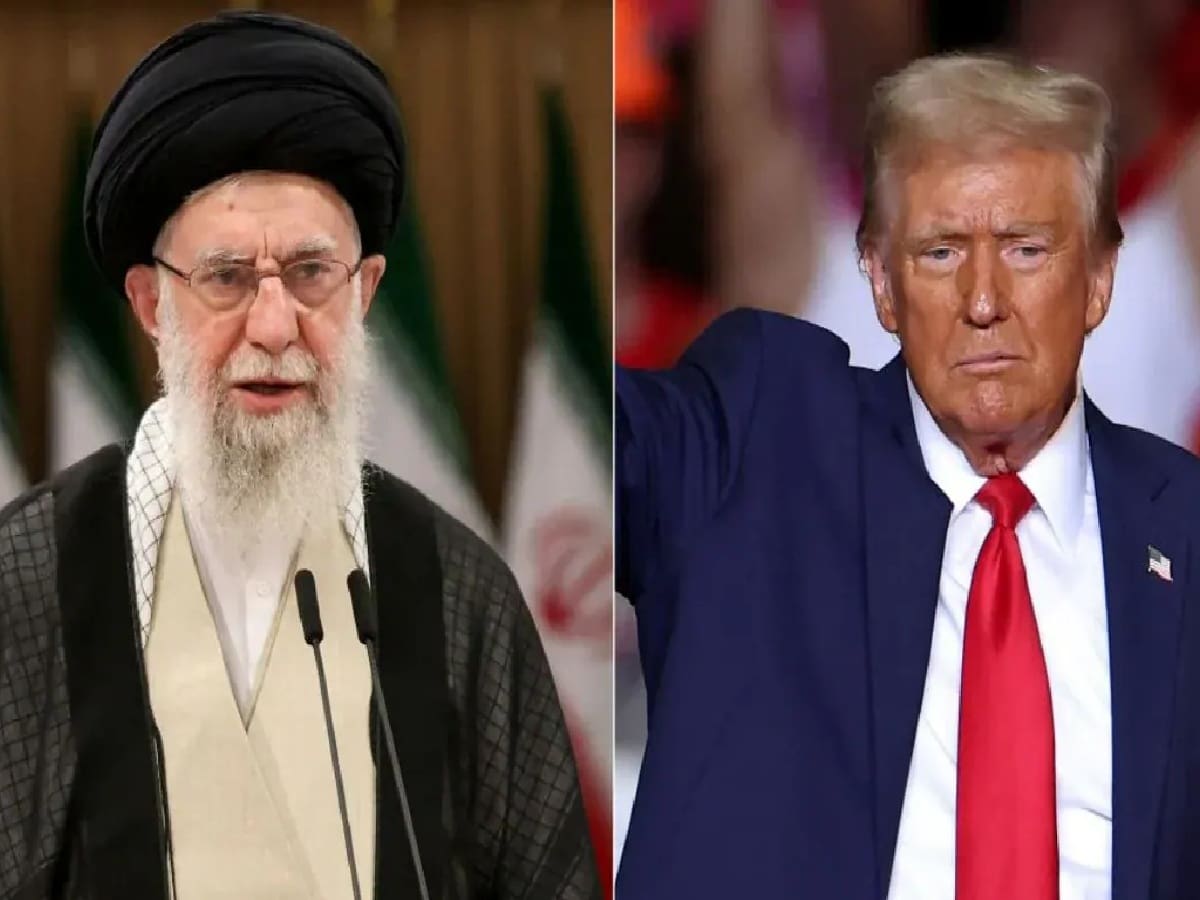
US Encircles Iran: 3 Aircraft Carriers & Stealth Jets Deployed in Massive Buildup
In response to sharp direct tensions with Tehran, the United States has escalated its military footprint across the Middle East and Persian Gulf to levels not witnessed in decades. According to strategic assessments, the Pentagon has moved rapidly to encircle Iran by air, land, and sea, establishing an impenetrable defense perimeter around regional allies. The massive deployment is structured not merely to intercept prospective missile and drone strikes, but to hold the capability to systematically paralyze Iran’s integrated air defenses, naval assets, and coastal missile launch complexes if direct military confrontation erupts.
The 'Siege' Blueprint: 3 Carrier Groups, Advanced Fighters, and Elite Marines
At the core of Washington's strategic maneuver is the simultaneous deployment of three nuclear-powered aircraft carrier strike groups—including the USS Abraham Lincoln—operating in close coordination across the Persian Gulf, Gulf of Oman, and Arabian Sea. Escorted by dozens of Aegis-equipped guided-missile cruisers and destroyers, these flotillas bring massive strike power to Iran's maritime doorstep. In the skies, the US Air Force has multiplied deployments of F-15E Strike Eagles and advanced stealth fighter jets stationed at Jordan's Muwaffaq Salti Air Base and Qatar's Al-Udeid Air Base. On the ground, more than 2,000 troops from Marine Expeditionary Units alongside Army Special Forces have positioned themselves to protect vital infrastructure, strategic choke points, and critical sea lanes.
Securing the Strategic Choke Points: Strait of Hormuz and the Red Sea
The primary operational priority of the American armada is safeguarding maritime trade through the Strait of Hormuz and the Red Sea corridor. Approximately 20 percent of the world's petroleum transit passes directly through the narrow waters of the Strait of Hormuz. With Iranian military leaders repeatedly threatening to choke tanker movement in response to economic sanctions and naval containment, allied warships are running around-the-clock armed escorts to shield oil tankers and commercial cargo carriers from mine attacks, drone swarms, or fast-boat boardings, preventing catastrophic disruption to global energy supplies.
Gulf Nations Caught in a Double Bind: Balancing US Alliance and Retaliation Fears
Arab states across the Gulf Cooperation Council—including Saudi Arabia, the UAE, Qatar, and Kuwait—find themselves in a delicate geopolitical bind. While these regional monarchies depend on the US defense umbrella to deter regional threats, they fear that hosting major direct offensive strikes against Iran could turn their domestic oil refineries, desalination complexes, and urban centers into targets for retaliatory strikes by Iran and its proxy network, including Yemen's Houthis and Iraqi militias. Consequently, Riyadh and Doha are taking a cautious stance, placing restrictions on the offensive use of their national airspace while pursuing backchannel diplomacy to defuse the standoff.
Iran's Subterranean 'Missile Cities', Drone Swarms, and Global Economic Shock
Faced with this heavy naval siege, Iran’s Islamic Revolutionary Guard Corps (IRGC) has placed its armed forces on maximum readiness. Tehran relies on extensive subterranean "missile cities" tunneled into coastal mountain ranges, housing stockpiles of precision ballistic and cruise missiles, Shahed loitering munitions, and armed swarming speedboats designed for asymmetric naval warfare. Meanwhile, regional proxy forces across Lebanon, Syria, Iraq, and Yemen continue asymmetric pressure on American garrisons. Economically, the standoff threatens global markets: energy analysts warn that any localized exchange of fire in the Persian Gulf could push Brent crude past $100 per barrel, spiking inflation and compounding maritime insurance rates across global trade routes.