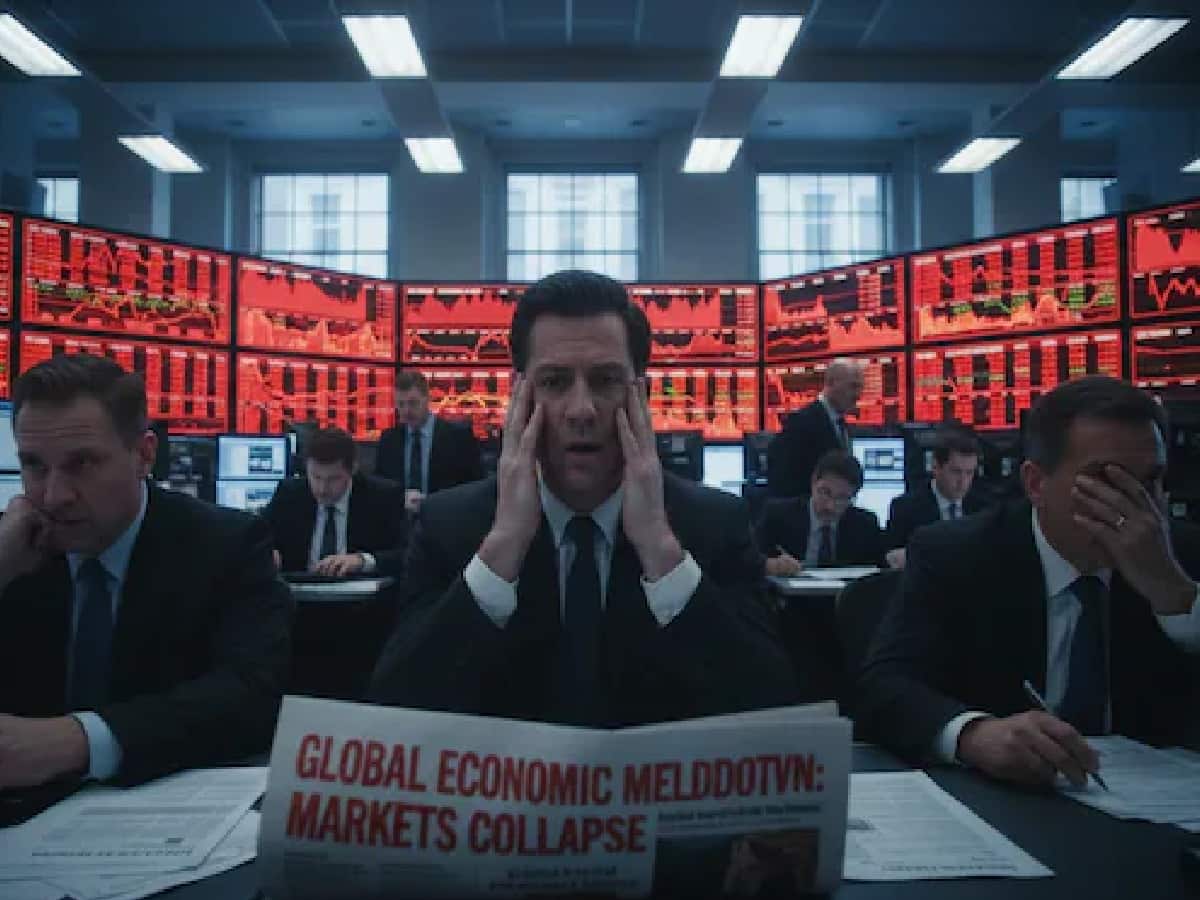
Asian Markets Tumble as Brent Crude Crosses $102 and US Bond Yields Hit 2002 Highs
Global financial markets opened October on sharply conflicting notes on Friday, displaying severe volatility across trading desks. While Wall Street scraped modest overnight gains—with the S&P 500 inching up 0.2% alongside slight upticks in the Dow Jones and Nasdaq Composite—Asian equity exchanges experienced steep morning selloffs. In India, domestic cash and derivative markets remained closed for the national Gandhi Jayanti holiday, leaving domestic investors tracking offshore indices to gauge the twin macro pressures of soaring crude oil prices and multi-decade highs in US Treasury yields.
US Bond Yields Touch 2002 Peaks: Why Fixed Income Spikes Spook Equity Bulls
The primary catalyst roiling global equity sentiment emerged directly from the US sovereign bond market. On Thursday, the benchmark US 10-year Treasury yield surged to 5.344%, scaling levels not witnessed since 2002, while the 30-year long bond yield reached a 24-year peak before cooling slightly into the close. Elevated sovereign yields present an acute headwind for equity valuations by lifting risk-free hurdle rates, encouraging capital rotation out of volatile equities into high-yielding debt, and dramatically escalating debt-servicing costs for corporate borrowers. Despite overnight US index gains, the weekly performance remained firmly negative, with the Dow Jones down 1.7% over the week. Overnight US futures showed muted activity, with S&P 500 futures gaining 0.1%, Dow futures adding 38 points, and Nasdaq 100 futures inching up 0.3%.
Asian Selloff Led by 3% Hang Seng Plunge; Nikkei and Kospi Slide
When trading commenced across Asia on Friday morning, risk aversion dominated regional order books. Hong Kong's benchmark Hang Seng Index bore the brunt of the downturn, sinking nearly 3% as traders returned from holidays. In Tokyo, Japan's Nikkei 225 tumbled between 0.95% and 1.06% across trading sessions following a sharp rally the previous day, while the broader Topix index declined 0.87%. South Korea's Kospi retreated up to 1%, though the tech-heavy Kosdaq defied the trend with an 0.89% gain. Australia’s S&P/ASX 200 showed relative resilience, advancing 0.35% in early trade, though regional sentiment remained largely risk-averse.
Crude Oil Crosses $102 as Pentagon Mobilizes 3rd Carrier Group Near Iran
Compounding market jitters, international energy benchmarks witnessed violent upside breakouts driven by geopolitical military friction in West Asia. Brent crude surged over 4% on Thursday to close at $102.31 per barrel, continuing its advance on Friday morning to reach $102.65 per barrel for December delivery. US West Texas Intermediate (WTI) crude climbed to $93.03 per barrel. The crude price spike follows reports confirming that the Pentagon is deploying a third aircraft carrier strike group, amphibious Marine Corps units, and up to 10,000 additional troops to the Persian Gulf by late November. Energy fund managers noted that escalating military posturing and potential attacks on Persian Gulf energy infrastructure make an additional $15 spike in oil prices significantly more probable than a $15 decline.
Markets Brace for US Nonfarm Payrolls and Federal Reserve Rate Bets
Investor focus has now turned entirely to the impending release of the US September Nonfarm Payrolls report. Consensus forecasts compiled by Dow Jones project the addition of 84,000 new non-farm jobs, with the headline unemployment rate expected to hold steady at 4.1%. Market pricing via Fed Funds Futures indicates a 72% probability that the Federal Reserve will maintain interest rates unchanged at its upcoming October monetary policy meeting. Economists at Natixis CIB Americas noted that even an addition of 60,000 to 80,000 jobs would reflect orderly cooling rather than outright labor deterioration, suggesting strong construction and AI data center investments continue to support underlying employment without forcing aggressive rate hikes.