







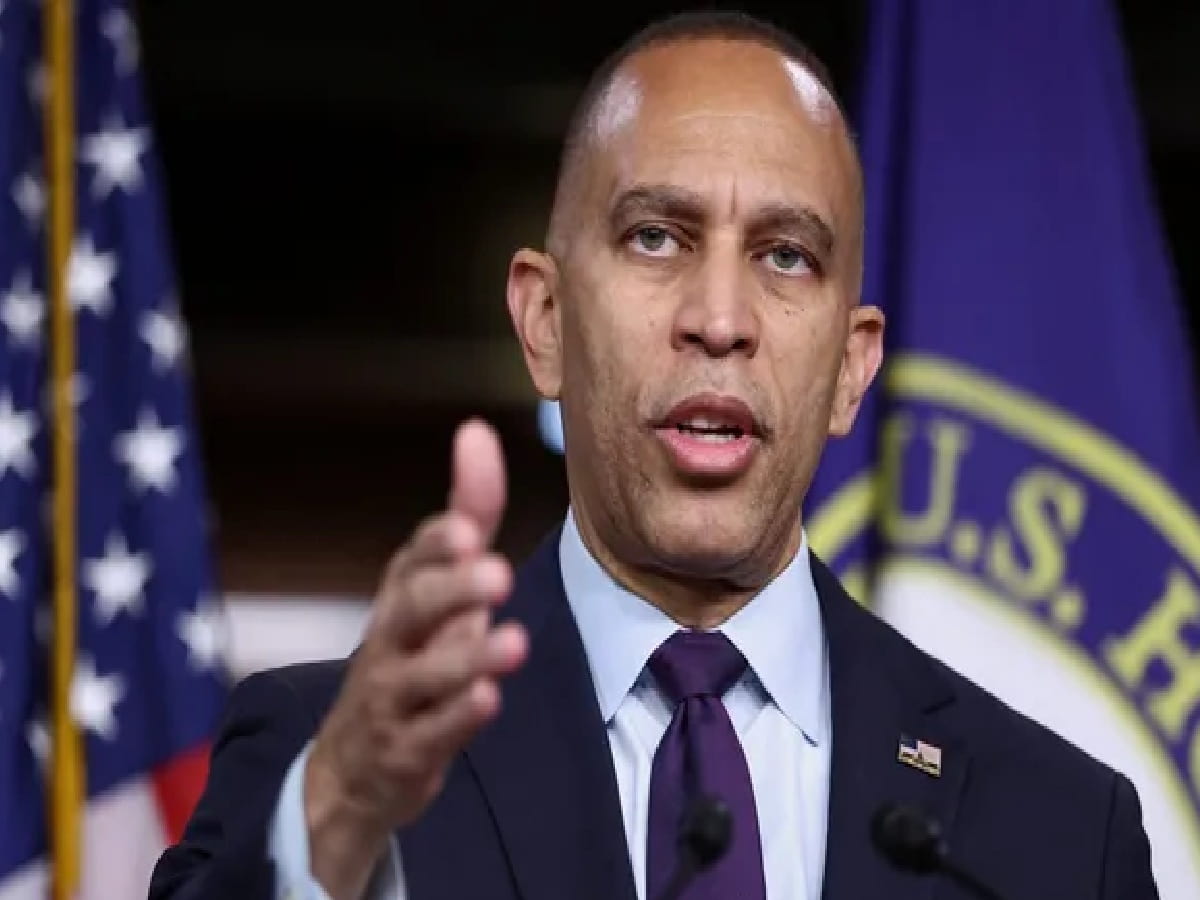
US Democrats Nominate Hakeem Jeffries for House Speaker by 251-11 Vote
Following sweeping Democratic gains in the 2026 US midterm elections, House Democrats have overwhelmingly nominated New York Congressman Hakeem Jeffries as their candidate for Speaker of the House of Representatives, putting the Brooklyn lawmaker on course to become the first Black Speaker in United States history. According to Congressional tallies and news reports from Washington, Democrats voted 251–11 (with two abstentions) during a closed-door caucus meeting on Wednesday, November 18, 2026, backing Jeffries as their unopposed nominee to lead the chamber when the 120th Congress convenes on January 3, 2027. While the formal floor election requires a majority vote of the full House—at least 218 votes—at the start of the new session in January, Jeffries's landslide intra-party endorsement signals broad unity around the generational leadership team that succeeded former Speaker Nancy Pelosi in 2023. Alongside Jeffries, House Democrats elected Katherine Clark of Massachusetts as Majority Leader—setting her up to become the first female Majority Leader—and Pete Aguilar of California as Majority Whip, positioning him as the first Latino Majority Whip, while Joe Neguse of Colorado won Assistant Speaker and Ted Lieu of California was chosen as Caucus Chair. Even as Jeffries pledged after the vote to prioritize affordability across groceries, housing, and healthcare while working across all wings of the caucus, incoming Democratic committee leaders immediately moved to flex their forthcoming subpoena and oversight powers against President Donald Trump's administration. For international observers, policymakers, and readers across New Delhi, Mumbai, Bengaluru, Hyderabad, Chennai, Kolkata, Lucknow, Unnao, and Washington, the leadership transition marks a consequential shift in Washington's legislative balance of power ahead of 2027.
Inside the 2026 US House Democratic Leadership Vote and Oversight Push
To clarify the new Democratic leadership lineup, the intra-party voting margins, and the parallel congressional oversight letters issued on Capitol Hill on November 18, 2026, the table below summarizes the verified developments:
| Political / Institutional Dimension | Verified Details & Figures (November 18, 2026) | Legislative & Constitutional Significance |
| House Speaker Nomination Vote | Rep. Hakeem Jeffries (D-N.Y.) won the Democratic caucus nomination by 251–11 (with 2 abstentions), facing no formal challenger. | Positions Jeffries to become America's first Black Speaker of the House during the formal floor vote on January 3, 2027. |
| Incoming House Leadership Slate |
• Majority Leader: Rep. Katherine Clark (D-Mass.) • Majority Whip: Rep. Pete Aguilar (D-Calif.) • Assistant Speaker: Rep. Joe Neguse (D-Colo.) • Caucus Chair: Rep. Ted Lieu (D-Calif.) |
Completes a historic leadership roster featuring the first female Majority Leader and first Latino Majority Whip alongside Jeffries. |
| House Oversight Preservation Letters | Incoming Oversight Chair Rep. Robert Garcia (D-Calif.) issued document-preservation demands to Eric Trump, Donald Trump Jr., Jared Kushner, Vice President JD Vance, and federal agencies. | Covers alleged financial conflicts of interest, Department of Homeland Security operations, White House ballroom donations, and Jeffrey Epstein-related records. |
| Commerce & Nvidia Export Inquiry | Reps. Jamie Raskin, Gregory Meeks, and Sydney Kamlager-Dove sought records from Cantor Fitzgerald (chaired by Brandon Lutnick) regarding Commerce Secretary Howard Lutnick. | Examines whether Lutnick's AI chip export-control decisions on firms like Megaspeed intersected with Cantor Fitzgerald's Nvidia holdings—allegations the firm called "inaccurate" and "baseless". |
Balancing Progressive Demands and Legislative Priorities Ahead of January 2027
Although Jeffries won the caucus nomination overwhelmingly, the 11 dissenting votes reflected ongoing policy conversations with newly elected progressive lawmakers pushing leadership for sharper commitments on domestic and foreign policy priorities. Speaking to reporters at the Capitol after the vote, Jeffries acknowledged differing viewpoints inside the expanded Democratic majority and emphasized that the caucus embraces open debate while staying focused on lowering everyday costs for working families. Navigating a divided government alongside President Trump—who has signaled openness to selective legislative cooperation while threatening vetoes on policies he opposes—will test Jeffries's consensus-building skills once he takes the gavel in January.
Incoming Democratic Committee Chairs Launch Wide-Ranging Oversight Letters
Even before officially assuming majority control in January, senior House Democrats moved swiftly on Wednesday to lay the groundwork for aggressive congressional oversight. Rep. Robert Garcia of California, poised to chair the House Oversight Committee, dispatched formal preservation notices directing members of the Trump family—including Donald Trump Jr., Eric Trump, and Jared Kushner—as well as Vice President JD Vance and administration officials to retain records spanning alleged financial conflicts of interest, Department of Homeland Security actions, private donations tied to White House construction, and files connected to Jeffrey Epstein.
Simultaneously, senior Democrats Jamie Raskin, Gregory Meeks, and Sydney Kamlager-Dove sent document-preservation requests to financial services firm Cantor Fitzgerald—now led by Brandon Lutnick—seeking records on its Nvidia investments and overseas data-center dealings to examine whether Commerce Secretary Howard Lutnick's export-control decisions were influenced by his family's business interests. While Cantor Fitzgerald rejected the allegations as "inaccurate" and "baseless" and White House Counsel Will Scharf noted the administration is closely monitoring Democratic investigative threats, the flurry of letters previews a fiercely contested legislative and oversight battle in Washington beginning in January 2027.




