







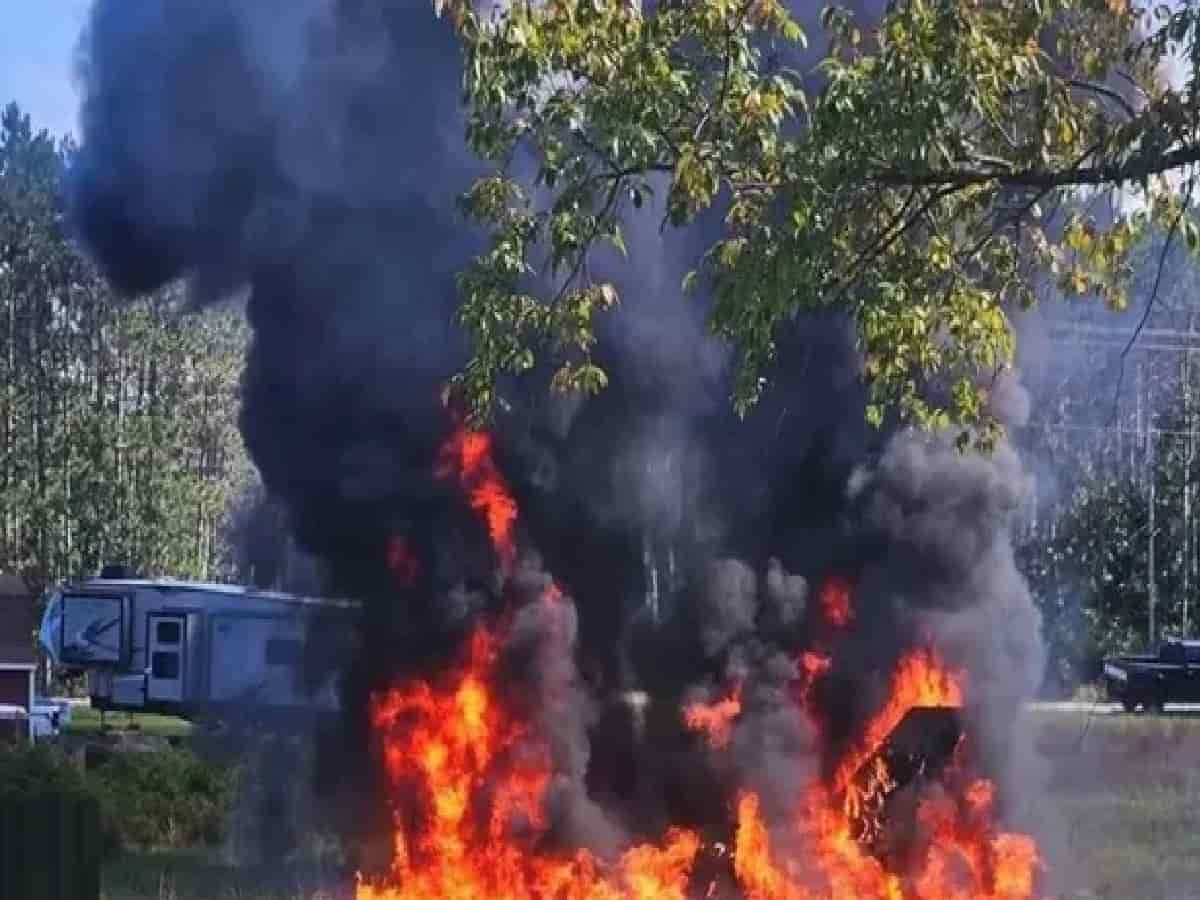
US Air Force F-16 Fighter Jet Crashes in Michigan During Training; Pilot Ejects Safely
A United States military training flight encountered a major emergency on Thursday when an F-16 Fighting Falcon fighter jet assigned to the Texas Air National Guard crashed into rural terrain in northern Michigan. Military officials confirmed that the sole pilot on board successfully activated the aircraft's emergency ejection systems before impact and survived the crash without fatal injuries. Emergency rescue teams and aviation safety officers were immediately dispatched to secure the perimeter near Traverse City, while military investigators launched a formal inquiry to determine whether mechanical failure, structural issues, or environmental factors caused the high-performance combat aircraft to go down during routine maneuvers.
149th Fighter Wing Confirms Crash Near Traverse City During Routine Sortie
Following the mishap, leadership from the 149th Fighter Wing issued an official public statement detailing the aircraft's operational status at the time of the incident. The unit confirmed that the single-engine supersonic multirole fighter was engaged in standard tactical training operations across northern airspace when the emergency unfolded. While the aviator's timely ejection prevented immediate loss of life, the wreckage site generated significant concern for surrounding civilian sectors due to the intense impact, scattered debris fields, and thermal damage resulting from ignited jet fuel. Military personnel from Joint Base San Antonio-Lackland and local authorities are coordinating closely to secure the flight recorder and preserve physical components for federal investigative analysis.
Grand Traverse County Issues Evacuations Over Chemical Spill Concerns
The aftermath of the crash prompted urgent public safety interventions from regional disaster response personnel. Grand Traverse County Emergency Management enacted localized evacuation directives and perimeter cordons around the crash zone, citing immediate hazards stemming from volatile aviation fuel ignitions and toxic chemical leaks associated with aerospace composite materials and specialized onboard aircraft systems. Addressing the crisis, United States Senator Gary Peters announced that his office remains in direct communication with military liaisons and state emergency responders to oversee resource mobilization, contain hazardous runoff, and safeguard neighboring residential communities while federal safety panels conclude on-site forensic assessments.