







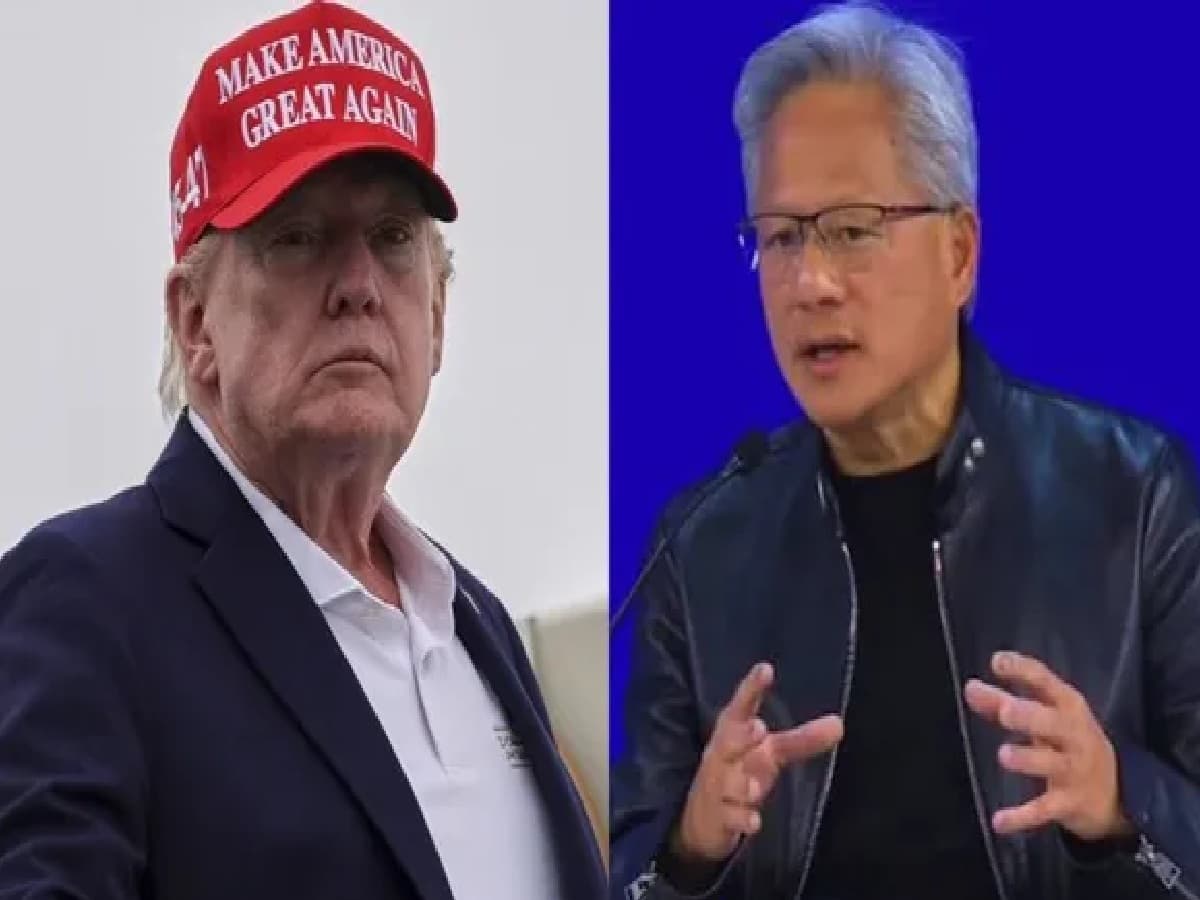
Trump Interrupts Nvidia CEO on Stage: Dismisses AI Threats as a ‘Hoax’ and Demands Massive Data Center Push
In an extraordinary convergence of Silicon Valley technology and high-stakes presidential politics, Nvidia Chief Executive Officer Jensen Huang put United States President Donald Trump on speakerphone during a live panel discussion at the prestigious All-In Summit in the United States. The unexpected on-stage exchange immediately transformed into a blockbuster moment for the tech sector as President Trump outright dismissed mounting global alarms surrounding the existential risks of Artificial Intelligence, labeling apocalyptic warnings as a coordinated "hoax." Addressing the packed auditorium through Huang's phone, Trump argued that resistance to high-speed AI deployment plays directly into the geopolitical hands of adversaries who want Western technological leadership to stumble, pointing specifically to self-serving political factions and strategic rivals like China.
Jensen Huang Backs Safety Whistleblowers While Rejecting False Dichotomies
While the live phone dialogue downplayed doomsday narratives, Jensen Huang offered a more measured perspective from the stage, notably expressing public support for AI safety whistleblowers. The Nvidia chief executive praised Jacob Coxon, the former Anthropic researcher who recently tendered an explosive resignation warning that premier AI labs were gambling with human safety. Huang remarked that Coxon exhibited immense personal and professional courage by airing his moral apprehensions publicly, insisting that genuine whistleblowers within leading frontier laboratories must always be heard and treated with institutional seriousness. Nevertheless, Huang emphasized that public hysteria has engineered a misleading, false dichotomy between relentless technical innovation and fundamental computational safety, asserting that responsible engineering and rapid hardware advancement can progress concurrently without stifling economic momentum.
Accelerating Industry Friction Over the Pace of Frontier Model Development
The live incident comes amid escalating panic over whether the breakneck acceleration of frontier artificial intelligence systems must be reined in before autonomous capabilities surpass human oversight. Researcher Jacob Coxon’s resignation ignited fierce debates across Silicon Valley, prompting leading tech executives to weigh in on potential regulatory decelerations. Over the weekend, Anthropic CEO Dario Amodei released a comprehensive 3,800-word essay proposing institutional mechanisms to deliberately pace frontier AI development, an initiative that quickly earned cautious endorsements from OpenAI chief executive Sam Altman and SpaceX and xAI founder Elon Musk. This rare alignment among competing founders highlights a widening philosophical rift between software researchers calling for structural deceleration and hardware manufacturers intent on supplying computational horsepower.
Trump Champions Data Centers as Modern 'Oil' Amid Sharp Wall Street AI Stock Sell-Off
The public debate quickly rattled global equity markets, with US technology shares sliding on Monday over persistent investor anxieties that political pushback and regulatory interventions could trigger a slowdown in capital expenditure on AI computing infrastructure. Market bellwether Nvidia—whose advanced GPUs serve as the core engine powering the entire generative AI ecosystem—saw its stock price slip by 3.4 percent during the trading session. Stepping into the economic fray, President Trump vehemently defended the aggressive expansion of high-density AI infrastructure, criticizing various US state governments that have hesitated or refused to grant land, water, and environmental permits for massive computing facilities. Trump championed data centers as regional economic goldmines, declaring that artificial intelligence infrastructure will serve as the indispensable "oil" powering the global economy for the next 20 to 25 years, representing a commercial transformation even larger than the dawn of the internet.