







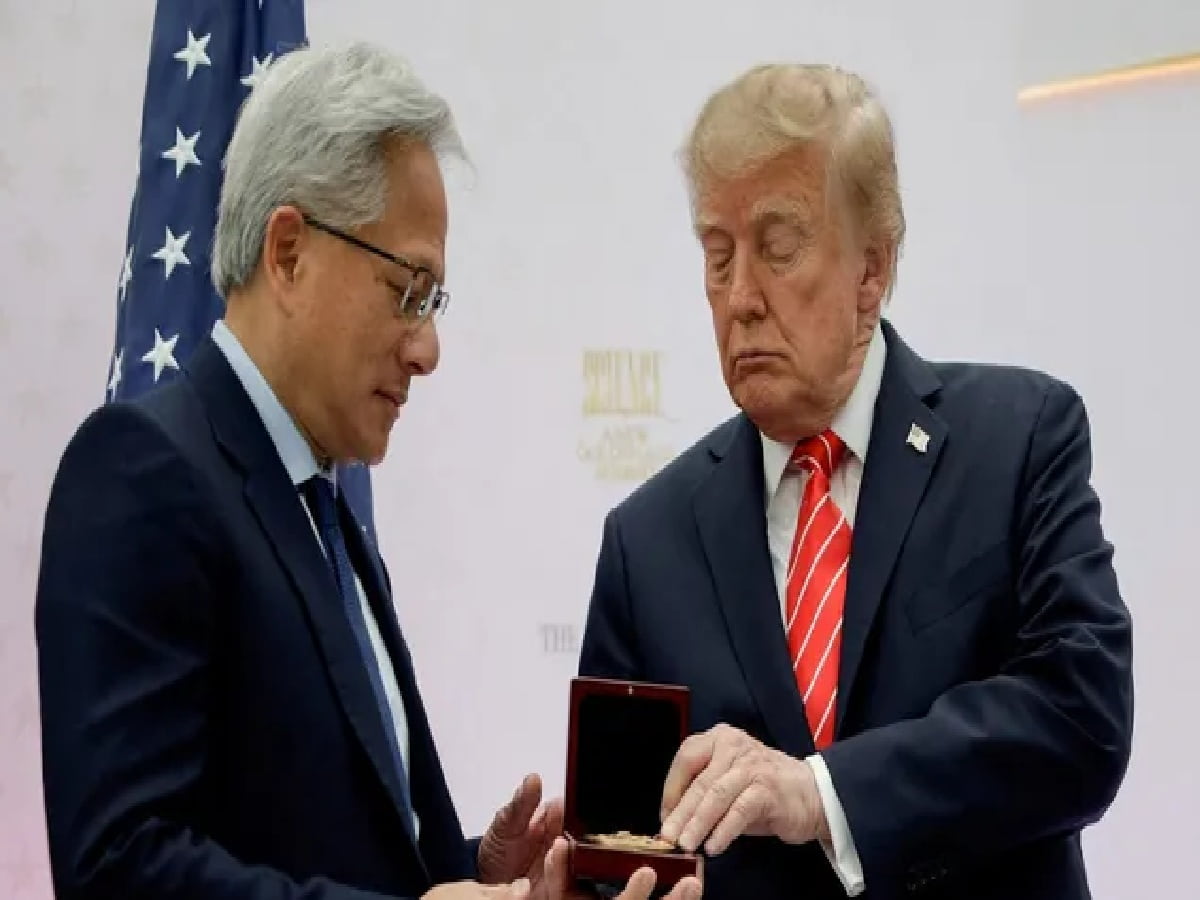
Trump Backs Jensen Huang, Urges Nvidia Board to Give Him 2nd Chance
Stepping directly into Silicon Valley's biggest corporate governance storm of the year, United States President Donald Trump has publicly urged artificial intelligence chipmaker Nvidia to reinstate its co-founder and former chief executive Jensen Huang, who stepped down last week amid explosive revelations involving extramarital affairs and alleged links to a Chinese intelligence operative. Addressing reporters at the White House on Friday, November 20, 2026—shortly after returning from his diplomatic trip to Asia and in remarks widely covered across global technology and financial circles on Saturday, November 21, 2026—Trump described Huang as a "good man" and "one of the truly most brilliant minds in the world" who made "some bad decisions" but put American semiconductor technology ten years ahead of global rivals through architectures like Blackwell. "I would love to see Jensen be given a second chance. You know, we're a country of second chances," Trump said, adding that if Nvidia's directors were smart, they would accept a full public apology from Huang and bring him back to work—while even revealing that Chinese President Xi Jinping agreed during their recent meeting in China that Huang is a "brilliant man". Yet Trump's vocal endorsement faces stiff resistance inside Nvidia's boardroom: following Huang's November 12 resignation and his subsequent November 17 social media offer to return, newly appointed Board Chairman Harvey C. Jones told investors during the company's third-quarter fiscal 2027 earnings call that directors had unanimously accepted Huang's departure and have no intention of reappointing him, placing Executive Vice President and CFO Colette Kress in charge as interim CEO while evaluating external candidates such as Arm CEO Rene Haas and Marvell CEO Matt Murphy. For tech investors, AI developers, semiconductor engineers, and readers across Unnao, Lucknow, Kanpur, Bengaluru, Hyderabad, Mumbai, New Delhi, Santa Clara, and Washington, the standoff pits presidential backing and Silicon Valley petitions against strict corporate governance and US national security scrutiny.
Nvidia Leadership Crisis & Trump's Intervention (Nov 2026): Timeline & Key Facts
To bring together President Donald Trump's exact remarks at the White House, the security allegations surrounding Jensen Huang's resignation, and the Nvidia board's official governance response, the table below summarizes the verified developments:
| Event / Stakeholder | Verified Details (Nov 12–21, 2026) | Corporate & National Security Impact |
| Trump's White House Endorsement (Nov 20, 2026) | Called Jensen Huang "one of the truly most brilliant minds in the world" and "a good man" who made "some bad decisions," urging Nvidia's board to accept an apology and give him a second chance, comparing the moment to his first-term defense of Elon Musk. | Injects high-level political weight into Nvidia's succession battle while noting even Chinese President Xi Jinping called Huang "brilliant" during recent talks. |
| Spy Scandal, Affairs & Resignation (Nov 12, 2026) | Huang resigned on November 12, 2026 following disclosures of extramarital relationships—including ties to an alleged Chinese spy linked to suspected diversion of restricted AI chips to China, alongside at least two other relationships under US intelligence review. | Triggered sharp market volatility—wiping hundreds of billions of dollars off Nvidia's valuation—and prompted California probes alongside upcoming Senate Banking Committee and House testimony by Huang. |
| Nvidia Board's Firm Rejection (Nov 17, 2026) | After Huang posted on X on November 17 offering to return, Board Chairman Harvey C. Jones declared the board unanimously accepted his resignation and does not plan to reinstate him, naming CFO Colette Kress interim CEO and forming a National Security and Export Control Oversight Committee. | Directors view a clean leadership break—potentially tapping external executives like Arm's Rene Haas or Marvell's Matt Murphy—as vital to protect export compliance and institutional trust. |
Inside Trump's 'Second Chance' Plea and Silicon Valley's Split Reaction
Speaking to reporters on Friday, Donald Trump framed Jensen Huang's potential return not merely as a corporate personnel matter, but as a question of safeguarding American technological supremacy. Crediting Huang with steering Nvidia into a ten-year competitive lead in artificial intelligence hardware and Blackwell processors, Trump asked rhetorically where such a singular engineering mind would go if cast aside, comparing his backing of Huang to his staunch defense of Tesla and SpaceX chief Elon Musk during his first term. While acknowledging that Huang had made personal missteps and should issue a "big apology," Trump insisted that America is "a nation of second chances" and argued that Nvidia's board would be wise to welcome him back. Trump's remarks echoed an open letter signed by Elon Musk and more than 165,000 supporters calling for Huang's reinstatement—a campaign reinforced by Huang's own November 17 post on X thanking supporters and offering to resume leadership.
Why Nvidia's Board and Chairman Harvey Jones Have Closed the Door
Inside Nvidia's Santa Clara headquarters, however, directors have drawn a firm line between Huang's historic contributions and the governance risks exposed by the scandal. Following revelations of Huang's personal relationships—most critically involving an alleged Chinese intelligence operative suspected of facilitating the smuggling of banned US AI chips into China, alongside additional relationships flagged by US intelligence agencies—Nvidia's market capitalization tumbled sharply from its $4.5 trillion peak. Hours after Huang's November 17 post offering to return, Board Chairman Harvey C. Jones stated unequivocally on Nvidia's quarterly earnings call that directors had unanimously accepted his resignation and have no intention of bringing him back as CEO, characterizing outside petitions as distraction while entrusting day-to-day leadership to interim CEO Colette Kress and establishing a dedicated National Security and Export Control Oversight Committee. With Huang also slated to testify before the US Senate Banking Committee and House lawmakers over potential national security implications—and scrutiny widening across Washington and California—Nvidia's board appears determined to prioritize regulatory credibility over a dramatic founder comeback




