Pakistan & Turkey Commit Troops to Saudi Arabia Amid Massive Yemen Escalation
The multi-year confrontation against Iran-backed Houthi insurgents has entered a critical new phase following the launch of "Operation Dawn of Yemen." Engineered by Yemen’s internationally recognized government with direct backing from the Saudi-led military coalition, the sweeping counter-offensive aims to dismantle insurgent chokeholds across the Red Sea littoral and secure the vital maritime corridors surrounding the Bab al-Mandab Strait. On October 5, 2026, coalition authorities confirmed that 100 frontline combat aircraft spearheaded the opening wave of air operations, unleashing coordinated strikes on 324 high-value insurgent targets across Dhubab and adjacent coastal approaches. Backed by intensive air cover, allied ground units have secured tactical inroads near the Bab al-Mandab, a narrow maritime gateway connecting the Red Sea to the Gulf of Aden that carries vital energy shipments between Asia and Western markets.
Historic Trilateral Commitment: Pakistan and Turkey Mobilize Under the Mecca Defense Pact
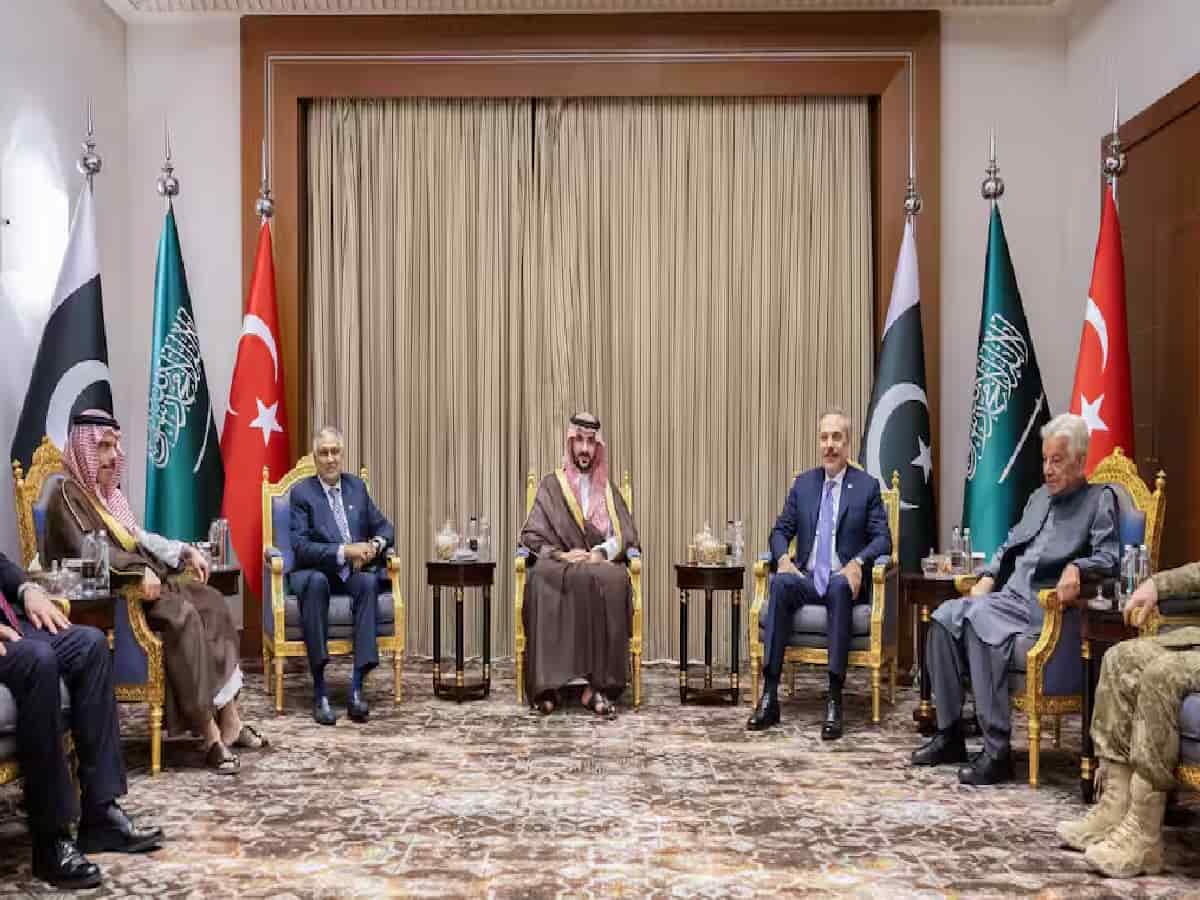
Parallel to kinetic operations along the Yemeni coast, a strategic defense realignment has solidified across Riyadh, Ankara, and Islamabad. Following the execution of the Makkah Joint Defense Agreement—formally signed in August 2026—Saudi Arabia, Pakistan, and Turkey have officially authorized the mutual deployment of military forces within Saudi territory. Under the core mutual defense clause of the pact, an attack against one signatory is legally treated as an aggression against all three. Reinforcing Islamabad's commitment, Defense Minister Khawaja Asif affirmed that Pakistan stands ready to protect the territorial sovereignty of Saudi Arabia. Demonstrating operational seriousness, an executive delegation comprising Pakistan's Deputy Prime Minister Ishaq Dar, Defense Minister Asif, and Army Chief Field Marshal Asim Munir landed in Riyadh on October 5 to participate in high-level defense deliberations of the Strategic Political and Defense Committee established under the accord.
Economic Fragility vs. Foreign Deployments: The Tightrope Facing Islamabad
While Pakistan’s strategic commitment to Saudi Arabia remains firm, embarking on an extended foreign military engagement presents significant challenges for Islamabad. The country continues to navigate severe macroeconomic volatility governed by stringent International Monetary Fund (IMF) loan conditionalities. Pakistan’s federal budget for fiscal year 2026-27 has raised defense spending by 18 percent to nearly PKR 3 trillion, set against federal development appropriations of PKR 1 trillion, a tax revenue target of PKR 15.26 trillion, and a targeted fiscal deficit of 3.6 percent of GDP. Sustaining active overseas logistical lines, weapons maintenance, aviation fuel, and personnel allowances in a protracted conflict could impose severe strains on Pakistan's national treasury.
Strategic Financial Lifelines and Military Disparity
Despite economic domestic headwinds, Pakistan's strategic dependence on Gulf financial support has made alignment with Riyadh non-negotiable. Saudi Arabia remains an indispensable financial backer for Islamabad; in April 2026, the Kingdom rolled out a fresh $3 billion loan assistance program while extending a preexisting $5 billion deposit, providing crucial support to bolster Pakistan’s foreign exchange reserves and meet external debt obligations. The relationship balances two starkly different military ecosystems: according to the Stockholm International Peace Research Institute (SIPRI), Saudi Arabia's defense expenditure stood at $83.2 billion in 2025, compared to Pakistan's military budget of $11.9 billion. While Saudi Arabia commands financial and high-tech aerial dominance, Pakistan provides seasoned manpower and conventional operational expertise, cementing an alliance that now faces its sternest operational trial in the sands of the Arabian Peninsula.