







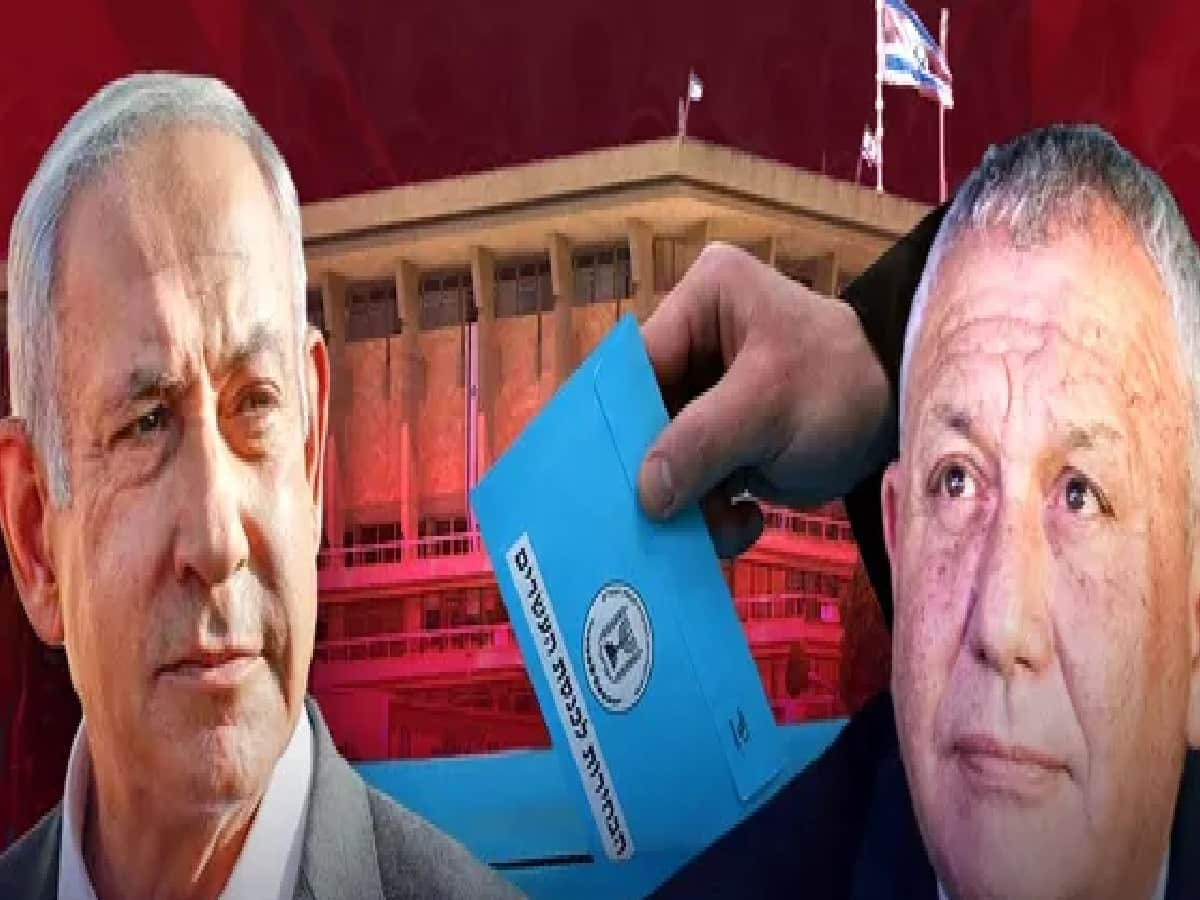
Knesset’s 3.25% Proportional Voting Differs From India
Israel stands on the brink of a defining political crossroads as roughly 7.3 million registered voters prepare to cast their ballots on Tuesday, October 27, 2026, in a high-stakes general election that will determine whether Prime Minister Benjamin Netanyahu extends his record as the nation's longest-serving leader or yields power to his principal challenger, Gadi Eisenkot. With 120 parliamentary seats in the Knesset hanging in the balance, the election operates under a distinctive nationwide proportional representation model that treats the entire nation as a single, indivisible electoral district. Because no individual political party has ever succeeded in securing an outright 61-seat parliamentary majority in the history of the modern Israeli state, the electoral architecture inherently mandates intense post-poll negotiations, making coalition mathematics, minor party viability, and factional alignment the decisive elements in forming a functional government.
Proportional Representation and the 3.25% Threshold: Why Coalitions Dominate Israel's Knesset
Unlike traditional legislative frameworks divided into local geographic constituencies, the Israeli electoral framework functions on a closed party-list system where citizens cast their ballots for a preferred political party rather than an individual local lawmaker. To qualify for seat allocation inside the 120-member Knesset, a contesting party must surmount a mandatory national electoral threshold of 3.25 percent of the total valid vote share. Under this rigorous mechanism, any faction failing to hit the 3.25 percent benchmark is summarily disqualified, resulting in their accumulated ballots being entirely discarded rather than factored into the distribution calculus. The remaining qualifying parties are then allocated parliamentary representation directly proportional to their share of the valid vote—where, for example, a party securing 10 percent of the national tally receives approximately 12 Knesset seats—a high-stakes dynamic that frequently pushes delicate governing coalitions to the brink of collapse and leaves Israeli administrations structurally susceptible to premature dissolutions and repeat polls.
Israel vs India: Single Nationwide Party-List System Against First-Past-The-Post Constituencies
The electoral architecture governing Israel diverges fundamentally from the democratic machinery practiced in India, where federal and provincial governance is anchored by the Westminster-style First-Past-The-Post (FPTP) system. While Israel dispenses with local boundaries to treat the entire country as one comprehensive constituency, India divides its territory into hundreds of distinct, geographically demarcated Lok Sabha and Vidhan Sabha seats. Indian citizens do not vote for generalized party rosters; instead, they cast individual ballots for specific candidates competing directly within their local constituency boundaries, where the contender securing a simple plurality—even if far below 50 percent of the total votes cast—claims victory. Furthermore, while India imposes no statutory baseline percentage for a party to win localized representation in Parliament, Israel's 3.25 percent national barrier acts as an uncompromising filter, concentrating legislative power strictly among organized political fronts capable of mobilizing broad, nationwide backing across a diverse and fractured electorate.




