





Italy Bans Burqas In Schools, Caps Foreign Student Quota At 30% Per Classroom
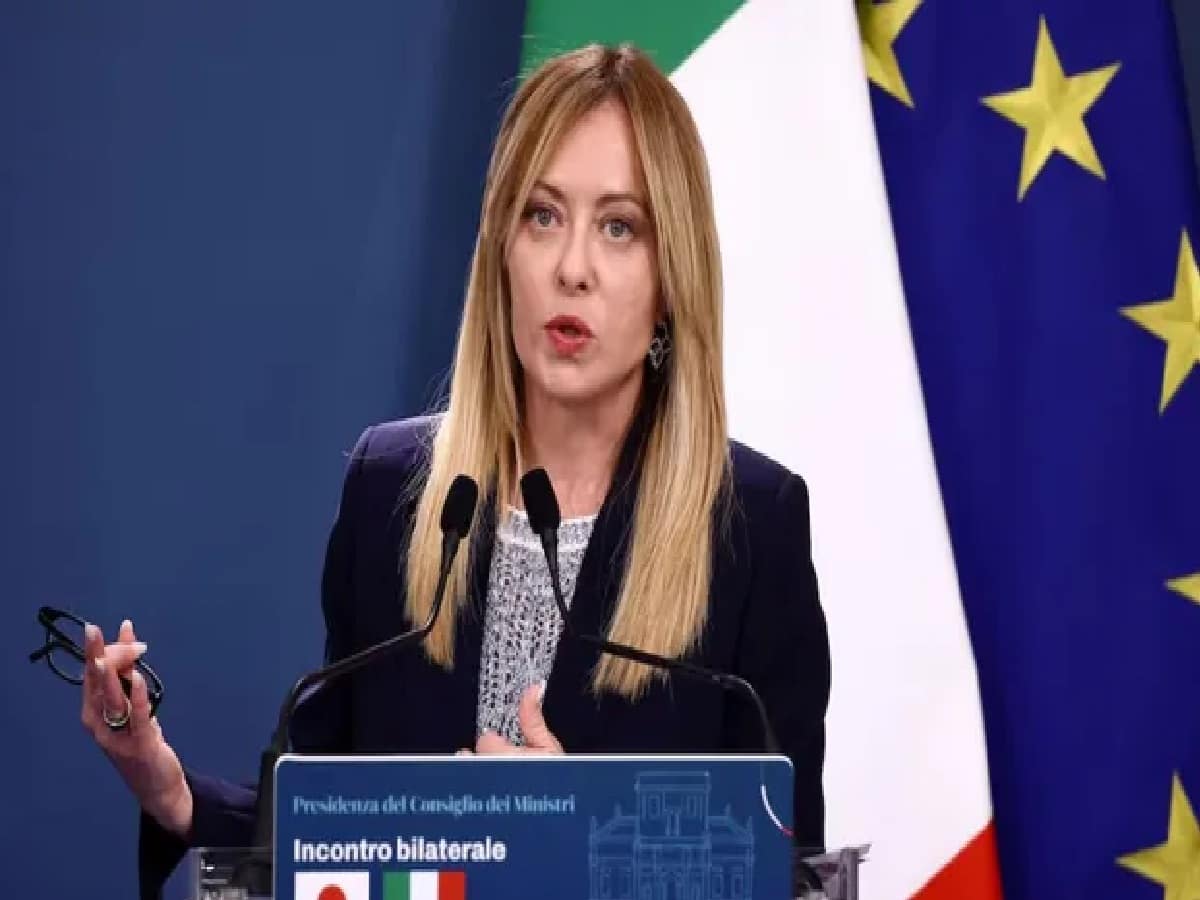
In a decisive policy move aimed at social integration and national education standards, the Italian Council of Ministers presided over by Prime Minister Giorgia Meloni has approved sweeping legislation impacting academic institutions nationwide. Assembled in Rome, the cabinet enacted an ordinance that strictly prohibits students from wearing face-covering veils—specifically burqas and niqabs—inside school premises across Italy. Alongside the dress code restriction, the regulation establishes a firm 30 percent ceiling on students with weak command of the Italian language or foreign backgrounds within individual classroom divisions.
Prime Minister Giorgia Meloni Defends Facial Cover Restrictions
Announcing the decision via public broadcasts and official social channels, Prime Minister Giorgia Meloni categorized the prohibition as both a civic necessity and a fundamental security safeguard. Defending the measure during a post-cabinet television address, Meloni asserted that requiring young women and young girls to conceal their faces infringes upon individual rights and hampers active participation in community life. She maintained that clear visual identification remains crucial inside academic environments and that facial concealment poses an insurmountable barrier to mutual socialization and basic public safety.
Classroom Linguistic Quota and Free Language Programs
To accelerate scholastic performance and avoid demographic clustering, the decree imposes an enforceable 30 percent threshold on non-fluent foreign pupils assigned to any single class. Meloni explained that the policy is designed to ensure seamless social integration rather than separation, promising that the state will inject supplemental funding, advanced equipment, and specialized language educators into affected school districts. Under the operational framework, schools will run targeted language immersion tracks to assist newly arriving non-native speakers in achieving required grade-level fluency without slowing classroom curriculums.
Strict Parental Accountability and Fines for Truancy
The cabinet ordinance introduces rigid monitoring mechanisms to track integration progress among young learners. In instances where an enrolled child demonstrates persistent failure to adapt academically or socially due to acute language deficiencies, regional social services will be formally notified to intervene. The administration has made it obligatory for parents of such students to attend state-subsidized, cost-free Italian language and orientation courses. Guardians who repeatedly refuse to comply or fail to attend these mandatory language sessions face statutory administrative fines of up to 1,000 euros.
Education Ministry Differentiates New Arrivals from Native-Born Students
Clarifying the scope of the classroom ceiling, Italian Education Minister Giuseppe Valditara rejected accusations of segregation, asserting that linguistic limitations inevitably handicap children's educational progress. While approximately 34,000 classrooms across Italy currently exceed the 30 percent foreign-origin threshold, Valditara emphasized that the renewed cap strictly targets recent migrant arrivals rather than foreign-origin children born in Italy or those who completed local preschool nurseries. The minister noted that parental engagement remains non-negotiable for childhood academic achievement, explaining that while a flexible 30 percent guidance guideline had existed since 2010, the new decree enforces rigid compliance.
Political Backlash from Opposition and Rising Right-Wing Pressure
The sweeping measure has ignited fierce domestic controversy across Italy’s political spectrum. Democratic Party opposition leader Elly Schlein denounced the decree as an ideological siege launched at the expense of vulnerable school children. Child welfare advocacy organizations like Save the Children similarly warned that arbitrary classroom redistribution risks creating a harmful hierarchy of first-class and second-class students based on nationality. Concurrently, political analysts observe that the Meloni administration faced mounting pressure from the further-right National Future Party, which first campaigned for the school burqa ban in July and has registered surging numbers in national opinion polls ahead of general election campaigning.