







Israel-Hezbollah Ceasefire Raises Hopes For US-Iran Peace Talks
News Topical,Digital Desk : Tehran refused to be part of the US-Iran peace talks starting in Switzerland on Friday in protest against Israel's military offensive in Lebanon and reiterated that the two main points of any deal – a ceasefire in Lebanon and withdrawal of Israeli forces – were being flouted by the US. This stance triggered ripples across the mediating countries, and talks in Switzerland were postponed indefinitely.
Switzerland's Foreign Ministry had confirmed that the projected talks between Washington and Tehran would not be held until further notice. The Iranian Revolutionary Guard Corps had meanwhile ramped up pressure, saying that the Strait of Hormuz would remain closed till the terms and conditions of the agreement were met and raising fears in global oil and energy markets.
Amid growing concerns over the situation, the United States in tandem withQatar and Pakistan stepped up efforts. The US continued to lobby Israel for a ceasefire, even as Tehran began talks with Hezbollah leadership.
A US official had earlier stated to Reuters that a ceasefire between two sides has begun and is in effect at 6.30 pm IST. Crude oil prices, which soared after the reports of negotiations postponement, have cooled down. Share markets too registered a decline.
It should be noted that even before the time for preliminary negotiations, US President Donald Trump signed a Preliminary Memorandum of Understanding (MOU) to expedite the peace process.
Iranian President Masoud Pezeshkian also endorsed the pact, even though the escalation in Lebanon had already started.
Following the signing of the MOU at the Palace of Versailles in France,Trumphad evenadvised his Israeli counterpart Benjamin Netanyahu to exercise restraint while Vice President JD Vance also voiced displeasure with some of the Israeli ministers' harsh pronouncements, whileIsrael'sambassador to Washington, Yashiel Leiter, affirmed the commitment to the truce but reserved the right to defend Israeli citizens in case of any attacks. However, a cessation of hostilities or any troop withdrawal by Netanyahu's government appears unlikely to happen with Israel continuing to launch retaliation against Lebanon.
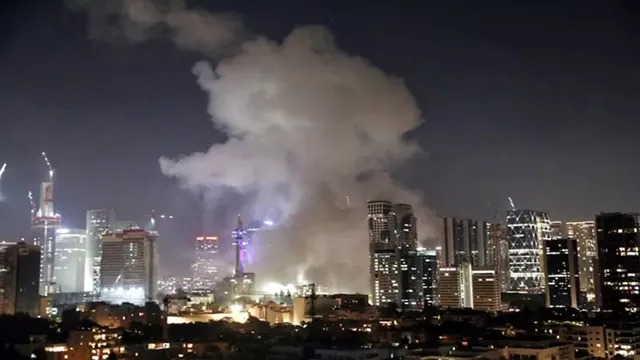
It is worth noting that Israel, continuing its military operations, launchedretaliatorystrikes on Lebanon on Friday killing at least 21 people in response to Thursday’s killing of four Israeli soldiers by the Hezbollah group in the Jewish state. The attacks on Lebanon and retaliatory strikes on Israel became increasingly intense in days leading up to the ceasefire negotiations.
Despite that, however, Israel relented on the offensive following diplomacy by the US and Qatar, andIranputting pressure onthe Hezbollah movement, who agreed to stop launching rockets. But theregionalexpertswarn thattwo priorceasefiresbetween Israel and Lebanon had fallen apart before lasting a day, with the most contentious issue between the two the complete withdrawal of Israel's forces from Lebanon.
A senior lawmaker in Hezbollah stated that Iran's position is that no talks would be held with the US unless a complete and comprehensive ceasefire takes place in Lebanon. An Iranian Foreign Ministry spokesman, meanwhile, said that the US is entirely responsible for all Israeli attacks on Lebanon, and Iran will take all necessary actions to protect its national interests. According to the Associated Press, Iran declined to send delegates to Switzerland until the ceasefire actually happens.
This put Pakistan – a mediator - under pressure. This also led to US Vice PresidentJDVancetoconcede a planned trip. The White House, however, officially cited "technical complications" for the cancellation. The Iranian Foreign Ministry spokesman also told the Lebanese dailyAl Akhbar that Lebanon's sovereignty and territorial integrity must be ensured according to the MOU, implying that Israel would have to totally withdraw from Lebanon.
Meanwhile, he cautioned that if this condition is not met, the agreement will be null and void. Iranian ParliamentSpeaker Mohammad Bagher Ghalibaf warned theUSthat any new conditions imposed during the negotiations could derail the entire process, threatening "a stronger reaction if the agreement is violated." "The enemy has already been slapped in the war and if it chooses the same path again, it will get an even bigger response," he said.
In the latest developments on Friday, Iran issued new regulations stipulating that any ships passing through the Strait of Hormuz will have to register with a new regulatory body dubbed the "Persian Gulf Strait Authority," even as the passage itself remains free.