







ISIS-Linked Rebels Kill 22, Kidnap 10 in Ebola-Hit Eastern Congo
A wave of coordinated militant violence has dealt a devastating double blow to eastern Democratic Republic of Congo, where Islamic State-affiliated insurgents killed at least 22 civilians and abducted at least 10 others across remote border communities already struggling to contain a historic Ebola epidemic. Conducted over a 48-hour span between Tuesday and Wednesday across eight separate locations in the Mambasa territory of Ituri province, the assaults were carried out by fighters belonging to the Allied Democratic Forces (ADF). Operating in densely forested, hard-to-reach terrain near the Ugandan frontier, the armed assailants stormed rural settlements, gunning down and hacking residents while setting homes and motorcycles ablaze before melting back into the jungle with captives. Local civil society monitors and child protection advocates warn that the true human toll may climb even higher as search teams struggle to reach isolated hamlets and account for missing villagers. Beyond the immediate bloodshed, security and public health officials fear the latest violence will severely disrupt frontline containment teams battling the deadliest Ebola outbreak in Congolese history.
Coordinated Raids in Mambasa: How the Border Attacks Unfolded
According to civil society leaders and human rights monitoring groups operating on the ground, the militant incursion targeted eight distinct localities within the Babila Teturi grouping of the Babila Babombi chiefdom in Mambasa territory. Because these rural villages lie deep inside tropical forest corridors with minimal road infrastructure and erratic telecommunications coverage, verifying casualties required hours of hazardous outreach by local monitors. Marie-Noelle Anatobe, coordinator of the Civil Society of Congo in the Mambasa area, confirmed that preliminary tallies recorded at least 22 civilian fatalities alongside multiple abductions. In addition to the loss of life, attackers torched at least five residential dwellings and two motorcycles, leaving surviving families destitute and terrified.
Humanitarian workers on the ground painted a grim picture of the aftermath as dawn broke over the affected settlements. Ramazani Malikidogo, territorial coordinator of the Association for the Protection and Defense of Vulnerable Children and Women (APDEF) in Mambasa, described the bloodshed as "truly deplorable," noting that community volunteers were left simply counting the dead across scattered homesteads. Malikidogo reported that at least one resident survived with severe wounds and emphasized that several people remain unaccounted for in zones still too dangerous for rescue teams to enter. Warning that armed ADF cells remain active in the surrounding forest belt, he urged residents in neighboring localities—including Luhindi, Kanyotha, and Wamba—to maintain extreme vigilance against further surprise incursions.
Double Blow to Public Health: Violence Threatens Ebola Containment
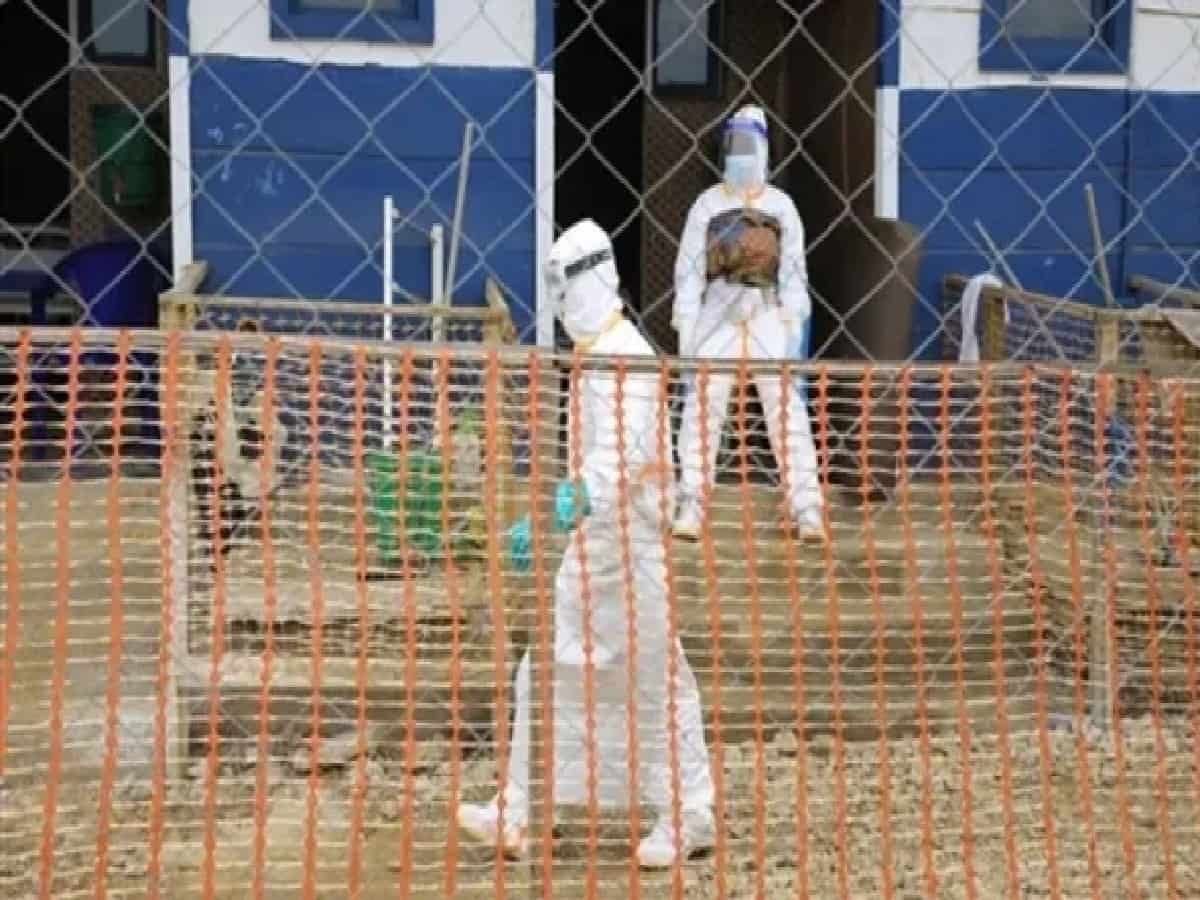
The fresh outburst of insurgent terror strikes at the heart of a region already buckling under one of the world’s most complex public health emergencies. Ituri province, alongside neighboring North Kivu, serves as the epicenter of the deadliest Ebola virus outbreak ever recorded in the Democratic Republic of Congo—a prolonged epidemic that has infected more than 11,000 people and claimed over 5,000 lives. Containing hemorrhagic fever outbreaks in active conflict zones requires uninterrupted daily access to rural communities so medical teams can isolate suspected patients, trace high-risk contacts, conduct safe burials, and administer ring vaccinations.
Public health specialists and international aid agencies warn that every militant raid triggers a dangerous domino effect for epidemic control. When ADF fighters attack villages in Mambasa, terrified residents flee into surrounding forests or overcrowd neighboring towns, scattering potential Ebola contacts beyond the reach of epidemiological surveillance teams. Simultaneously, insecurity forces the World Health Organization, the Congolese Ministry of Health, and non-governmental medical partners to suspend field deployments to protect health workers from ambushes and kidnapping. Epidemiologists caution that even brief pauses in contact tracing allow undetected transmission chains to multiply, turning localized security breakdowns into renewed surges of fatal viral infections.
Military Response and Security Gaps: Army Operations Under Scrutiny
Local administrative authorities in Mambasa acknowledged the gravity of the security crisis while defending ongoing military efforts to dislodge the insurgents from their forest hideouts. Speaking to The Associated Press, Colonel Maxime Tshishimbi, the deputy administrator of Mambasa territory, stated that national security forces are working continuously to curb the rebel group’s movements and restore stability. Tshishimbi maintained that despite severe logistical and geographical obstacles across the vast forested territory, constant operational actions are being pursued to craft a lasting security solution.
However, grassroots leaders and local residents have voiced mounting frustration over persistent gaps in civilian protection. Villagers across Ituri frequently report that government soldiers are absent when rebel raiding parties descend upon remote settlements, arriving only hours after attackers have completed their massacres and retreated. Ramazani Malikidogo questioned how ADF fighters managed to launch coordinated raids across eight locations while an active military offensive was purportedly underway to hunt them down. He called upon military commanders to urgently review their tactical planning, improve intelligence gathering, and adapt their patrol patterns to counter the insurgents' hit-and-run guerrilla tactics.
Who Are the Allied Democratic Forces? Origins and ISIS Ties
To understand the persistence of violence in eastern Congo, regional security analysts point to the evolution of the Allied Democratic Forces over the past three decades. Originally formed in western Uganda in the mid-1990s as an armed opposition movement against the government in Kampala, the ADF was gradually pushed across the border into the rugged Rwenzori Mountains and dense forests of eastern Congo. Over the years, the group entrenched itself in North Kivu and Ituri provinces, financing its operations through illicit timber logging, gold smuggling, and extortion while subjecting local Congolese communities to systematic brutality.
In 2019, the ADF formally pledged allegiance to the Islamic State group, which subsequently designated the faction as its Central Africa Province (ISCAP). Since forging that affiliation, the group has escalated the frequency and lethality of its assaults on civilians, churches, health clinics, and peacekeeping patrols. Although the Congolese armed forces (FARDC) and the Ugandan People’s Defence Force (UPDF) have conducted joint cross-border military operations to dismantle ADF camps, the insurgents have repeatedly splintered into smaller, highly mobile cells capable of evading conventional troop deployments.
Humanitarian Crisis in Ituri: Mounting Displacement and UN Warnings
The Mambasa massacres add to a staggering toll of civilian suffering across Ituri province. Last year, ADF fighters carried out a series of brutal attacks in neighboring Irumu territory that killed dozens of villagers in atrocities the United Nations explicitly condemned as "bloodbaths". According to United Nations humanitarian assessments, escalating militia violence across Ituri province alone has killed more than 600 civilians and forced over 345,000 people to flee their homes this year, creating an acute shortage of food, clean water, and emergency shelter.
As mourning families in Mambasa bury their dead and await news of the ten abducted neighbors, humanitarian observers emphasize that military force alone cannot pacify eastern Congo. Securing durable peace—and finally extinguishing the deadly Ebola epidemic—will require sustained investment in rapid-response community protection, cross-border intelligence coordination between Kinshasa and Kampala, and robust international support for displaced families trapped on the frontlines of conflict and disease.




