







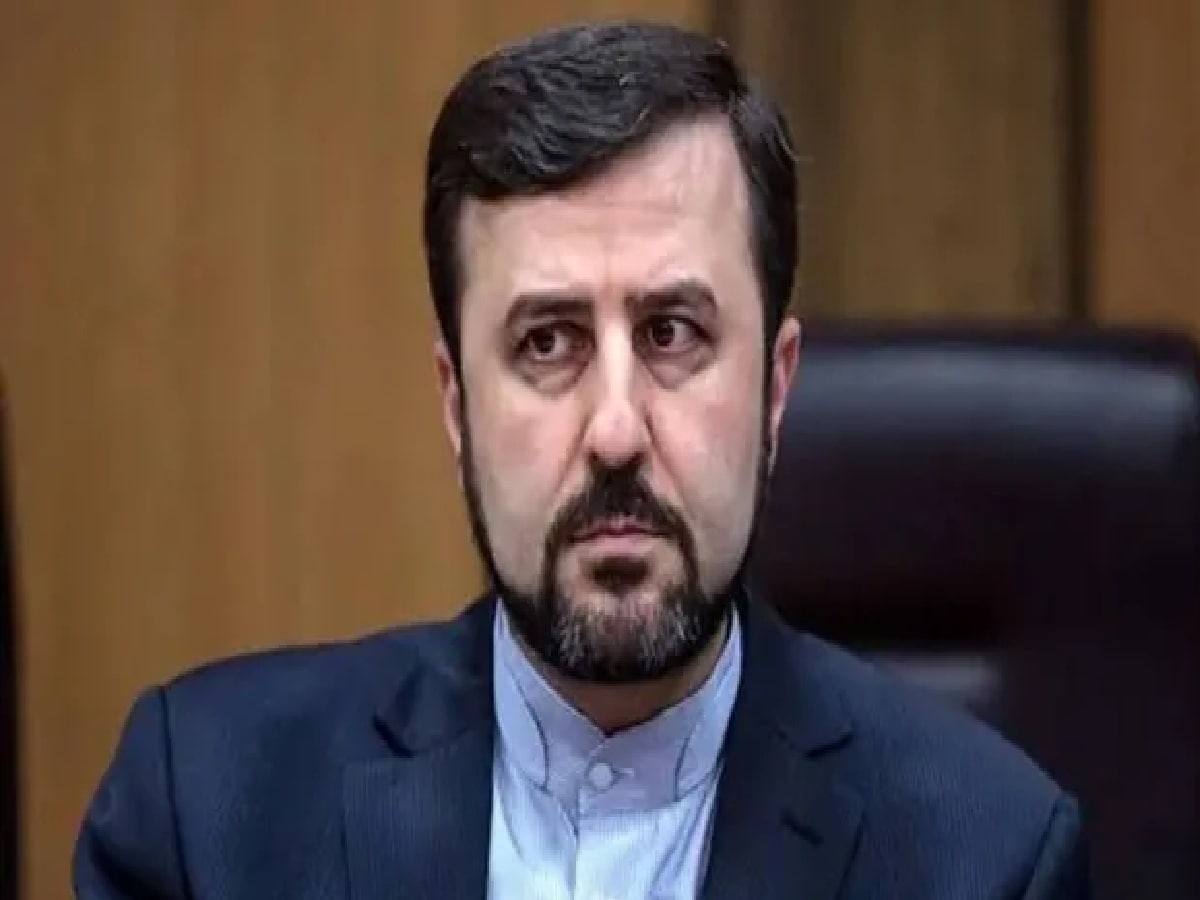
Iran Warns US It Won't Wait to Strike First: 'Not Cuba or Venezuela'
Tehran has delivered a stark warning to Washington, declaring that it will not wait for the United States to launch a military strike before retaliating and accusing American negotiators of using diplomatic channels to buy time for another offensive. Speaking in televised interviews carried by Iranian state news agencies Fars and IRNA late on Sunday, November 15, 2026, Iranian Deputy Foreign Minister Kazem Gharibabadi stated that the Islamic Republic is actively preparing across three simultaneous scenarios in its standoff with Washington: diplomacy, an economic blockade, and direct military confrontation. Rejecting pressure campaigns aimed at isolating Iran economically or geographically, Gharibabadi declared pointedly, "Iran is not Cuba that you can blockade, nor is it Venezuela that you can force to surrender," insisting that US attempts to impose aerial or land restrictions have failed. The warning comes amid heightened military deployments in the Middle East—including the arrival of the USS Theodore Roosevelt carrier strike group in the US Central Command area—and ongoing disruption around the strategic Strait of Hormuz. Alongside detailing new missile capabilities developed by the Islamic Revolutionary Guard Corps (IRGC), Gharibabadi announced that Iran remains legally in a state of war, ruled out International Atomic Energy Agency (IAEA) inspections of damaged nuclear sites until Washington provides binding guarantees, and outlined a revised two-day timeline to halt hostilities and reopen the Strait of Hormuz if all Iranian conditions are fulfilled. For energy markets, shipping operators, diplomats, and readers across New Delhi, Mumbai, Bengaluru, Chennai, Hyderabad, Kolkata, Pune, Ahmedabad, Lucknow, and Kochi, any escalation or breakthrough in the Strait of Hormuz carries immediate consequences for global crude oil supplies and regional stability.
'Not Cuba or Venezuela': Why Tehran Rejects Blockade and 'Neither War Nor Peace'
Addressing Iran's strategic posture, Kazem Gharibabadi dismissed descriptions of the current standoff as a phase of "neither war nor peace," stating that from a legal standpoint, Iran remains in an active state of war and acted purely in self-defense. He argued that land blockades have failed because neighboring states—including Iraq, Turkey, Pakistan, Turkmenistan, Armenia, and Azerbaijan—have kept border crossings functioning, while aerial restrictions have similarly fallen short.
Gharibabadi further claimed that the IRGC is manufacturing missiles with "new ranges" and cautioned that Tehran will not allow diplomatic talks to be exploited as cover for another surprise strike, citing past escalations that erupted even while negotiations were underway.
IAEA Nuclear Inspections Suspended Until Permanent End to Hostilities
Responding to renewed calls from the UN nuclear watchdog (IAEA) for inspectors to regain access to Iranian nuclear facilities—including sites damaged during recent strikes—Gharibabadi—who previously served as Iran's ambassador to the agency—made clear that IRGC forces will bar IAEA access until hostilities permanently end and Iran's conditions are guaranteed.
| Strategic Dimension | Tehran's Official Position (Kazem Gharibabadi) | Key Conditions & Operational Details |
| Three Preparedness Scenarios | Diplomacy, economic blockade, or military aggression | Tehran warns it will not wait to be attacked first before responding; IRGC developing new-range missiles |
| Legal Status of Conflict | Rejects "neither war nor peace" label | Asserts Iran remains legally in a state of war after acting in self-defense |
| IAEA Nuclear Site Access | Suspended until war permanently ends and US guarantees conditions | Accuses IAEA of seeking to assess the effectiveness of US weaponry on damaged facilities |
| Core Conditions for US Deal | Accuses Washington of showing "bad faith" at least three times in 18 months | Demands permanent ceasefire on all fronts, lifting of oil & economic sanctions, release of frozen Iranian assets, and addressing new US military deployments |
| Strait of Hormuz Reopening Plan | Timeline shortened from 7 days to 2 days after two months of mediator talks | Proposal remains on the table, but non-operational unless every single condition is implemented |
Iran's Two-Day Strait of Hormuz Proposal and Core Demands to Washington
Accusing the United States of breaching diplomatic trust at least three times over the past year and a half, Gharibabadi insisted that Washington—not Tehran—must take concrete steps to rebuild credibility. Iran's core prerequisites for any diplomatic settlement include a permanent end to fighting across all regional fronts, the lifting of US economic and oil-sector sanctions, the unfreezing of blocked Iranian assets abroad, and addressing new US military forces and equipment deployed in the region since earlier understandings.
Crucially, Gharibabadi revealed that Tehran's original seven-day roadmap to conclude hostilities and reopen the Strait of Hormuz—one of the world's most vital oil transit chokepoints—was compressed to two days following two months of consultations with international mediators. While that two-day blueprint remains on the table, he warned that no understanding can hold unless Washington implements every single commitment simultaneously.




