







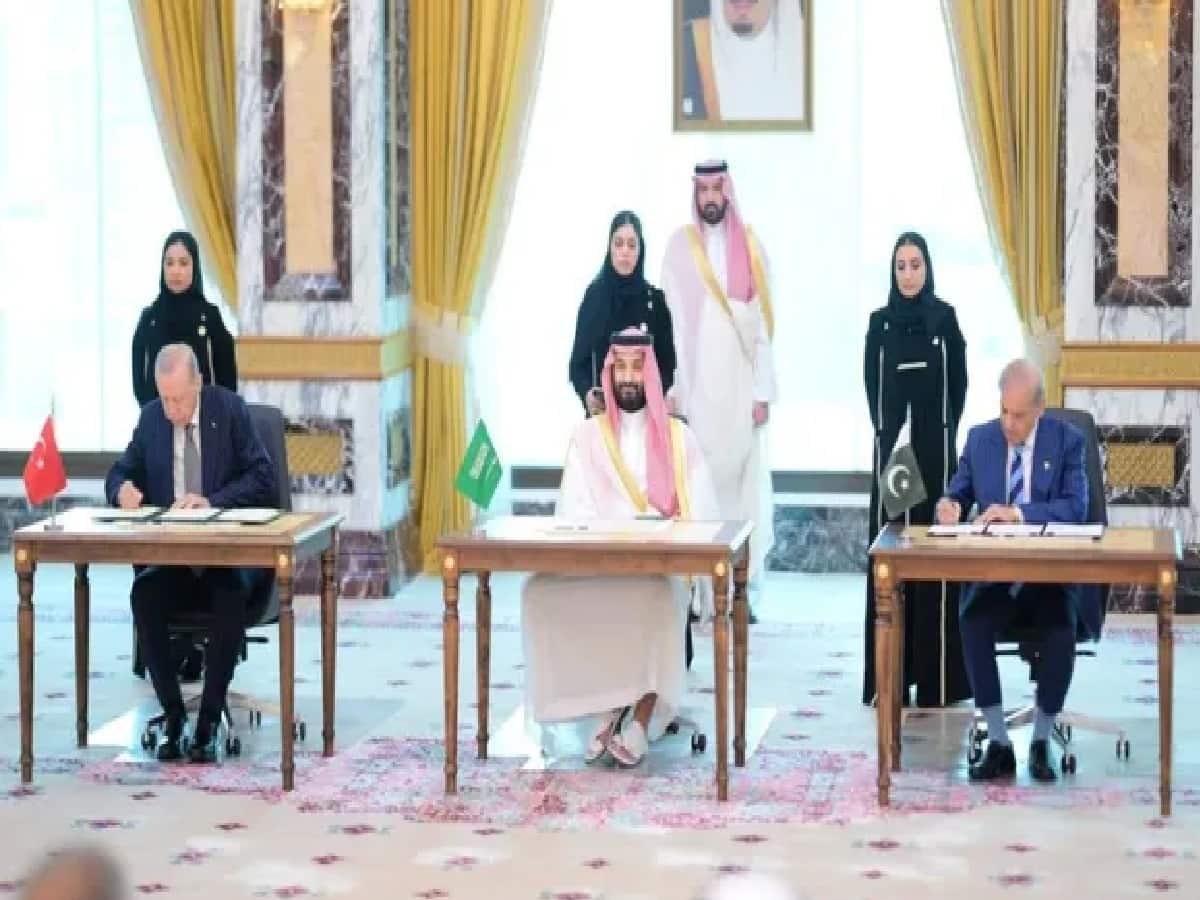
Iran Issues Stark Warning to Pakistan and Turkey Over Saudi Mecca Defense Pact
Amid escalating cross-border aerial strikes by Yemen's Houthi militia against critical infrastructure in Saudi Arabia, Iran has issued a stern warning to Pakistan and Turkey against initiating military interventions in Yemen under the framework of the newly enacted Mecca Defense Agreement. The mutual defense treaty, which formally came into force on October 5, 2026, establishes a collective security clause stipulating that any hostile aggression directed against one signatory state will be legally treated as an attack against all member nations, effectively authorizing Islamabad and Ankara to coordinate retaliatory military measures in defense of the Kingdom. Responding to reports indicating that both Pakistan and Turkey have initiated preliminary logistical and operational measures to bolster Saudi defense capabilities, Tehran warned that foreign military entanglements in the Yemeni theater would trigger dangerous and unpredictable repercussions across the wider Middle East.
Tehran Warns Ankara and Islamabad as Mecca Defense Pact Takes Effect
Addressing circulating reports regarding the prospective deployment of thousands of Pakistani combat troops to Saudi territory, Iranian Foreign Ministry spokesperson Esmail Baghaei stated that while Tehran hopes these reports remain unfounded rumors, regional powers must understand that unsolicited interference in Yemen will yield perilous fallout. Iranian Foreign Minister Abbas Araghchi urged neighboring administrations to exercise restraint and maintain constructive diplomatic ties, emphasizing that external collective defense pacts will fail to deter Iranian strategic posture. Reinforcing this stance, Ebrahim Rezaei, a senior member of the Iranian Parliament's National Security and Foreign Policy Commission, warned that Ankara and Islamabad would be unable to guarantee Saudi Arabia's territorial security any more effectively than Washington did, advising Riyadh to recalibrate its regional security policies rather than soliciting external military shields to protect its borders.
Hormuz Deadlock, Trump’s Nuclear Terms, and Stalled Peace Talks
The diplomatic confrontation unfolds alongside stalled negotiations between Washington and Tehran, with Iran officially rejecting the United States' diplomatic counter-response to its proposed seven-point peace initiative as fundamentally insufficient. Mohsen Rezaei, Secretary of Iran's Supreme National Security Council, asserted that while Washington consented to certain baseline conditions presented earlier at the United Nations General Assembly, several core stipulations remained deliberately ambiguous, confirming that the vital maritime transit corridor of the Strait of Hormuz will remain sealed until all seven conditions are comprehensively honored. Meanwhile, speaking to journalists at Joint Base Andrews, US President Donald Trump stated that hostilities could terminate swiftly provided Tehran offers an ironclad, verifiable guarantee that it will permanently abandon its pursuit of nuclear weapons capability. Suggesting that Iranian military posturing may intensify in the lead-up to the upcoming US midterm elections in an attempt to project leverage, Trump remarked that the American administration continues to exercise strategic patience despite mounting provocations.
Maritime Strikes in Gulf Waters and Pentagon's Revised Casualty Figures
The military standoff in regional waters escalated sharply after the Iranian Revolutionary Guard Corps (IRGC) Navy reported that an LPG-carrying supertanker, identified as the NV Sunshine, suffered an engine room explosion and major propulsion fire after striking a naval mine while attempting an unauthorized transit through the Strait of Hormuz within the anchorage waters of Sohar, Oman, with the IRGC publicly attributing responsibility for the maritime blast to the US military. Simultaneously, US Central Command (CENTCOM) confirmed that American fighter aircraft carried out precision strikes disabling the propulsion systems of the Panama-flagged cargo vessel Ocean Mollica (Arica Sun) in the Gulf of Oman after the vessel departed an Iranian port and repeatedly defied naval compliance warnings, noting that coalition patrols have redirected 135 vessels back toward the Strait of Hormuz and disabled 10 commercial tankers over the past three months. Adding to the gravity of the protracted conflict, the Pentagon officially updated its casualty metrics on the Defense Casualty Analysis System, increasing the verified tally of US service members killed in the conflict with Iran from 18 to 21, while wounded military personnel figures rose sharply from 98 to 865.




