







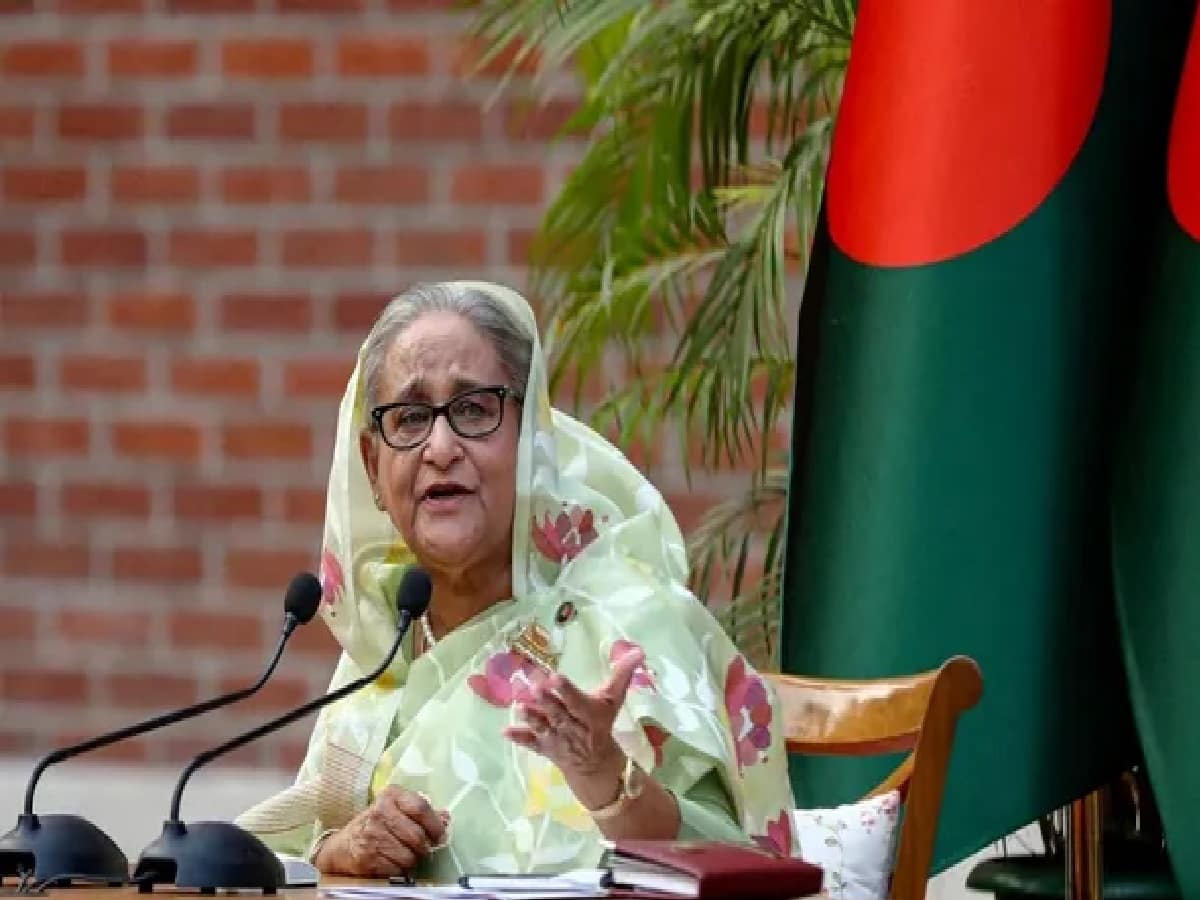
India Cannot Dictate Conditions on Sheikh Hasina's Return: Bangladesh
Asserting sovereign legal authority over any potential repatriation of former Prime Minister Sheikh Hasina, Bangladesh Prime Minister Tarique Rahman's Information Adviser Zahed Ur Rahman declared on Tuesday, November 17, 2026, that neither India nor any other foreign country can dictate conditions for her return to Dhaka. Addressing journalists during a media briefing at the Bangladesh Secretariat in Dhaka, Zahed responded to recent media reports suggesting that New Delhi had floated two specific conditions for handing over the 79-year-old deposed leader—namely, that the Bangladesh Army directly receive her via a military flight or land border crossing, and that Dhaka guarantee judicial safeguards including the right to appeal her death sentence and undergo a fresh trial. Dismissing the notion of external stipulations, Zahed stated unequivocally that Bangladesh is an independent, sovereign nation standing on firm legal ground and will reject any unjust terms, while expressing confidence that India itself would not attach conditions to Hasina's return. Echoing State Minister for Foreign Affairs Shama Obaed Islam, who had denied a day earlier that New Delhi had placed any preconditions before Dhaka, Zahed reiterated that Bangladesh has formally sought Hasina's extradition under the bilateral extradition treaty and that any legal proceedings upon her return will be governed strictly by Bangladesh's prevailing laws. Sheikh Hasina, who led Bangladesh for 15 years before being ousted in a student-led uprising in August 2024, has been residing in India since fleeing Dhaka. Her latest push to return—after her counsel emailed the Bangladesh High Commission in New Delhi earlier this month requesting a new passport and national identity card ahead of a stated plan to travel back in December—has sharpened diplomatic and legal focus across South Asia. In New Delhi, Ministry of External Affairs (MEA) spokesperson Randhir Jaiswal has maintained that Hasina's extradition is a "legal matter" that will be dealt with accordingly, while affirming India's desire for a "positive, constructive, and forward-looking relationship" with Bangladesh. For diplomats, strategic analysts, and readers across New Delhi, Kolkata, Agartala, Guwahati, Lucknow, Mumbai, Bengaluru, and Dhaka, the exchange highlights the delicate balance between legal due process and bilateral ties.
Dhaka's Stance vs. New Delhi's Position on Sheikh Hasina's Extradition
Amid intense media speculation surrounding Hasina's passport application and Dhaka's formal extradition request, official statements from both capitals clarify where matters currently stand:
| Stakeholder / Government | Key Official / Spokesperson | Stated Position & Legal Context (November 2026) |
| Bangladesh Prime Minister's Office (Dhaka Secretariat, Nov 17, 2026) | Zahed Ur Rahman (Information Adviser to PM Tarique Rahman) | Declared "neither India nor any other country can dictate terms" on Hasina's return; stressed Bangladesh will reject unjust conditions, though he doubted New Delhi would impose any, and affirmed trials follow Bangladesh's domestic law. |
| Bangladesh Foreign & Law Ministries (Nov 14–16, 2026) | Shama Obaed Islam (State Minister for Foreign Affairs) & M. Asaduzzaman (Law Minister) | Denied reports that India set preconditions; confirmed Dhaka has completed its legal steps under the India–Bangladesh extradition treaty, leaving the legal decision with New Delhi. |
| Former PM Sheikh Hasina's Legal Team (New Delhi, Nov 2026) | Counsel representing Sheikh Hasina (79) | Emailed the Bangladesh High Commission in New Delhi requesting a new passport and national identity card (NID) to facilitate her stated plan to return voluntarily in December. |
| Government of India (MEA) (New Delhi, Nov 10 & 13, 2026) | Randhir Jaiswal (Official Spokesperson, Ministry of External Affairs) | Reiterated that Hasina's extradition is strictly a "legal matter" to be handled under due process, noted that international travel requires a valid travel document, and emphasized a constructive, forward-looking relationship with Dhaka. |
Why Passport Access, Extradition Law, and Domestic Courts Intersect
The current diplomatic debate sits at the intersection of two parallel tracks: Hasina's declared intention to return voluntarily in December—which requires a valid travel document after her previous passport was revoked—and Dhaka's formal extradition demand following convictions handed down by Bangladesh's International Crimes Tribunal.
While Bangladesh's Law Minister M. Asaduzzaman noted that special tribunal rules restrict appellate extensions beyond statutory deadlines, several Bangladeshi legal experts have pointed out that individuals facing capital sentences still retain constitutional and procedural avenues to seek bail or judicial review upon surrender. Information Adviser Zahed Ur Rahman maintained that how any convicted citizen is tried or heard remains exclusively within the jurisdiction of Bangladesh's courts rather than bilateral negotiations.
Preserving Broad India–Bangladesh Engagement Amid Legal Sensitivities
Even as the fifth round of the India–Bangladesh Foreign Secretary-level Consular Dialogue was rescheduled to a mutually convenient date, both New Delhi and Dhaka have signaled reluctance to let the extradition dispute derail broader economic, connectivity, water-sharing, and border-management cooperation. By framing the matter firmly within established legal and treaty frameworks, both governments aim to manage domestic political sensitivities without undermining regional stability.




