







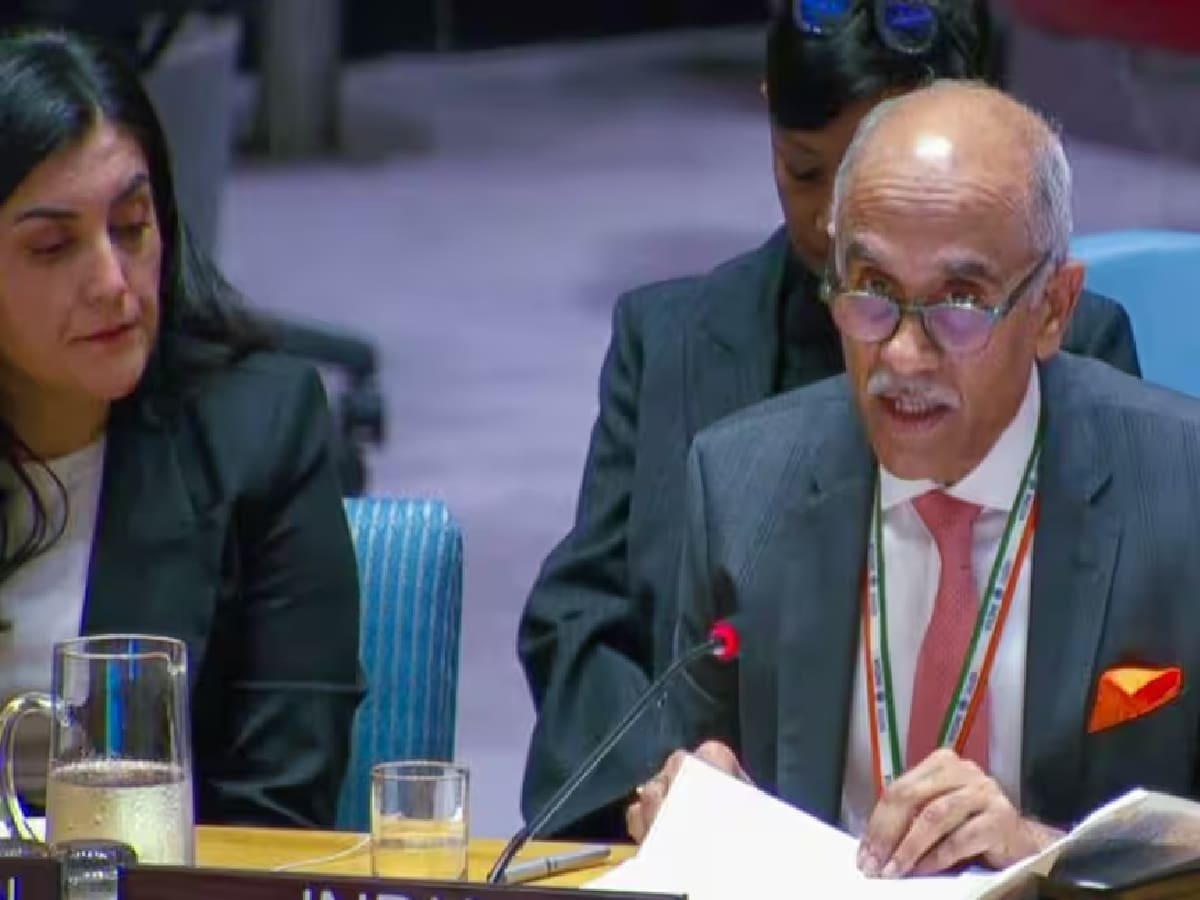
India at UNSC Warns Over 10M GCC Diaspora Safety After Citizen Killed in Riyadh
Delivering a resolute address before the United Nations Security Council (UNSC) during its open debate on the Middle East, India’s Permanent Representative to the UN, Ambassador Parvathaneni Harish, underscored New Delhi’s vital stake in preserving regional peace, stability, and maritime security. Emphasizing that approximately 10 million Indian expatriates reside across Gulf Cooperation Council (GCC) member states and serve as critical contributors to regional economies, the envoy affirmed that their safety and welfare form the cornerstone of India’s foreign policy and bilateral engagements. Expressing profound concern over the escalating military confrontations across West Asia, Ambassador Harish urged all regional actors to exercise immediate restraint and pursue de-escalation, while strongly condemning the unabated strikes against civilian infrastructure and commercial hubs. Pointing to the tragic loss of human life, he highlighted the killing of Indian citizen Mohammed Yusuf Ali during aerial strikes in Riyadh, declaring India’s full solidarity with the government and citizens of Saudi Arabia in defending their national sovereignty and territorial integrity.
Red Lines on High Seas: India Condemns Targeted Strikes on Commercial Vessels
Turning to the perilous disruptions unfolding across international transit lanes, Ambassador Harish delivered an uncompromising assessment of recurring maritime aggression, characterizing attacks on merchant shipping as both legally indefensible and morally bankrupt under established international maritime conventions. The envoy specifically called out recent hostile actions against commercial carriers, including the Indian-flagged vessel MV DP World Cauvery, alongside attacks targeting the MT Petro Dolphin and the MT Valthera. Stressing that numerous vessels transiting regional waters operate with Indian crews aboard, Harish asserted that protecting these mariners remains a paramount duty for New Delhi that cannot be compromised by geopolitical friction. Expressing formal gratitude to authorities in Oman and the United Arab Emirates (UAE) for their timely cooperation and on-ground coordination during emergency rescue operations, India reiterated that enduring stability can only be achieved through constructive diplomacy, structured dialogue, and an immediate cessation of strikes against commercial vessels, seafarers, and non-combatant installations.
Modi’s BRICS Maritime Blueprint: Institutionalizing Global Safety for Seafarers
Reinforcing India’s commitment to international law and unimpeded commercial navigation across vital waterways, the ambassador noted that recurrent naval incursions threaten to push an already fragile regional equilibrium past the breaking point. To counter this systemic vulnerability, Harish highlighted Prime Minister Narendra Modi’s proposal presented at the BRICS summit, which envisions a multilateral emergency assistance network dedicated to seafarers operating in volatile maritime zones. Under this proposed framework, maritime regulatory authorities, naval commands, and embassies of participating nations would be linked into a synchronized rapid-response architecture capable of transmitting real-time distress signals, coordinating emergency medical interventions, maintaining transparent communications with sailors' families, and orchestrating rapid evacuation corridors during active conflicts. By uniting diplomatic influence with institutional maritime safeguards, India continues to advocate for an international consensus that defends freedom of navigation and shields commercial crews from cross-border hostility.




