







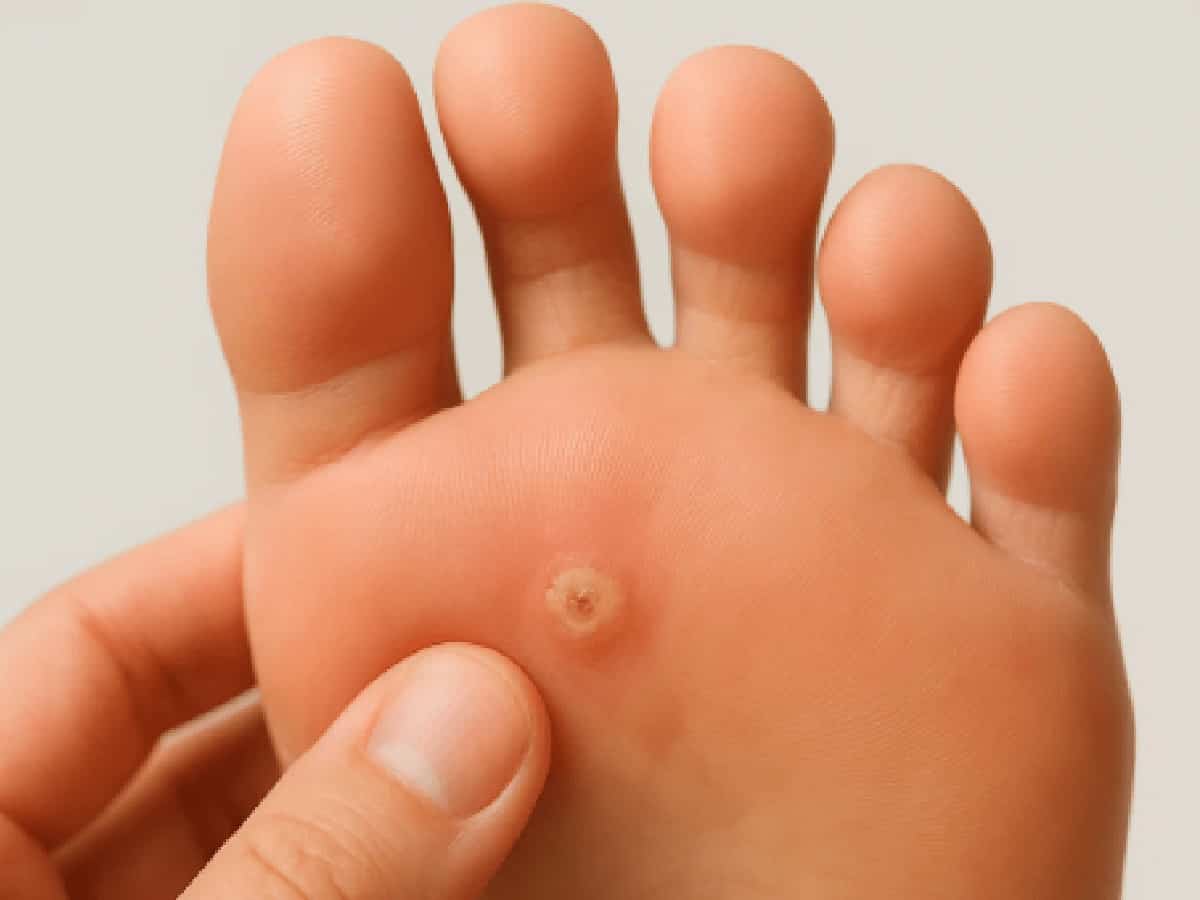
Painful Foot Corns Making It Hard to Walk, 5 Everyday Triggers
Experiencing an acute pinching sensation, sharp discomfort, or discovering a stubborn, hardened bump on your sole while walking is often the unmistakable sign of a foot corn. Though many initially shrug off these small thickened patches as trivial blemishes, unchecked friction and pressure can rapidly transform them into excruciating pressure points that hinder everyday walking, exercising, and wearing standard footwear. Dr. Amit Prakash Singh, Consultant of Internal Medicine at CK Birla Hospital in Delhi, explains that corns represent the skin’s biological defense mechanism—localized, dense layers of dead skin cells that build up in response to chronic mechanical stress, friction, or shearing forces. Most commonly surfacing along the tops of toes, on the soles of the feet, or between webbed toe joints, these painful lesions can be safely managed and resolved right at home with simple, doctor-approved dermatological steps.
The 5 Hidden Triggers: What Actually Causes Painful Corns to Develop?
Corns do not appear randomly; they develop when specific habits and foot mechanics generate localized friction points:
-
Ill-Fitting Footwear: Tight, narrow footwear constricts the toes and compresses them against each other, while overly loose shoes cause the foot to slide back and forth repeatedly, accelerating painful skin hardening.
-
High-Heeled Shoes: Elevating the heel shifts the body's cumulative center of gravity forward onto the metatarsal heads and front toes, placing immense localized mechanical pressure on the ball of the foot.
-
Structural Foot Deformities: Biomechanical conditions such as hammer toes, bunions, bone spurs, or abnormal walking gaits redistribute body weight unevenly, subjecting vulnerable patches of skin to constant friction.
-
Skipping Socks: Wearing closed shoes without socks leaves bare skin in direct contact with rough internal shoe linings, dramatically ramping up friction and callous formation.
-
Prolonged Standing and Walking: Occupations or lifestyles that demand standing upright on hard surfaces for hours subject the soles to unrelenting downward pressure, causing the epidermal layer to thicken into dense, painful cores.
Step-by-Step Home Remedies: How to Safely Remove Foot Corns
Treating corns at home requires gentle, non-invasive softening rather than harsh cutting or aggressive peeling:
-
Lukewarm Soapy Water Soaks: Immerse the affected foot in a basin of warm, mildly soapy water for 10 to 15 minutes to hydrate and soften the tough keratinized core of the corn.
-
Gentle Exfoliation with a Pumice Stone: Once the skin is supple, gently rub the softened surface with a wet pumice stone or gentle foot file using light, circular motions. Never scrub aggressively, and strictly avoid using razor blades, nail clippers, or scissors, as cutting into corns carries a severe risk of deep tissue infections.
-
Targeted Moisturizing with Urea or Lactic Acid: Apply a rich, nourishing emollient containing urea, lactic acid, or ammonium lactate daily to break down rough skin cells and lock in moisture. Over-the-counter medicated corn plasters containing harsh concentrations of salicylic acid must be used with caution, particularly by individuals with fragile skin.
-
Protective Cushioning Pads: Place donut-shaped silicone rings, gel sleeves, or soft felt pads over the affected area to redistribute shoe pressure away from the inflamed corn core.
-
Orthotic-Friendly Footwear Selection: Switch to wide-toe-box footwear with cushioned arch support and plush insoles, paired with soft, moisture-wicking socks to eliminate friction entirely.
Essential Prevention Rules: Keep Your Feet Smooth, Protected, and Pain-Free
Preventing recurrent corns relies on practicing good foot hygiene and smart shopping habits:
-
Wash, Dry, and Trim: Maintain clean, completely dry feet to prevent fungal infections, and trim toenails straight across regularly so they do not press against shoe caps.
-
Smart Shoe-Shopping Timing: Shop for new footwear later in the afternoon or evening when feet naturally expand slightly due to daily activity, ensuring a true, comfortable fit that prevents constriction.
-
Rotate Footwear: Avoid wearing the same pair of shoes every single day to prevent repetitive pressure patterns on identical spots of your feet, and consult a podiatrist or physician immediately if you manage diabetes, peripheral neuropathy, or poor blood circulation.




