







China's Giant TBM Export Block: Will India's Himalayan Roads Suffer
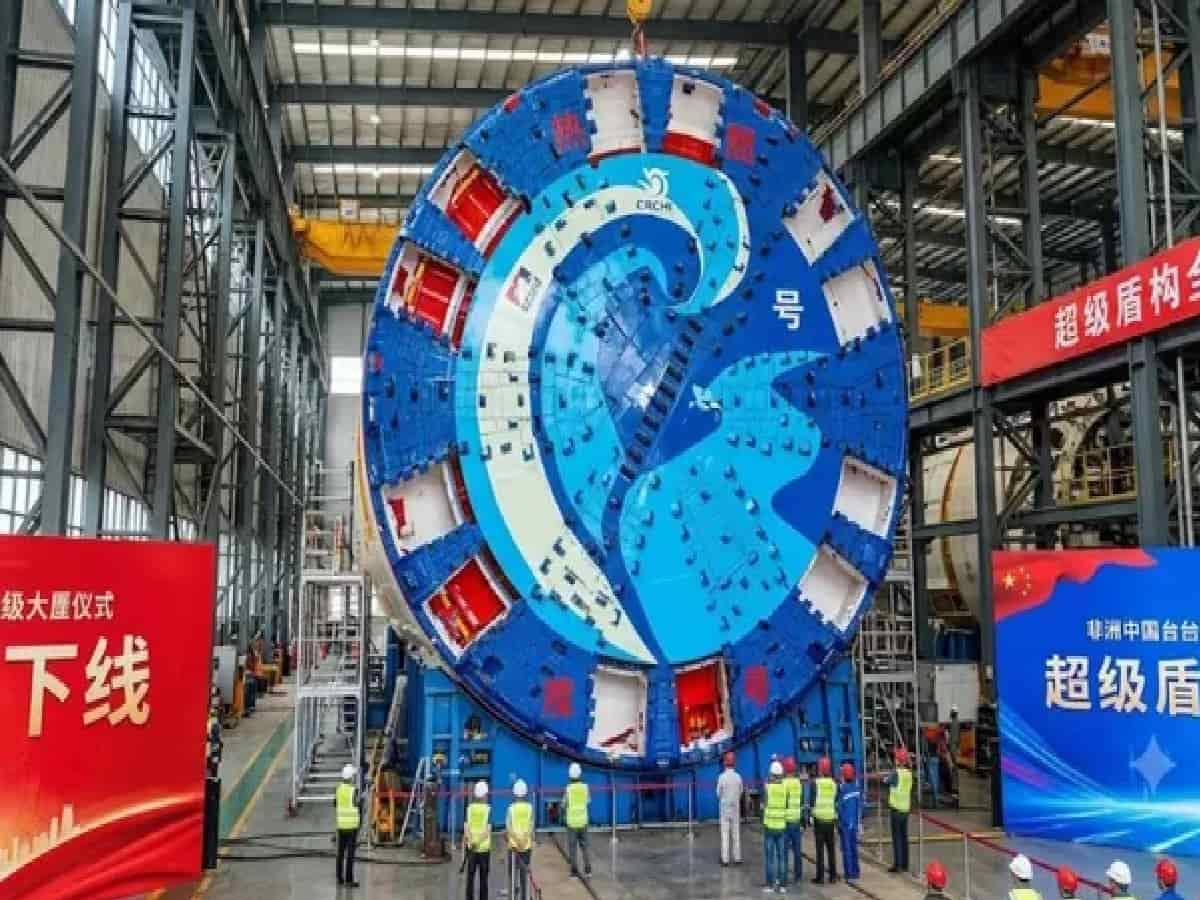
Following its aggressive export restrictions on critical rare earth minerals, China has expanded its economic statecraft into heavy industrial manufacturing by enforcing stringent export controls on specialized construction machinery, most notably massive tunnel boring machines (TBMs) weighing up to 5,000 tonnes. As the world’s undisputed leader in tunneling technology, controlling roughly 70 percent of the international market, Beijing has classified high-capacity excavation systems and high-altitude concrete sprayers under its "dual-use" regulatory regime, barring shipments to sensitive destination states and disputed frontiers. The move is viewed by strategic analysts as a calculated attempt to choke the supply chain of critical engineering equipment required for India's massive infrastructure drive along the disputed Himalayan Line of Actual Control (LAC), where New Delhi is constructing a fortified network of high-altitude roads, all-weather passes, and rail tunnels to ensure rapid military mobilization.
Targeting Strategic Himalayan Corridors: Beijing’s 70% Global Monopoly & Past Precedents
The new export mandates threaten not only the delivery of complete drilling systems but also crucial replacement components for machines already active across Indian urban metro networks and strategic frontier tunnels. Highlighting Beijing's geopolitical calculations, Sun Chenghao, a fellow at Tsinghua University's Center for International Security and Strategy, noted that China's primary strategic anxiety centers on whether its indigenous engineering prowess is being utilized to fortify a rival nation's defensive perimeter. The latest clampdown follows a precedent set in 2024, when Chinese authorities obstructed German engineering major Herrenknecht AG from exporting China-assembled boring machines earmarked for landmark Indian infrastructure projects, including the Mumbai-Ahmedabad Bullet Train corridor and the Delhi Metro expansion. With state-backed behemoths like China Railway Engineering Equipment Group Co. Ltd. supplying tunneling fleets to over 36 nations, including European infrastructure developers in France and Denmark, Beijing’s supply squeeze presents an immediate logistics hurdle for infrastructure contractors heavily reliant on cost-effective Chinese airframes and cutter-heads.
Navigating Supply Chokepoints: Gadkari’s $9.6B Tunneling Push & $1.2B Indigenous Equipment Incentive
Despite near-term vulnerabilities, economic assessments suggest the supply embargo could accelerate India's transition into an alternative global heavy-machinery hub. While international engineering firms based in Germany, Japan, and the United States offer viable technological alternatives, the prolonged lead times required to manufacture, test, and deploy non-Chinese TBMs risk introducing interim project delays. To eliminate external dependency, Union Minister for Road Transport and Highways Nitin Gadkari has underscored the urgency of building sovereign industrial capacity, projecting a domestic tunneling capital expenditure of up to $9.6 billion over the next five years and urging domestic manufacturing consortia to engineer indigenous excavation machinery. In tandem with these strategic targets, the Central Government is actively structuring a $1.2 billion incentive package aimed at attracting international equipment manufacturers to scale domestic assembly lines in India, effectively turning Beijing's industrial embargo into a long-term catalyst for India's self-reliant capital goods ecosystem.




