







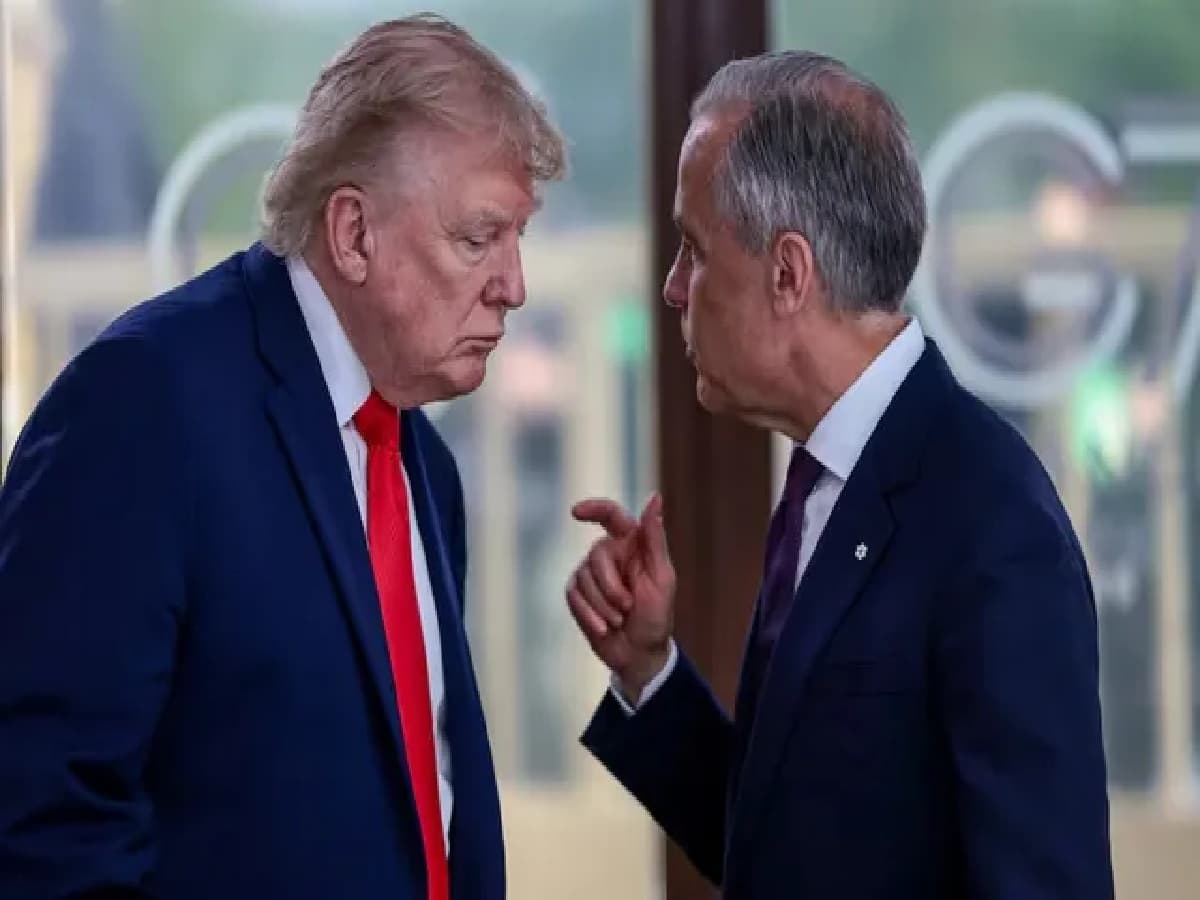
Canada Evaluated 'Serious Risk' of US Attack After Trump’s 51st State Threats
Bilateral relations between Washington and Ottawa have entered an unprecedented diplomatic chill, marked by extraordinary security reflections within the Canadian federal government. In a candid revelation, Canadian Prime Minister Mark Carney confirmed that his administration actively reviewed contingency assessments concerning a "very unlikely but serious risk" of military action from the United States. The disclosure underscores the profound diplomatic fallout and strategic anxiety triggered by United States President Donald Trump’s persistent rhetoric suggesting that Canada should be absorbed into the American federation as its 51st state. Speaking on the broader posture of national defense, Carney emphasized that sovereign leaders cannot afford complacency when foreign rhetoric borders on territorial annexation.
Trump's '51st State' Rhetoric Triggers High-Level Canadian Contingency Reviews
The unusual strategic deliberations inside Ottawa's defense circles were prompted directly by Donald Trump’s repeated public assertions regarding Canada’s political future. While many international observers initially treated the American president's comments about integrating Canada as rhetorical theatrics, the Canadian national security establishment treated the implications with measured seriousness. Carney confirmed that the rhetoric necessitated high-level discussions regarding strategic deterrence, territorial readiness, and defense posturing to safeguard Canada's constitutional sovereignty and international borders against unexpected unilateral moves from its southern neighbor.
Prime Minister Carney Defends Pragmatic National Risk Management
Elaborating on the administration’s thought process during a detailed conversation with The New York Times, Prime Minister Carney defended the strategic review as a fundamental exercise in prudent statecraft and crisis preparedness. Carney maintained that holding high-level constitutional office demands assessing catastrophic outlier possibilities rather than operating solely on conventional assumptions of bilateral peace. He characterized the evaluation not as a panic response or an expectation of immediate conflict, but as baseline institutional risk management, remarking that it would be fundamentally irresponsible for any head of government to ignore extreme geopolitical shifts when national sovereignty is openly questioned.
Preserving Sovereignty Amid Deteriorating Washington-Ottawa Relations
While reiterating that direct conventional military hostilities from the United States remain an exceptionally improbable prospect, Prime Minister Carney noted that the exercise reflected the broader imperative to adapt to rapid realignments in North American geopolitics. The deterioration in historical diplomatic norms between Washington and Ottawa has forced Canadian policy planners to systematically evaluate supply chain vulnerabilities, border controls, and defense dependencies. By publicly acknowledging these strategic considerations, the Canadian leadership has signaled to international allies that Ottawa remains vigilant, fully committed to defending its sovereign status, and prepared to manage unprecedented risks emerging from shifts in American foreign policy.