







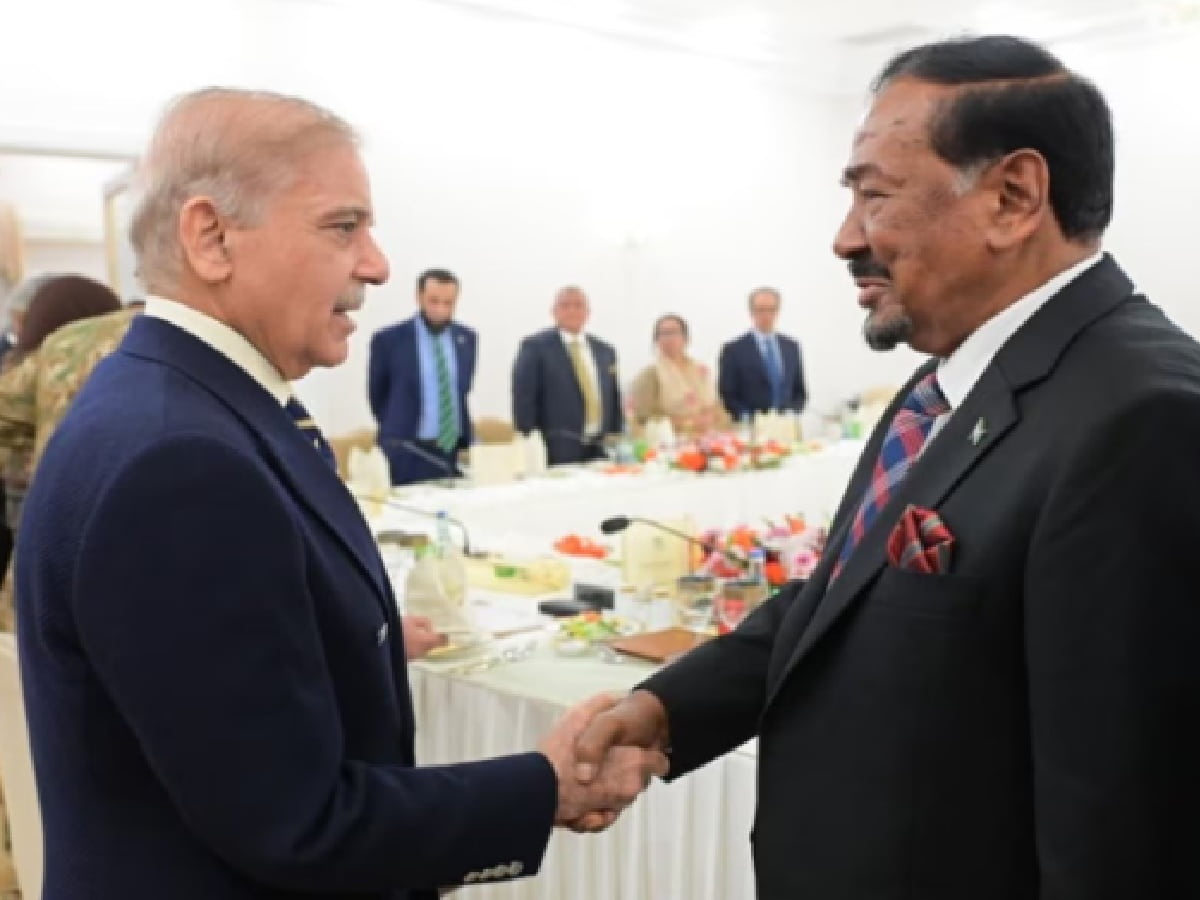
Bangladesh Speaker in Pakistan Targets India Over 1971, Kashmir & Hasina
Diplomatic friction in South Asia has sharpened markedly after Bangladesh Jatiya Sangsad Speaker Hafizuddin Ahmed (Hafiz Uddin Ahmad) used an official parliamentary visit to Islamabad to launch a sweeping verbal attack on India—recasting the history of the 1971 Liberation War, echoing Pakistani talking points on Kashmir, and warning of international legal action over exiled former Prime Minister Sheikh Hasina. Highlighted across national diplomatic, strategic, and regional desks on Friday, November 27, 2026, Ahmed is leading a five-member Bangladeshi parliamentary delegation on a six-day official trip to Pakistan (November 23 to 29, 2026) at the invitation of Pakistan's National Assembly Speaker Sardar Ayaz Sadiq—marking the first-ever official visit to Pakistan by a sitting Speaker of Bangladesh's Parliament. During his engagements in Islamabad, where he paid a courtesy call on Pakistan President Asif Ali Zardari at Aiwan-e-Sadr and attended an official dinner hosted by Prime Minister Shehbaz Sharif, Ahmed—himself a graduate of the Pakistan Military Academy, former Pakistan Army captain who later fought in 1971 and received Bangladesh's Bir Bikrom gallantry honor, and captain of Pakistan's national football team in 1968—told reporters at Parliament House that in 1971 India "did not help the Bengalis, but weakened Pakistan". Going further, he alleged that Bangladesh had turned into an "Indian colony" during Sheikh Hasina's 15-year rule, characterized India as hostile toward Muslims, declared that the Kashmir dispute should be resolved in line with United Nations resolutions, and asserted that Hasina would be sent straight to jail if she returns to Dhaka—claiming she has no prospect of returning for at least 10 years and warning that Dhaka could approach the International Court of Justice (ICJ) if New Delhi refuses her extradition. New Delhi, which maintains that Jammu and Kashmir is an integral and inalienable part of India with no room for third-party commentary and has stated that Dhaka's extradition request is under examination by competent authorities under applicable laws, is closely tracking the diplomatic fallout across New Delhi, Islamabad, Dhaka, Kolkata, Lucknow, Srinagar, and Guwahati.
Bangladesh Speaker Hafizuddin Ahmed's Islamabad Remarks: Key Claims & Context
To bring together the exact controversial statements made by Speaker Hafizuddin Ahmed during his November 23–29, 2026 Pakistan visit, how his remarks break sharply from decades of Dhaka–New Delhi diplomatic norms on 1971 and Kashmir, and India's established legal and diplomatic positions on Kashmir and extradition procedures, the tables below organize verified facts:
Key Controversial Statements by Speaker Hafizuddin Ahmed in Islamabad
| Topic / Issue | Speaker Hafizuddin Ahmed's Statement in Pakistan | Historical & Diplomatic Context |
| 1971 Liberation War | Claimed at Parliament House in Islamabad that in 1971, India "did not help the Bengalis, but weakened Pakistan" and argued Bengalis were denied genuine democracy after 1971. | Contradicts the foundational history of 1971, when Indian armed forces fought alongside the Mukti Bahini, sheltered roughly 10 million refugees, and helped secure Bangladesh's independence on December 16, 1971. |
| Kashmir Dispute & Minorities | Endorsed resolving Kashmir in accordance with UN resolutions and described India as hostile toward Muslims while praising closer Dhaka–Islamabad ties. | Marks a sharp departure from successive Dhaka governments that treated Kashmir as a bilateral India–Pakistan matter; New Delhi reiterates Kashmir is an integral part of India. |
| Sheikh Hasina's Exile & ICJ Warning | Alleged Bangladesh was an Indian "colony" under Hasina's 15-year rule, labeled her banned Awami League a "terrorist party," claimed she cannot return for 10 years (and would be jailed immediately), and said Dhaka may move the International Court of Justice (ICJ) if India refuses extradition. | Legal analysts note ICJ jurisdiction requires specific treaty or consent grounds, while India's MEA has stated Dhaka's extradition request is being examined under established legal procedures. |
| Sporting & Bilateral Optics | Cited a recent India–Pakistan football match in Dhaka claiming 99.9% of spectators cheered for Pakistan despite India winning the match, and thanked Pakistan for backing Bangladesh's Inter-Parliamentary Union (IPU) bid. | Underscores a deliberate political tilt toward Islamabad following Dhaka's post-2024 political transition and February 2026 general elections. |
Profile & Diplomatic Timeline of the Islamabad Parliamentary Visit
| Parameter | Verified Details | Strategic Significance |
| Speaker's Background | Hafizuddin Ahmed (Bir Bikrom), Speaker of Bangladesh's Jatiya Sangsad; trained at Pakistan Military Academy, captained Pakistan's national football team (1968), served as a Pakistan Army captain before joining the 1971 liberation struggle. | Personal and institutional familiarity with Pakistan framed his warm reception in Islamabad. |
| Visit Schedule & Meetings | November 23–29, 2026 in Islamabad at the invitation of National Assembly Speaker Sardar Ayaz Sadiq; met President Asif Ali Zardari (Aiwan-e-Sadr) and PM Shehbaz Sharif (PM House dinner). | First official visit to Pakistan by a sitting Bangladeshi Parliament Speaker, accompanied by broader bilateral MoU discussions. |
Why Remarks From Pakistani Soil Carry Heavy Diplomatic Consequences
Foreign policy observers in New Delhi, Kolkata, Lucknow, and Guwahati note that comments questioning India's role in 1971 and endorsing Pakistan's line on Kashmir—delivered while standing inside Islamabad's Parliament complex alongside meetings with Shehbaz Sharif and Asif Ali Zardari—strike at the core sensitivities of India–Bangladesh relations. Beyond rhetoric, India shares a 4,096-kilometer border with Bangladesh, deep trade and transit links vital to West Bengal and the Northeast, and decades of shared security cooperation that risk strain if anti-India messaging becomes routine statecraft in Dhaka.
What Diplomatic and Strategic Watchers Will Monitor Next
Following the conclusion of Speaker Hafizuddin Ahmed's Pakistan tour on November 29, 2026, diplomatic desks across New Delhi, Dhaka, Islamabad, Kolkata, and Lucknow will watch for any formal response from India's Ministry of External Affairs, how Dhaka reconciles provocative political rhetoric with economic and border interdependence, and developments ahead of Sheikh Hasina's announced December 16, 2026 return plan.




