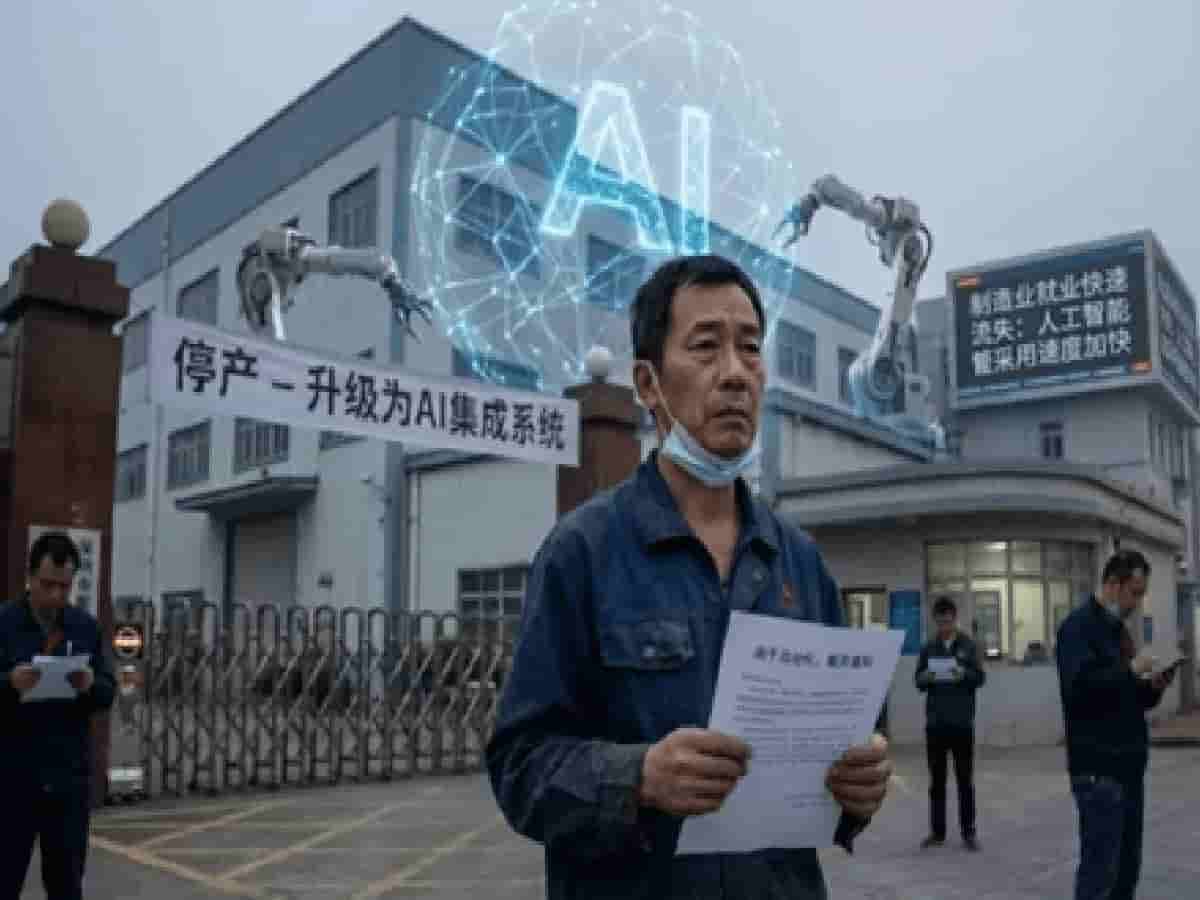
AI Threatens Livelihoods in China: Rapid Automation Sparks Massive Job Losses and Shifts Workforce to Gig Economy
The exponential rise and rapid integration of artificial intelligence across various industries in China have sparked intense concerns over widespread job displacement and an increasingly fragile labor market. Highlighting the growin friction between automation and human labor, recent reports from regions like Wuhan revealed how the sudden introduction of driverless robotaxis immediately threatened the livelihoods of local taxi drivers. While some temporary relief came when technical glitches caused the autonomous fleet to stall, triggering traffic jams and subsequent safety inspections, the broader reality of AI replacing workers—spanning both blue-collar transportation roles and corporate white-collar professions—has stoked deep-seated fears of structural unemployment throughout the nation.
Surging Gig Economy as Traditional Sectors Decline
Addressing the global dimensions of this technological shift at the World AI Conference in Shanghai, Chinese President Xi Jinping emphasized that artificial intelligence should ideally drive shared prosperity and collective security. However, independent reporting from outlets like The Guardian points out that this technological leap is clashing with an already weakening labor market. With traditional pillars of employment such as the real estate and education sectors experiencing sharp downturns, millions of displaced workers have been forced to abandon formal employment structures to survive in the gig economy. Think-tank estimates indicate that flexible employment figures are projected to skyrocket to 320 million people—representing roughly 44 percent of China's entire workforce—a massive surge from just 160 million in 2019.
Robotaxis and Automation Pose Immediate Risks to Workers
As more workers turn to ride-hailing and driving apps to make ends meet in a tightening economy, the aggressive deployment of robotics and autonomous systems threatens to pull the rug out from under their final safety net. From automated service desks to algorithmic dispatch systems, the relentless march of AI-driven efficiency is redefining the Chinese workforce. Experts warn that unless proactive policy measures and social safety nets are established to balance technological innovation with human labor preservation, the rapid transition toward automation could leave hundreds of millions of workers vulnerable to prolonged economic insecurity.