







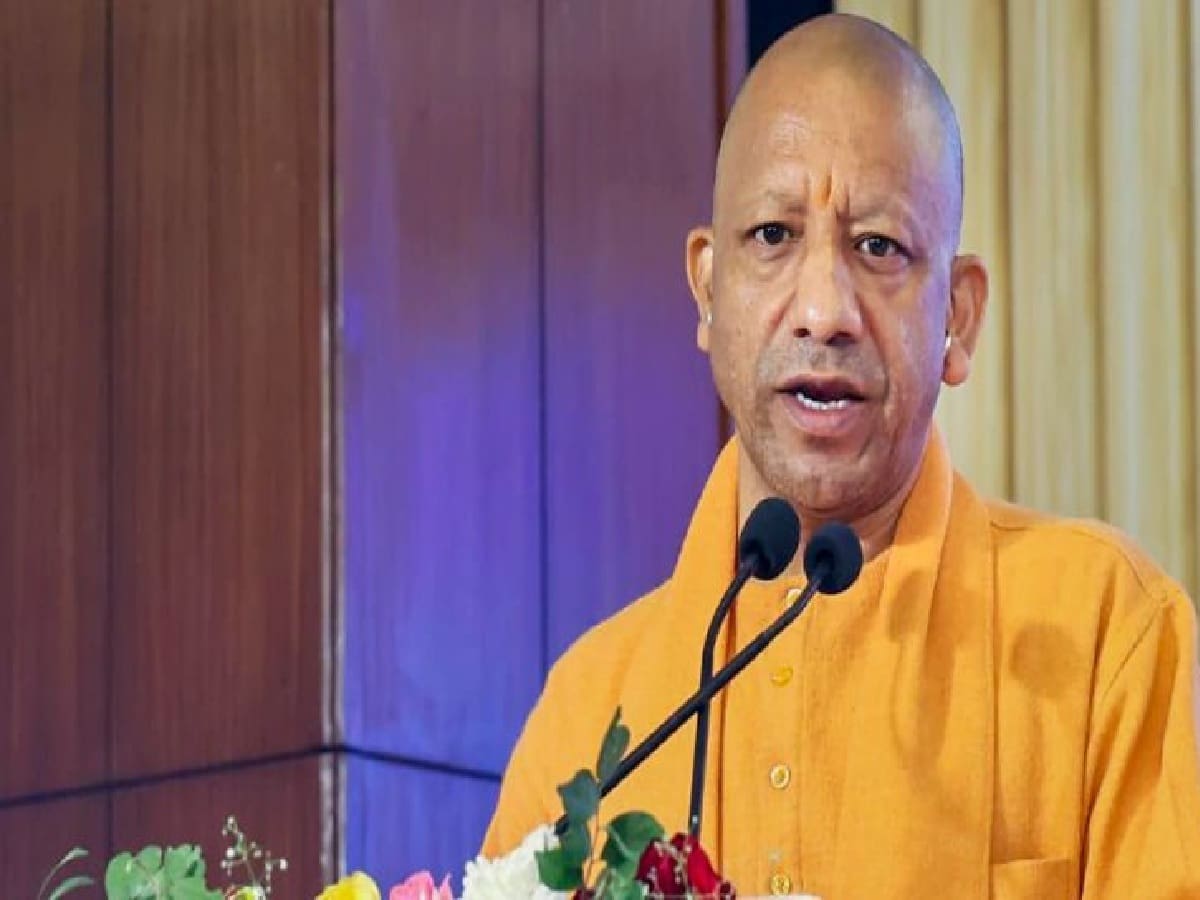
Will BJP Win 80% Seats in UP 2027, CM Yogi Answers
As the political climate across Uttar Pradesh intensifies ahead of the February 2027 State Assembly Elections, Chief Minister Yogi Adityanath has delivered a definitive, high-confidence projection regarding the ruling coalition's electoral prospects. Speaking during an expansive interview at a prominent media conclave, Chief Minister Yogi Adityanath addressed probing questions concerning whether the Bharatiya Janata Party (BJP) and its allies could sweep 80 percent of the popular vote and 80 percent of assembly seats—a political formulation often discussed in modern electoral discourse. While highlighting the massive welfare outreach, robust women's safety, surging industrial investments, and historic infrastructure transformation achieved by the double-engine government, the Chief Minister asserted that public sentiment across every demographic—women, youth, farmers, businessmen, and the poor—overwhelmingly favors a third consecutive term. When pressed on whether the ruling alliance is on track to cross the monumental 320-plus seat threshold in the 403-member Uttar Pradesh Legislative Assembly, CM Yogi affirmed that the political momentum is unequivocally headed in that direction, leaving little doubt about the eventual outcome. For political analysts, regional stakeholders, and voters across Lucknow, Varanasi, Ayodhya, Prayagraj, Gorakhpur, Kanpur, Meerut, Bareilly, and New Delhi, the Chief Minister's remarks offer a clear window into the ideological narrative and strategic metrics shaping the BJP's 2027 campaign.
Addressing the 80% Vote Query and the '15-20 Percent' Opposition Block
When asked whether the BJP alliance could capture 80 percent of votes and seats in Uttar Pradesh, Chief Minister Yogi Adityanath noted that the party has successfully delivered results that previously seemed unattainable through sheer dedication to good governance. However, offering a realistic assessment of electoral demographics, the Chief Minister candidly pointed out that a persistent 15 to 20 percent segment of the population remains inherently opposed to developmental progress, choosing instead to find negativity in every governance milestone.
CM Yogi remarked that those individuals or political factions who historically prefer social unrest, political patronage of criminals, and administrative chaos over civic celebration and economic growth will never succeed in derailing Uttar Pradesh's forward march. The table below outlines the core themes and electoral calculations addressed by Chief Minister Yogi Adityanath during his national conclave interaction:
| Electoral Theme / Question | Chief Minister Yogi Adityanath's Verified Stance (Nov 2026) | Strategic & Political Implication |
| Targeting 320+ Seats & 80% Scope | Affirmed that the election is firmly moving toward a sweeping mandate, backed by broad-based grassroots support from women, youth, and the poor. | Establishes an ambitious internal benchmark for party cadres to surpass previous legislative tallies. |
| The 15-20% Opposition Demographic | Noted that a small fraction of society persistently opposes development and manufactures negativity regardless of governance achievements. | Acknowledges ideological polarization while focusing core outreach on the vast, development-oriented majority. |
| Law and Order as Central Campaign Pillar | Stated unequivocally that the BJP will make the lawlessness, curfews, and riots of past SP-Congress regimes a central election issue. | Contrasts the zero-tolerance security model of the present government with historical allegations of appeasement. |
| The 2027 Electoral Landscape | Elections scheduled for February 2027 for all 403 assembly seats, with the BJP defending its 2022 mandate of 255 seats against a united opposition. | Frames the upcoming contest as a direct referendum on development and security versus past administrative decay. |
Making Past SP-Era 'Goondaraj' and Riots a Central Electoral Issue
A cornerstone of Chief Minister Yogi Adityanath's strategy for the upcoming 2027 assembly elections involves direct public accountability regarding the state's pre-2017 history. Pointing to the governance records of the Samajwadi Party (SP) and the Congress, the Chief Minister stated that the ruling coalition will aggressively remind voters of the pervasive atmosphere of fear, frequent curfews, administrative corruption, and unchecked criminal syndicates that characterized previous coalition and single-party regimes.
Recalling how ordinary citizens, businessmen, and daughters were forced to live under constant threat during periods of political appeasement, CM Yogi emphasized that the electorate remembers the difference between the "jungle raj" of yesteryear and today's climate of absolute safety, investment booms, and midnight commutes for working professionals. By placing law enforcement, transparency, and public security at the forefront of the campaign narrative, the BJP aims to consolidate its traditional voter base while appealing to middle-ground citizens who prioritize stability above all else.
Preparing for a High-Stakes Electoral Battle in February 2027
As Uttar Pradesh hurtles toward its February 2027 assembly showdown, the political battlefield is sharply defined. In the preceding 2022 assembly elections, the BJP cemented its political dominance by securing 255 out of 403 seats, successfully breaking a decades-old trend where incumbent governments failed to win consecutive terms. Facing a coordinated challenge from a joint alliance of the Samajwadi Party and the Congress, the ruling party is leaving nothing to chance—combining grassroots worker empowerment ("Workers First" strategy), division-wide rallies by national leaders, and aggressive digital storytelling. With Chief Minister Yogi Adityanath projecting absolute confidence and framing the election around tangible governance dividends, the stage is set for one of modern India's most closely watched electoral battles.




