







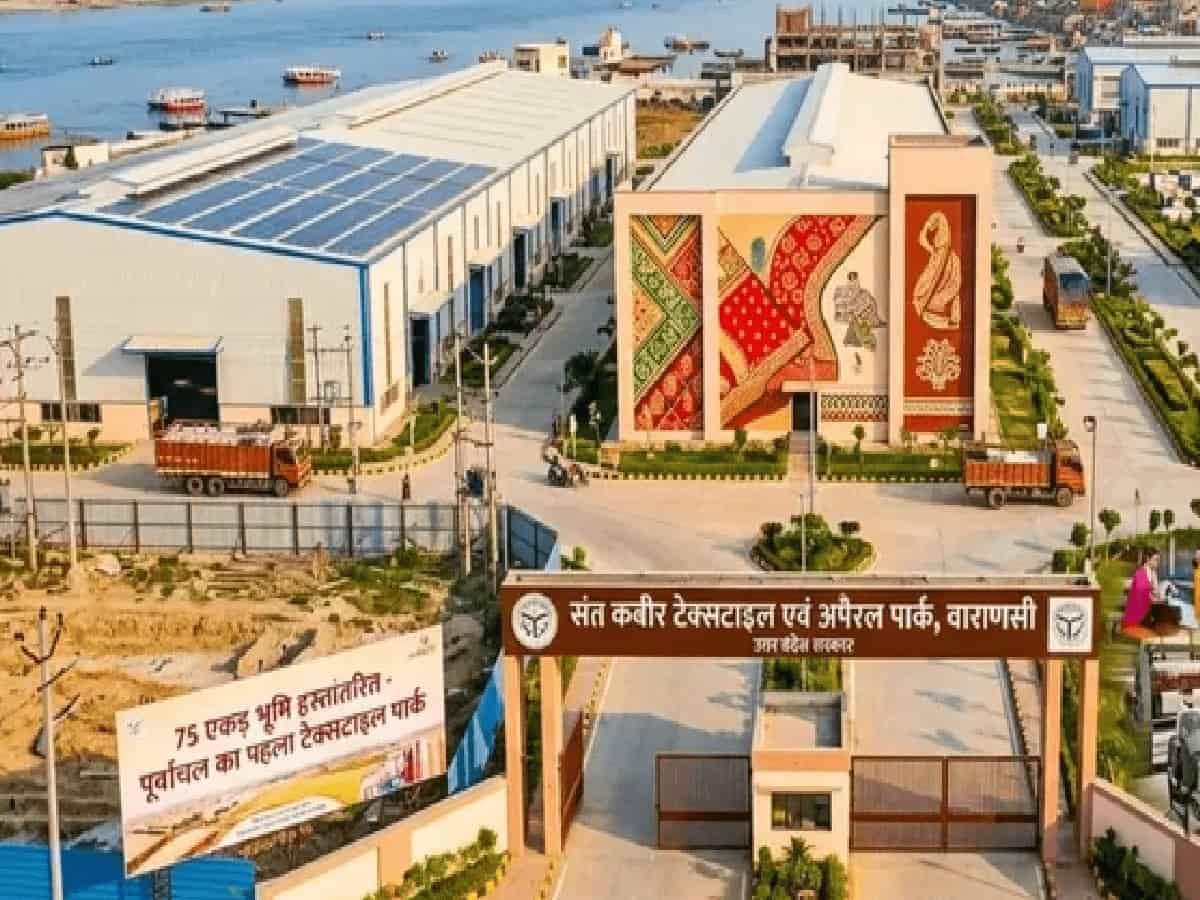
Purvanchal's First Mega Textile Park in Varanasi: 75 Acres Cleared in Ramna to Modernize Banarasi
In a landmark step to elevate eastern Uttar Pradesh into an international handloom and garment hub, the state government has officially cleared the land allotment for Purvanchal's first mega textile cluster in Varanasi. Under administrative orders, 75 acres of land formerly belonging to the Jalkal (waterworks) Department has been transferred directly to the Handloom and Textiles Department in the Ramna area of Rajatalab tehsil. Designed to establish the ambitious Sant Kabir Textile and Apparel Park, this specialized industrial complex aims to transform the historic Banarasi sari sector, equipping traditional artisan communities and modern entrepreneurs with a unified ecosystem spanning raw material supply, processing, high-tech manufacturing, and global trade promotion.
Over 430 Enterprises Line Up as Industrial Investment Surges in Kashi
The formal land handover has triggered significant commercial momentum across eastern Uttar Pradesh's manufacturing corridors:
-
High Commercial Demand: Even before ground construction commences, 431 textile manufacturers, apparel firms, and merchant exporters have submitted formal expressions of interest to set up production facilities within the park.
-
Global Market Integration: The industrial park will assist traditional master weavers in aligning handcrafted Banarasi fabrics with evolving export standards, rapid turnaround times, and competitive global retail pricing.
-
Strategic Transit Connectivity: Positioned strategically near the Rajatalab corridor, the park ensures direct logistics access to the Varanasi airport, major freight railway terminals, and connecting national highway networks.
Infrastructure Blueprint: 24/7 Power, Testing Labs, and Zero-Liquid Discharge Facility
Engineered as a clean, sustainable manufacturing zone, the Sant Kabir Textile Park integrates state-of-the-art utilities:
-
Uninterrupted Operations: Industrial units will benefit from dedicated round-the-clock electric power grids and continuous treated industrial water pipelines.
-
Ecological Safeguards: To ensure compliance with environmental and river protection mandates, an advanced Zero-Liquid Discharge (ZLD) effluent treatment plant will process all wastewater within the cluster.
-
Quality Assurance and Warehousing: The campus will house certified textile testing laboratories to verify fiber authenticity, climate-controlled warehousing for finished garments, and a central administrative complex for single-window clearances.
-
Skill Development and Trade Displays: A dedicated training center will update the technical proficiency of local weavers to operate modern looms, while a sprawling exhibition center will host domestic and international trade buyers.
Plug-and-Play Sheds and Commercial Amenities for Micro-Weavers
The project layout places particular focus on accommodating small cottage-industry weavers alongside large industrial factories:
-
Pre-Fitted Workspaces: Small-scale handloom weavers, boutique garment makers, and textile designers can lease ready-to-use plug-and-play industrial sheds, drastically lowering initial capital entry costs.
-
Custom Plot Allocations: Larger enterprises and integrated spinning-weaving mills can acquire custom-sized industrial plots tailored to expansive plant layouts.
-
Comprehensive Civic Amenities: The design includes integrated healthcare clinics, commercial zones, landscaped recreational parks, dedicated fire stations, and multi-tier police security systems to support workers and entrepreneurs.




